


Tarantino’s transformative pop culture juggernaut remains one of cinema’s coolest experiences
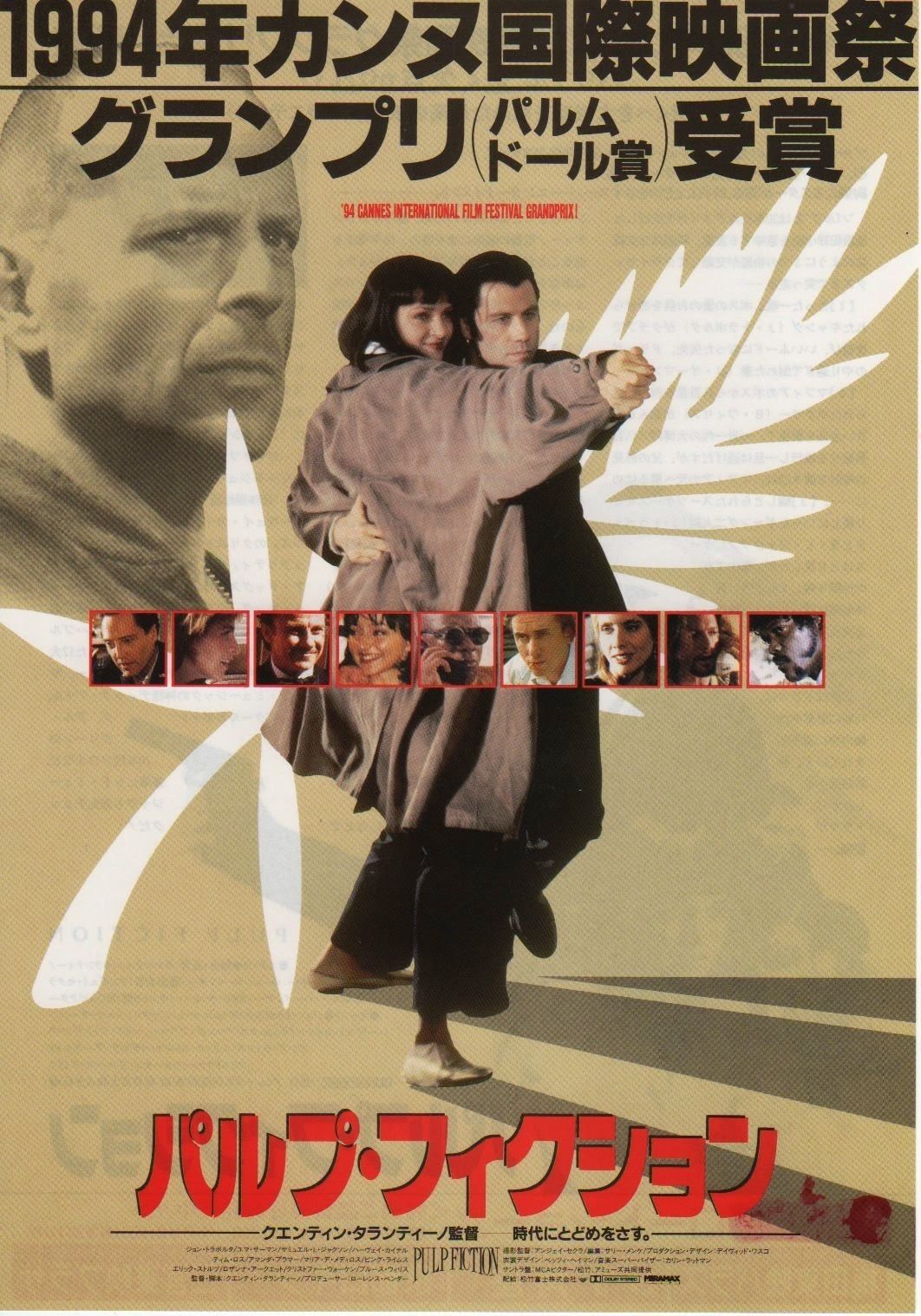
It’ s hard to convey just how much of an impact Pulp Fiction had on popular culture during the mid 90s. Those who lived it will recall a cultural phenomenon of monumental proportions, one that coursed through our collective veins like a dose of Lance’s finest China White. The first independent film to gross more than $100,000,000, Tarantino’s true breakout picture resonated in a way that still feels unique. Everyone was talking about this movie: filmmakers, actors, writers, critics, moviegoers of all demographics — even my dear, departed grandmother, not one for foul language or violence of any description, was utterly compelled by what she saw when the movie inevitably found its way into her VCR. Watching it through glowing eyes, she laughed, she gasped, she cringed, and when John Travolta, a former twinkle-toed superstar who had long-since left the spotlight, took to the dance floor in the world famous Jack Rabbit Slims, she even let out a little sigh. Her face was practically beaming.
That moment, more than any other, taps into Tarantino’s genius when it comes to not only making actors relevant again, but giving them a brand new lease of life. It would have been so easy to use the Saturday Night Fever star in a more overblown fashion, though hindsight being 20/20, it’s hard to see the logic. For one thing, a forty-year-old, overweight Travolta could never eclipse his slimline turn as brash, street-hardened disco prince Tony Manero, or even camp 50s throwback Danny Zuko, two iconic personas that transformed the actor into a worldwide superstar, but as soon as Vincent reluctantly agrees to boogie with the quietly manipulative Miss Mia Wallace, those are the characters who immediately leap to mind. Instead of going full-throttle, Travolta does just enough to remind us of exactly who we’re dealing with, which for me does two things. Firstly, and most importantly, it makes us long for just a smidgen more. It’s way more fun to be left slightly unfulfilled, to anticipate but not quite get there. This is the foreplay that leads us to the following scene’s breathtaking climax. The other thing it does is let us know that the actor is no longer a spring chicken. This is the same Travolta you all remember and love, but those days are behind him. He’s moved on. And Pulp Fiction as a whole felt very much like the future.
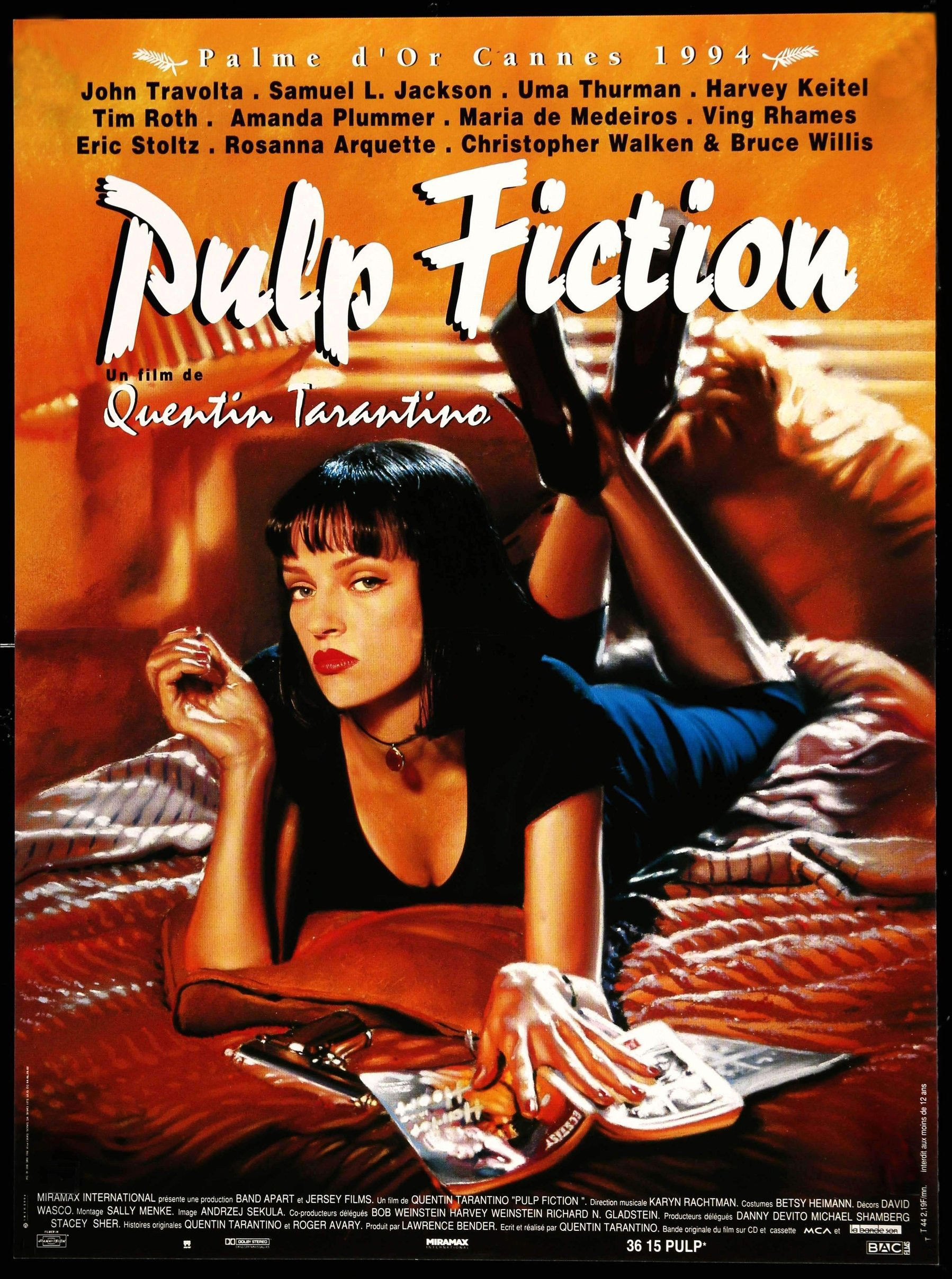
Unsurprisingly, the roles would soon pile up for Travolta off the back of what remains Tarantino’s most perfect movie, but he wasn’t the only actor to experience a renaissance under the filmmaker’s guidance. Bruce Willis, long-since typecast as a generic action star and drowning under the weight of such commercial flops as Hudson Hawk and Striking Distance, would completely redefine himself following his role as crafty, punch-drunk boxer Butch Coolidge, once again becoming hot property in Hollywood. Pulp Fiction‘s universal appeal would also create some new megastars. Uma Thurman was no stranger to Hollywood, her role as Maid Marion in 1991‘s Robin Hood: Prince of Thieves her most mainstream prior to Tarantino’s opus, a support role in John McNaughton’s hugely underappreciated 1993 mob comedy Mad Dog and Glory proving that she was much more than just a pretty face, but Pulp Fiction elevated her to a whole new stratosphere. Even after starring in the Kill Bill duology as samurai assassin The Bride, Mia is still Thurman’s most iconic character.

The same can be said of Samuel L. Jackson’s Jules. Jackson was already a screen veteran with almost 30 features under his belt by 1994, but asides from providing notable support in Spike Lee’s Do the Right Thing and Stephen Spielberg’s Jurassic Park, he was mostly background noise, even for a brief but memorable turn as careless mob associate Parnell Steven “Stackz” Edwards in Martin Scorsese’s innovative gangster epic Goodfellas. Of all the performances in Pulp Fiction, SLJ’s turn as the afro-sporting, Ezekiel-shooting Jules is probably the most memorable, and certainly the most quotable, but he almost didn’t make it to the dance. Though the part of Jules was originally written with Jackson in mind, the actor almost lost out to Paul Calderón, who would assume the role of barely glimpsed bartender Paul as consolation. So impressive was Calderón’s audition that Jackson flew in for a second crack at the whip, only to be mistaken for Laurence Fishburne by one of QT’s staff. It is believed that Jackson’s rage at such an oversight, the same channelled during his audition only moments later, ultimately won him the role. Say Fishburne again, motherfucker! Say Fishburne one more goddamn time!
That’s when you know you’ve found somebody special. When you can just shut the fuck up for a minute and comfortably enjoy the silence.
Mia Wallace
Jackson’s Jules wasn’t the only character to ignite the imagination. Pulp Fiction is packed with cutting edge characters, conversations about music, television, fast food restaurants and a dozen other seemingly innocuous subjects endearing audiences to them instantly. Those interactions may have been fictional smooth, but the subjects and sense of camaraderie we could fully relate to. The opening interaction between Jules and Vincent didn’t reveal anything about who they were or where they were going, and yet we had an immediate affinity with them. Even when they suddenly ‘got into character’, sparking their abrupt transition from hyper-cool comedy act to ‘the tyranny of evil men’, it didn’t change a thing. These no-nonsense assassins were very much the movie’s protagonists.
Pulp Fiction‘s breathless prologue sets the tone, memorable cameos from Tarantino favourite Tim Roth and the immensely talented Amanda Plummer giving us a taste of the snappy, everyday dialogue that permeates the film’s extraordinary events, and there was so much to talk about after seeing Pulp Fiction, so many startling, offhand occurrences punctuated by equally blasé interactions. I was thirteen when I first witnessed the film that everyone just had to see with their own eyes. At the time it was all about the syringe through the heart, the murky pawn shop, the wallet that says Bad Motherfucker, and it’s still about those things, but the movie’s true magic occurs during those seemingly innocuous interactions, petty quarrels about sticking your tongue in the holiest of holes or dining on filthy animals uniquely engaging and instantly relatable. And you just know that people will be discussing the contents of THAT briefcase for as long as they have eyes. A future pop culture artefact, the screenplay was nothing short of transformative.

I hadn’t seen a movie quite like Pulp Fiction, the kind that used dialogue as something more than an expositional device. Sure, QT had done the same with City of Fire derivative Reservoir Dogs two years prior, as he had with the Tony Scott crime caper True Romance and the yet to be released but already written From Dusk Till Dawn, but Pulp Fiction was my first taste of Tarantino’s unique writing style, the kind that was forged as he whiled away the days as a video store clerk in Manhattan Beach, California. In 1995, he and co-writer Roger Avery would scoop the Best Original Screenplay Gong at the Oscars, but that was as far as it went for a movie that proved nothing short of seminal. The film managed six further nominations — Best Picture, Best Director, Best Actor, Best Supporting Actor, Best Supporting Actress and Best Film Editing — but once again the ceremony failed to shower the industry’s latest left-field masterwork with riches, typically erring on the side of safety. We all remember Samuel L Jackson’s apparent disgust at having missed out to Martin Landau for his astonishing portrayal of troubled Dracula icon Bela Lugosi in Tim Burton’s biopic Ed Wood. At least they didn’t announce him as Laurence Fishburne!
Well, I’m a mushroom-cloud-layin’ motherfucker, motherfucker! Every time my fingers touch brain, I’m Superfly T.N.T., I’m the Guns of the Navarone!
Jules Winnfield
Of all those nominations, something that wasn’t addressed at the Oscars was Pulp Fiction‘s use of music. This wasn’t an oversight on the Academy’s part. The only two available awards in terms of musical accompaniments were Best Original Music Score and Best Original Song, neither of which were applicable to the Pulp Fiction OST, which uses already established music in the most bold and inventive way. The importance of the movie’s use of music cannot be underestimated, something that would become a trademark of Tarantino’s entire filmography. As is the case with his use of actors, QT has an unrivalled ability to make songs relevant again, to make them bigger and more popular than they ever were, and always with a few lesser known gems thrown in for good measure.
Take the Jack Rabbit Slims dance-off. Before Pulp Fiction, ‘You Never Can Tell’ was hardly the most recognisable track from the Chuck Berry catalogue, but now it’s one of the first on everybody’s lips. So unexpected was this particular choice that Uma Thurman questioned its suitability, suggesting that it just didn’t fit the scene. In response, Tarantino simply replied, “Trust me, it’s perfect,” an assertion that is now impossible to dispute. Maria Mckee, best known for her 1990 pop smash ‘Show Me Heaven’, was also given a new lease of life with the deeply sombre ‘If Love is a Red Dress (Hang Me in Rags)’, a desperately tender track that plays on the radio prior to Zed’s unconscionable misdeeds in the murky basement of the movie’s notorious, back alley pawn shop. Talk about irony! ‘Jungle Boogie’, ‘Let’s Stay Together’, ‘Son of a Preacher Man’ — all hugely popular 70s hits that would become staples for a new generation. Even perennial guilty pleasure Neil Diamond was lent some much needed credibility thanks to Urge Overkill’s wildly sensual cover of ‘Girl You’ll Be a Woman Soon’, a mysterious, passionate track which acts as a prelude to one of the movie’s most talked about scenes.

There were many controversial moments in Pulp Fiction, though back in 1994 an adrenaline shot through the heart was a topic of unprecedented fascination. It was the very reason that the real Laurence Fishburne turned down the role of Jules prior to Jackson’s eventual casting. Fishburne was not impressed with the way such a scenario was presented in the movie, or the way in which Vincent Vega’s drug use was stylised. In an interview with Vulture, the actor would recall, “Pulp Fiction wasn’t for me. Quentin wrote that part with me in mind, too, but it wasn’t for me. I just had a problem with the way the heroin use was dealt with. I just felt it was a little cavalier, and it was a little loose. I felt like it made heroin use attractive. For me, it’s not just my character. It’s, “What is the whole thing saying?” …I just was like, “No, I don’t get it as an actor.” It wasn’t about my character in Pulp Fiction. It was about the way in which the heroin thing was delivered. And the whole f_cking thing with the hypodermic and the adrenaline shot? No.”
It may seem overblown and in line with the film’s pulp leanings, but the scene in which Vincent hilariously almost stabbed Mia “three times” was inspired by a real-life event involving a roadie for Neil Diamond, a tale lifted from Martin Scorsese’s unreleased 1978 documentary American Boy: A Profile of Steven Prince. The story — one that was later told in Richard Linklater’s Waking Life — was almost identical to that of Mia’s. Former drug addict Prince, who would land a small role as Easy Andy in Taxi Driver two years prior, would say of the experience, “I was stoned. I had to reach down really far and deep to get some control to go ahead and do that. Almost exactly like the film. I didn’t get finished hitting that plunger all the way down before she was up and wide awake. I, however, removed the needle…”
I gotta stab her three times?
Vincent Vega
Dark stuff, but QT isn’t one to bog us down with realism, something that would become increasingly apparent when tackling subjects such as Nazi Germany and American slavery in a way that only he can. The director isn’t quite so fanciful here, or as self-satisfied, but as edgy and as excruciating as the scene is, it is alive with an electric undercurrent of humour, inspiring the kind of exhausted smiles that are as much from relief as anything. From the moment Vince finds Mia whacked-out on his personal stash, your heart is in your mouth, the ceaseless chaos that ensues the only thing preventing you from swallowing it. It’s an excruciating ordeal, from the frenetic phone call between Vince and Lance to the act of penetration itself, Jody’s insane outbursts as the group search a stoner’s domestic junkyard for a little black medical book only adding to the emotional frenzy. There’s nothing funny about the situation, it’s the way in which the characters react that leaves you smiling: the empty threats, the frantic foraging and general inadequacy in dealing with the situation. Once again we are presented with outlandish characters in outlandish scenarios, but we can identify with their human frustrations and petty quarrelling. We find humour where there shouldn’t be any.
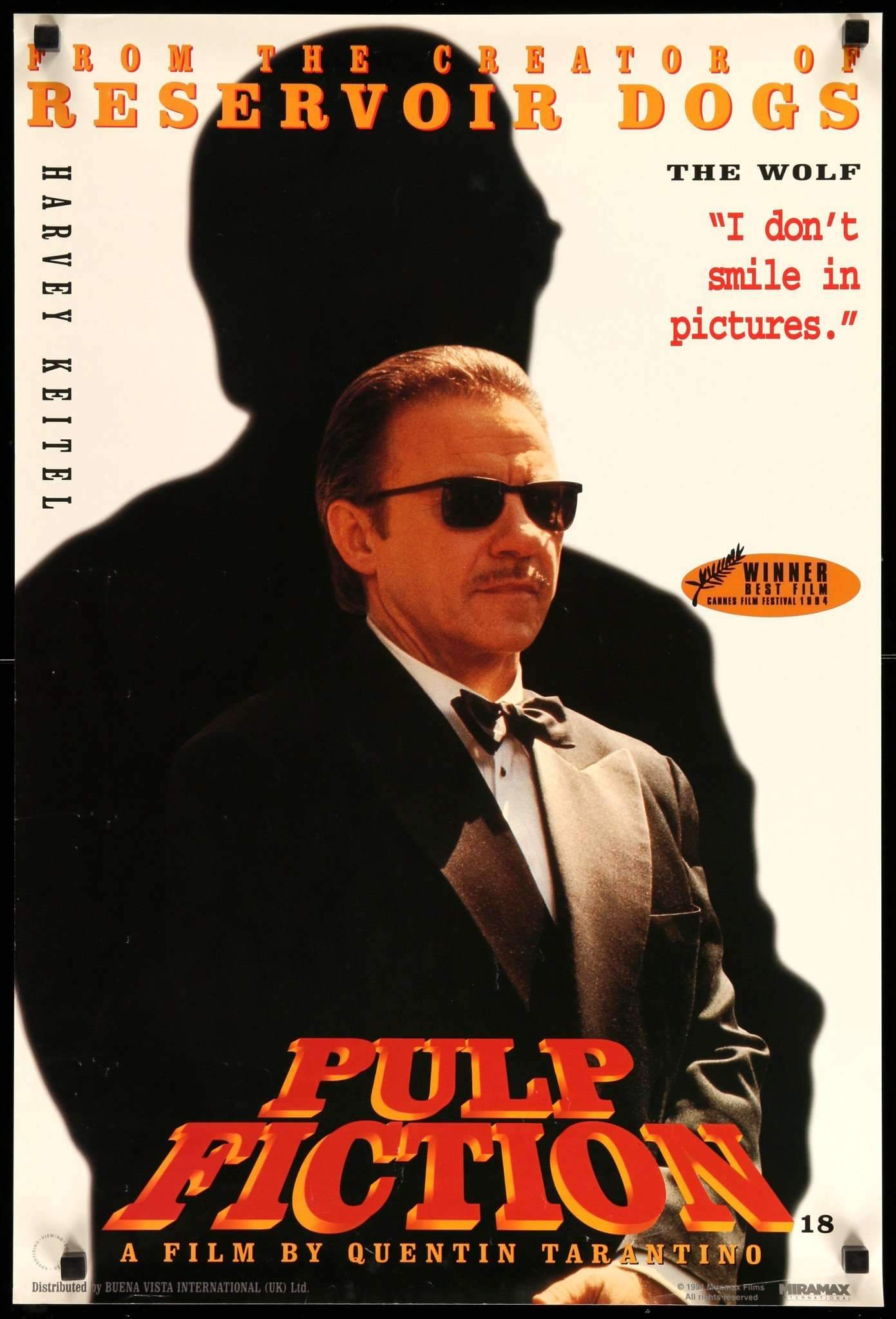
It is this comic charm that helps to offset the movie’s graphic nature, the two elements often inseparable. This is perhaps most relevant during “The Bonnie Situation” when our two lovable gangsters are forced into a detour after Vincent accidentally shoots preppy thief Marvin in the face. Vince and Jules always seem to be arguing about something, their ceaseless quarrelling reaching its zenith during a heated discussion about whether the two have experienced a divine intervention or a simple freak occurrence by escaping death under fire. Jimmy (Tarantino) is the unlucky sucker lumbered with the pair, and when Winston Wolfe, played with effortless cool by a spellbinding Harvey Keitel in what is essentially a cameo role, shows up to lend an inimitable hand in disposing of the body, Vincent takes offence at his curt and demanding manner, the comedy duo soon becoming a classic ménage à trois.
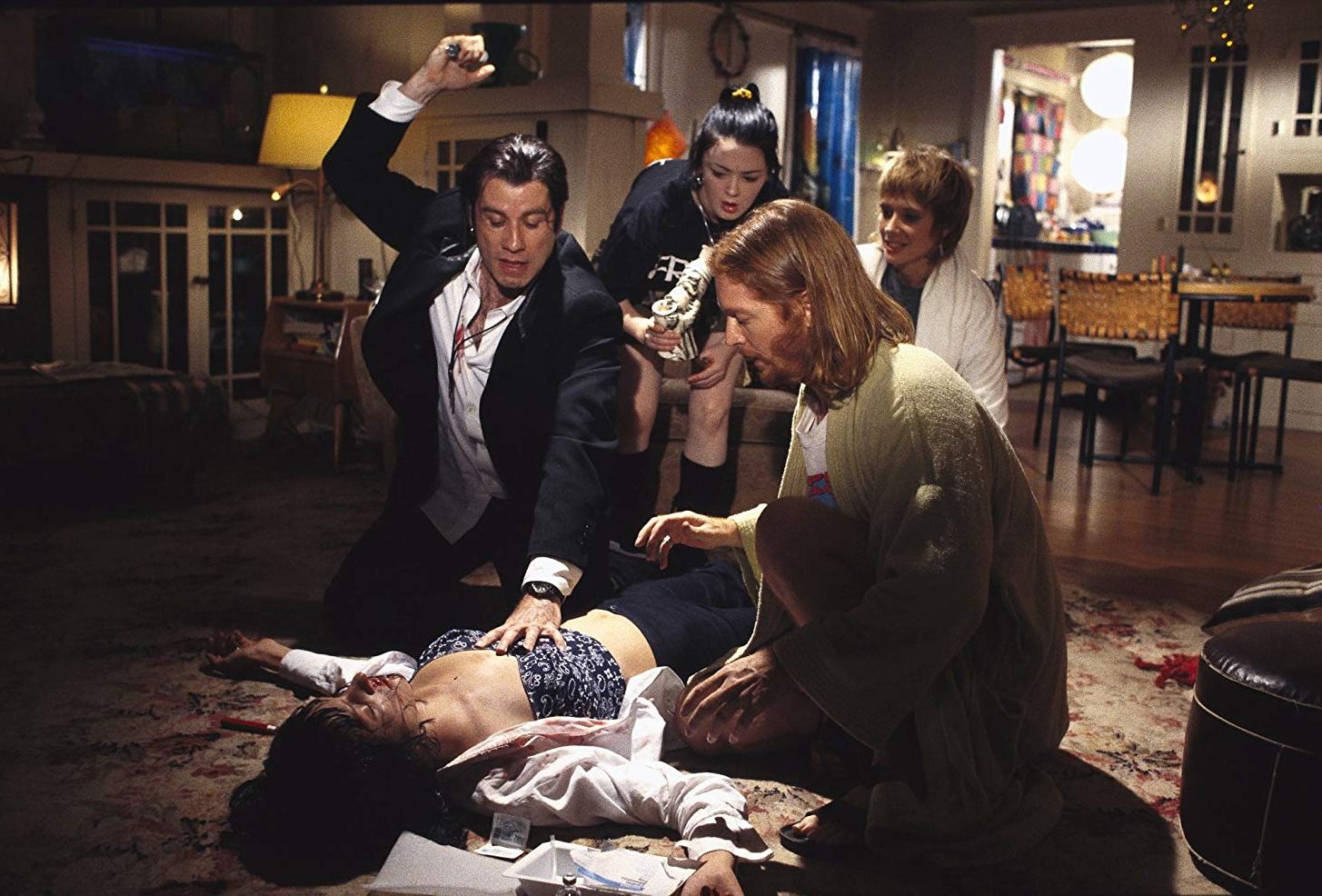
The Bonnie Situation results in some of the movie’s finest dialogue. How often do we hear the words “mushroom cloud laying motherfucker, motherfucker” slipped into an argument about a headless corpse? At the same time, we’ve taken part in those squabbles, have been involved in bizarre situations that have helped forge or strengthen the most unlikely bonds. Despite their fanciful incarnations, we can empathise with these characters completely. They are both familiar and unfamiliar, grounded in reality yet ill-fitting pieces in a jigsaw of pop culture fantasy. Where else would you find a hick racist with a submissive troop of basement dwellers, women with pot belly fetishes and Cuban cab drivers with an unhealthy fascination with murder? The answer is everywhere, but Pulp Fiction set the bar.
Even during its most unsettling scene, Pulp Fiction‘s darkly comic touch doesn’t falter. It’s almost impossible to muster a smile when it comes to a subject such as rape ― I say almost because of this particular scene’s slowly consumed gallery of potential retribution, Butch going from baseball bat to chainsaw before settling on the kind of samurai blade that the director would later fetishize in the Kill Bill movies. Before entering the most sordid pawn shop ever committed to celluloid, Butch and Los Angeles crime lord Marsellus Wallace want nothing more than to wipe each other off the face of the planet, but there are some cruelties so calculated and sadistic that they transcend even the most bitter of feuds. All Butch wants is to escape the gangster’s wrath and begin a new life with his inimitable love, Fabienne — a name curiously similar to Rocky Balboa’s Adrian — but when the chance finally presents itself he just can’t go through with it. As much as it’s a risk on his behalf, Butch can’t bear to see a fellow man subjected to such an ignominious death and takes great delight in seeking vicarious vengeance. As foreshadowed by an earlier flashback scene involving Christopher Walken and a crudely hidden watch, such loyalty can only be forged under the most devastating and unique of circumstances.
Get it straight buster — I’m not here to say please, I’m here to tell you what to do and if self-preservation is an instinct you possess you’d better fucking do it and do it quick. I’m here to help. If my help’s not appreciated, then lotsa luck, gentlemen.
The Wolf
For all its extraordinary moments, Pulp Fiction‘s plot is a deceptively simple one, though a fractured, non-linear structure gives us an illusion of complexity, just as its characters and events present us with an illusion of reality. The story is book-ended by a peculiar coffee shop stick up from two different perspectives, a would-be-romance, an unlikely truce and a philosophical journey tying it all together. There are also instances of overt unreality that are in-keeping with the movie’s title ― moments of rear projection effect; an instance in which Uma Thurman’s Mia Wallace draws an imaginary square with her fingers in the Jack Rabbit Slims parking lot ― and events are often heavily stylized, a sequence in which Travolta’s Vincent takes part in a ritual of drug taking instantly iconic, and at the time hugely controversial for its explicit sense of intimacy. The film does not provide us with a conclusive ending in a conventional sense, but it does offer closure, and it does so with what seems like the most peripheral of all narratives, that of Jules’ divine purpose, which until that point has provided nothing but comic relief.
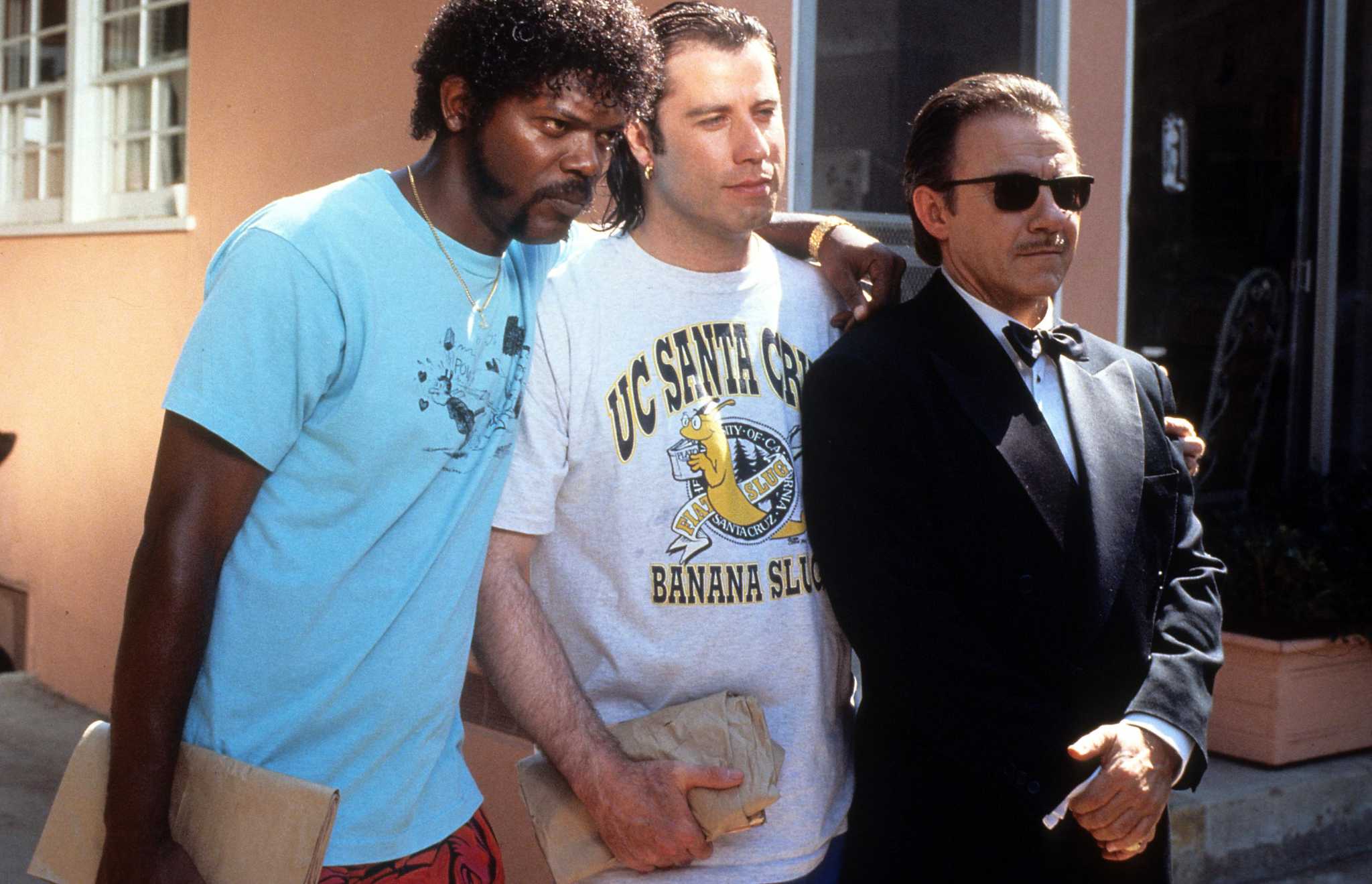
In the film’s opening scene, the two dime store crooks whose destiny our antiheroes will forever alter are nothing but assertive, Roth’s “Pumpkin” and Plummer’s “Honey Bunny” dreaming of a bright future sticking up coffee shops that will “cut down on the hero factor”. But heroes they will surely meet, and as far as their occupational aspirations are concerned, that meeting will not end well. At the time this scene may have confused or disheartened passive moviegoers looking for a traditionally conclusive send-off, but it’s an inspired finale that leaves us feeling humbled, enlightened, and, most crucially, satisfied with what is for all intents and purposes a happy ending. Jules may be blowing in the wind and Vincent may have a date with death that we’ve already experienced thanks to an excruciating O.K. corral style stand-off between fated enemies Vince and Butch and an unfortunate incident with a toaster, but by the time our t-shirt wearing dorks exit the coffee shop to an awed and deserved silence, we get the resolution we all craved, even if the movie’s nonlinear timeline tells us that it is not the definitive one.
All these years later, the film’s presentation is still a joy to behold, the dialogue still as fresh and as endearing as ever, despite the industry’s deluge of like-for-like screenplays that cheapened the novelty into oblivion by the late 90s. Pulp Fiction‘s brand of character interaction revolutionised the craft of screenwriting, its delightfully stylized yet comparatively organic script setting the bar for writers old and new, resulting in a half-decade of imitators desperate to emulate his formula. The movie’s success would spawn a whole host of Tarantino clones, from forgetful knock-offs such as 8 Heads in a Duffle Bag to punchy yet derivative imitators like Things to Do in Denver when You’re Dead. There were even a couple of memorable efforts such as 1995‘s aforementioned Hollywood satire Get Shorty, and 1998‘s fractured narrative thriller Run Lola Run, while Guy Ritchie made an entire career off exploiting the movie’s various techniques and enduring popularity.
Of course, there is one major difference. When you revisit any of those films today, they immediately smack of a very distinct period in movie history, one that has lost much of its charm in the ensuing years. Pulp Fiction forged that period, but it doesn’t belong to it. It is ageless, incomparable, one of the finest, most influential movies ever committed to the silver screen. In the words of Winston Wolfe, “Just because you are a character, doesn’t mean you have character.” Time, as they say, will attest to that.
Director: Quentin Tarantino
Screenplay: Quentin Tarantino
Music: Kristen Becht
Cinematography: Andrzej Sekuła
Editing: Sally Menke









 vhsrevival.com