

Cartoon spin-offs, Patrick ‘Dirty Dancing’ Swayze & the return of Madonna… VHS Revival brings you all the retro movie news from August 1987
August 5
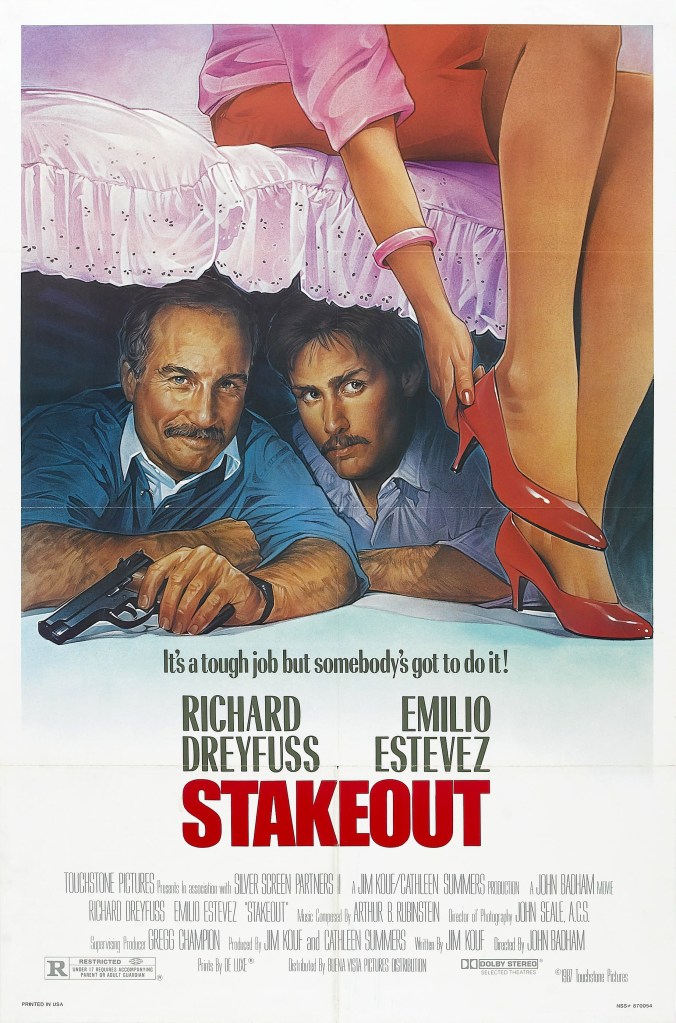
A solitary theatrical release in the first week of August would prove a rather memorable one as the ever watchable Richard Dreyfuss and Sheen family offspring Emilio Estevez teamed up for John Badham’s charming buddy comedy Stakeout.
The story of two cops tasked with staking out Madeleine Stowe’s Maria McGuire, the premise blossoms when Dreyfuss’ cocky detective falls head over heels with his beautiful suspect, posing as a telephone repairman while partner Bill Reimers (Estevez) watches on with an ever growing frustration, particularly when criminal boyfriend Richard ‘Stick’ Montgomery (Aidan Quinn) escapes from prison and heads for a jarringly violent showdown that seems somewhat at odds with the film’s otherwise jovial tone. Affairs are made even trickier when a pair of rival detectives, tasked with alternate shifts, join the increasingly precarious fray. The movie’s screenplay, written by Jim Kouf, bagged a 1988 Edgar Award.
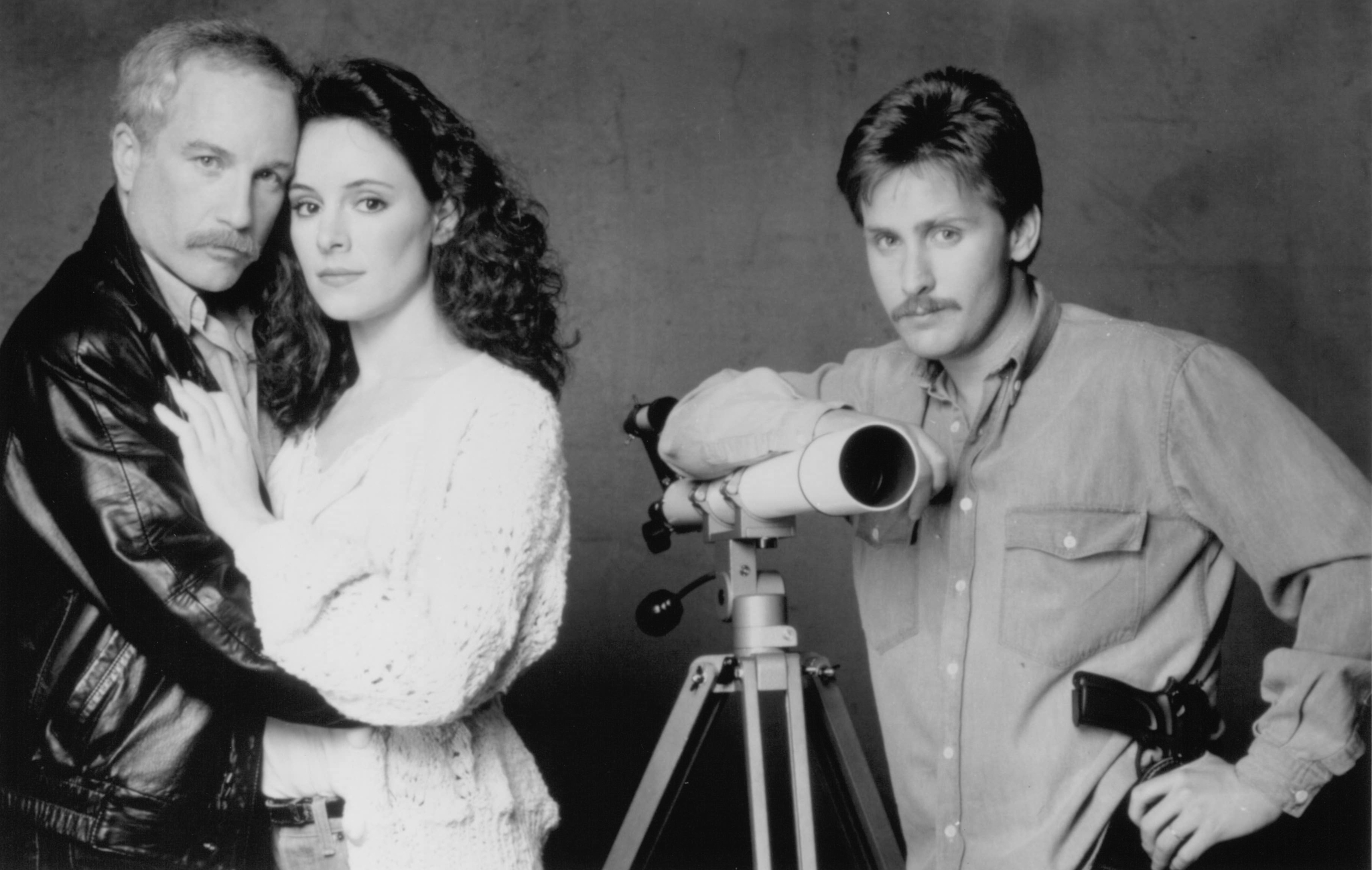
Blessed with an incredible comedic cast that includes Dennis Farina, Dan Lauria, Rosie O’Donnell, Miguel Ferrer and and future Oscar Winner Forest Whitaker, it was the chemistry of the film’s two male leads that hit a note with critics, the two ultimately reuniting for the mediocre Another Stakeout released six years later. Stakeout, which was the 14th release for the relatively new Touchstone Pictures, debuted at number one at the box office. The movie went on to gross $65,600,000 domestically, ranking as the eighth-highest-grossing film of the year.
Badham, best-known as the filmmaker behind gritty disco phenomenon Saturday Night Fever, and later buddy cop comedy-come-Hollywood satire The Hard Way, was keen to stress Stakeout‘s qualities beyond the obvious chemistry of its leads. “The thing I like about [Stakeout] is that it has so much more going for it. It has a wonderful romance that was done in a very funny way. So there’s a lot of comedy and romance. Plus, a tremendous amount of action that sort of begins and ends the movie, and so it’s always changing tone from one thing to another. So, if you’re a little bored with one thing, hang on, it’ll change in a second.”
Such an approach did not sit right with Pulitzer Prize winning critic Roger Ebert, who though a fan of the film took umbrage with such a scattergun approach. “Dreyfuss and his style are the two best things in “Stakeout,” a movie that consists of a good idea surrounded by a bad one. The good idea is the film’s basic premise: Two cops stake out a good-looking woman whose ex-boyfriend is a dangerous escaped convict… The movie’s bad idea is that this comic notion needs to be surrounded by a violent thriller.”
August 7
The second week of August saw the release of Lyndall Hobbs’ musical beach comedy Back to the Beach, the story of a stressed-out car salesman and ex-surfer who, while en route to a vacation with his wife in Hawaii, stops off in California and winds up embarking on one final beach adventure with some old friends.
The project was the brainchild of Grease icon Frankie Avalon, star of 1963’s similarly themed Beach Party, here taking on the lead role alongside original Mickey Mouse Club member and singer Annette Funicello aka Annette. The script was eventually picked up by Paramount, who instead of running with the whole beach party genre homage, completely altered the project to a straight-up parody as the beach party movies’ AIP belonged to rivals Orion Pictures, then in their most successful period. A proposed sequel, set on safari in Africa, failed to materialise due to Funicello’s dwindling health.
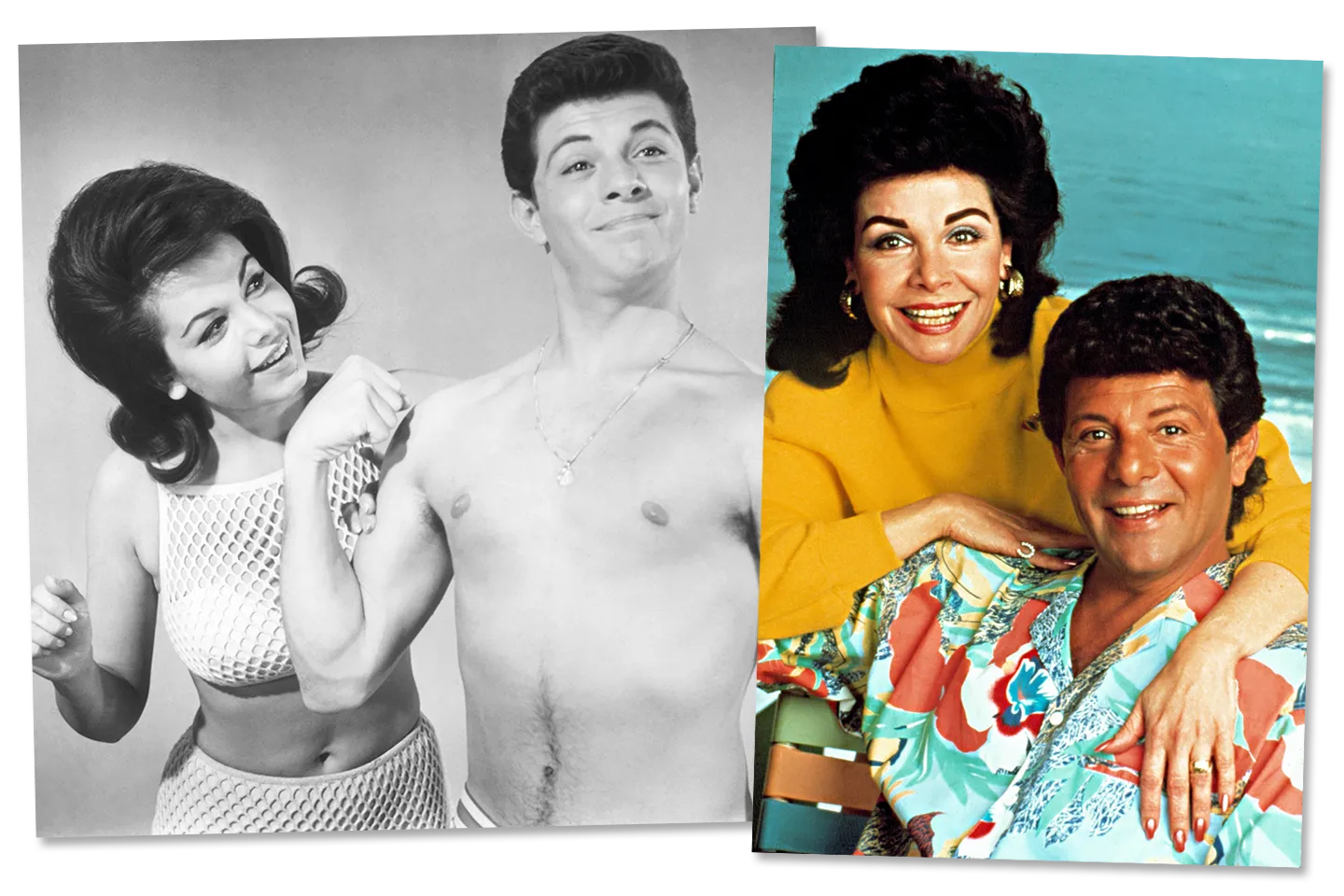
As well as featuring hits performed by Avalon himself, the Back to the Beach soundtrack included hits from such musical luminaries as Eddie Money, Stevie Ray Vaughan, Herbie Hancock… and Peewee Herman. It was also rather well received, qualifying for the famous two thumbs up from Gene Siskel and Roger Ebert, who favourably compared the movie to Grease.
Back to the Beach fared less well at the box office, its $12,208,754 domestic gross considered hugely disappointing by Paramount, who shelled out roughly the same sum on production. Perhaps their whole spoof concept, clearly a pompous dig at a rival studio, wasn’t as appealing as they anticipated.
It should have been the summer’s biggest blockbuster, but Golan-Globus and Cannon Films, a production company and distributor who were mostly synonymous with bottom-rung scripts and low-key exploitation, bit off more than they could swallow.
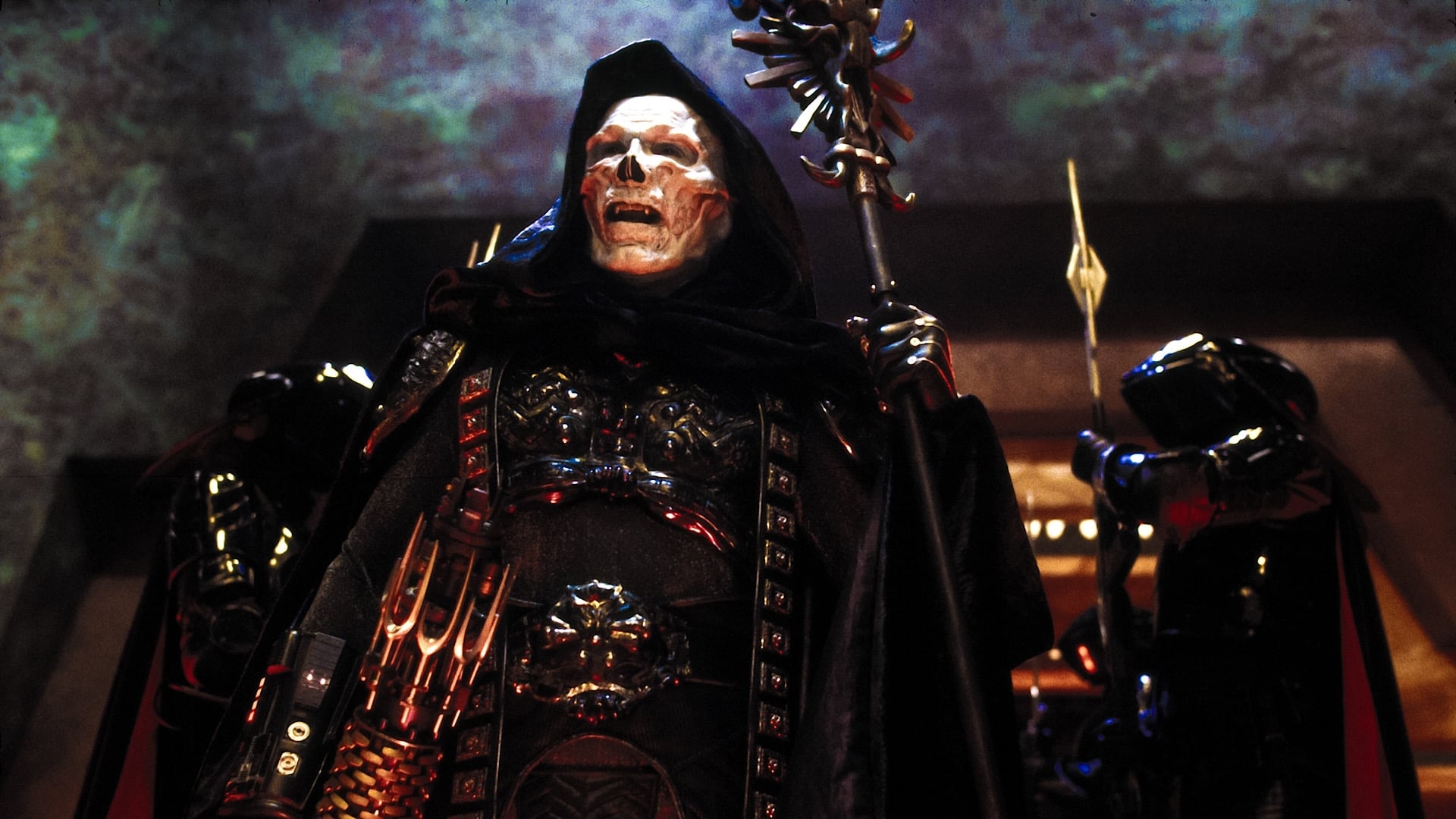
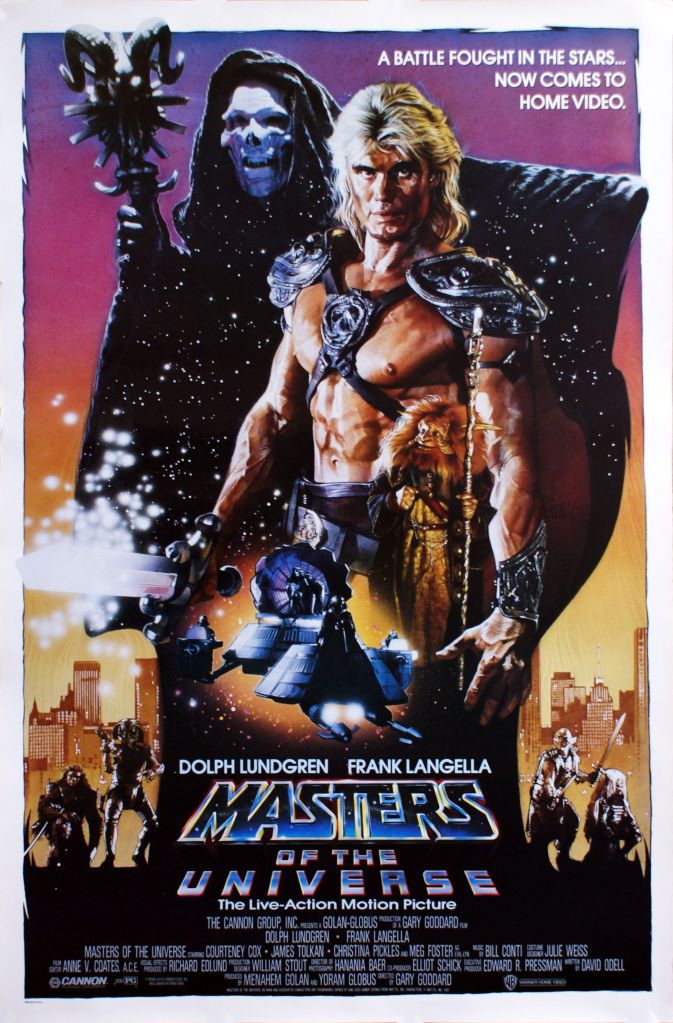
Based on the hugely popular cartoon series He-Man and the Masters of the Universe, which in turn was devised to tap into the cultural marketing boom of the 1980s with a range of action figures, Masters of the Universe was a ready-made property with a cast of colourful swords and sorcery characters that could have inspired a series of sequels. Instead, Golan-Globus took their cue from the hugely popular Star Wars franchise, even announcing their project as the ‘Star Wars of the 80s’.
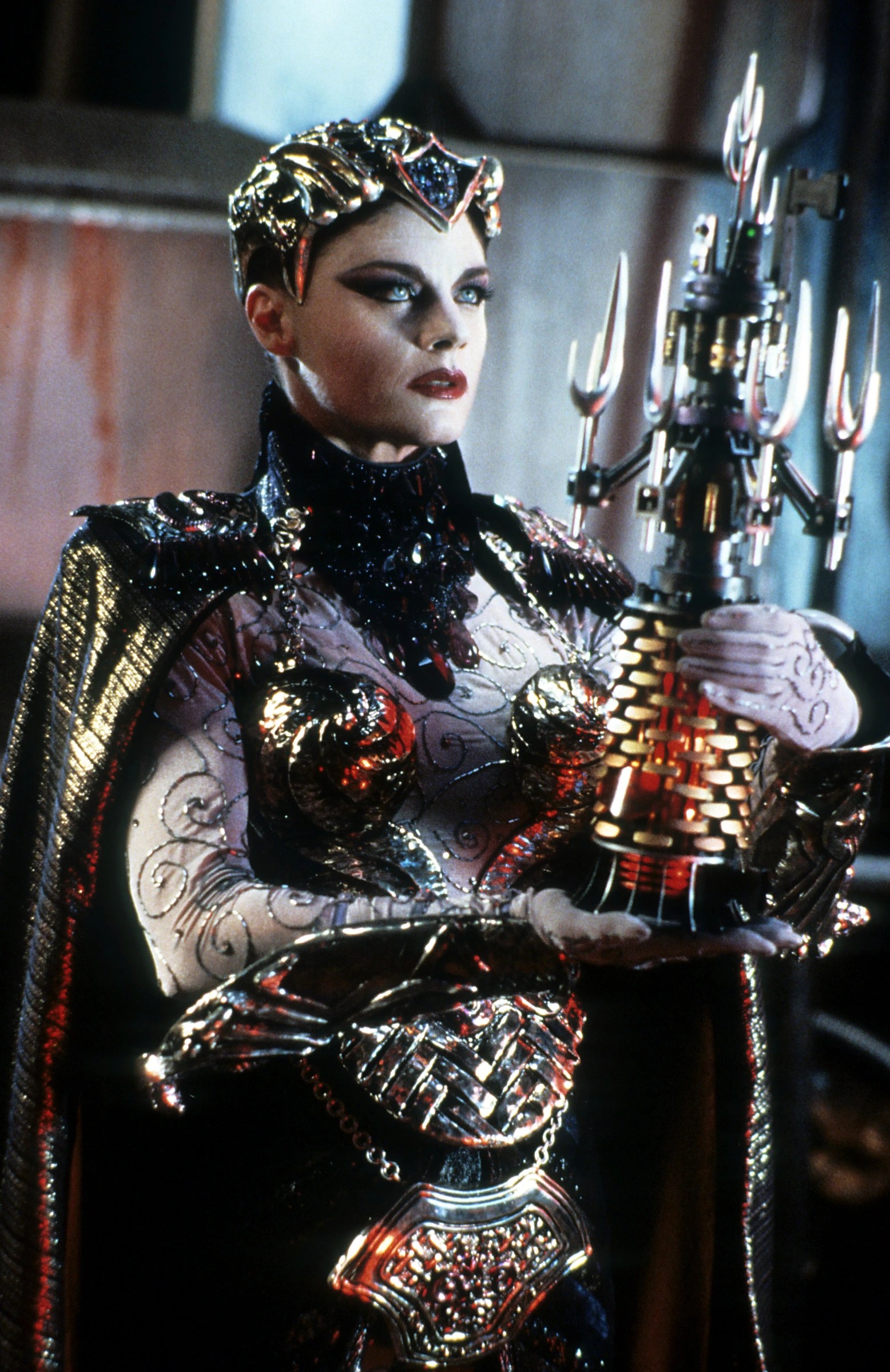
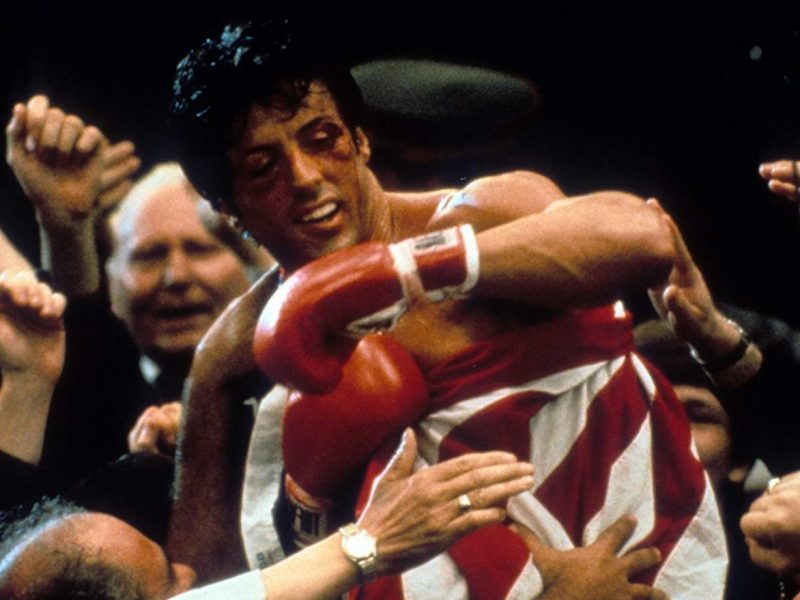
Unfortunately for Cannon Films it didn’t pan out that way, Masters of the Universe slammed for its cheap production values and weak plot, though it did benefit from a couple of stand-out performances, namely Frank Langella’s turn as He-Man nemesis Skeletor and Meg Foster’s striking support turn as devil-eyed second in command Evil-Lyn. Dolph Lundgren, who rose to prominence as hulking Rocky IV villain Ivan Drago, would star as the movie’s sword-wielding protagonist, looking decidedly camp this time around.
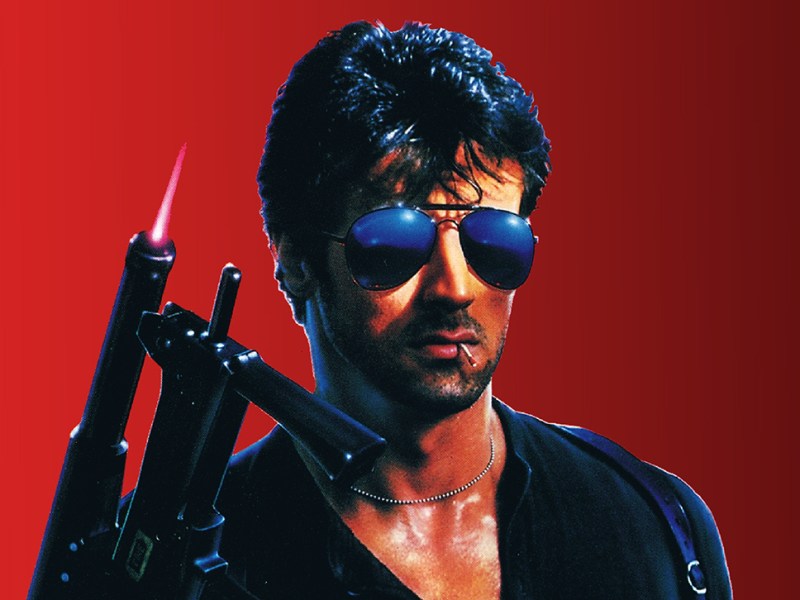
Cannon’s initial punt at the big time arrived with the capture of Hollywood megastar Sylvester Stallone, who, having landed the lead in Martin Brest’s innovative action comedy Beverly Hills Cop, acrimoniously parted ways with Paramount Pictures after attempting to alter the screenplay to fit a more generic vigilante template. Instead, Sly signed up for Golan-Globus project Cobra, a movie that allowed him hegemonic creative control and a humongous slice of the financial pie. It’s interesting to note that Beverly Hills Cop’s Axel Foley, eventually played by Eddie Murphy, was initially named Axel Cobretti, as in Cobra protagonist Marion Cobretti. Boy, would that have been a different movie!
Stallone would part ways with Cannon Films almost as quickly following huge commercial flop Over the Top, the tale of an arm wrestling trucker that went down like a lead weight at the US box office, but it was Masters of the Universe, along with the similarly high-profile flop Superman IV: The Quest For Peace, a movie that put that particular franchise on the shelf for decades, that spelled the end for Cannon as a major player, the Golan-Globus project shrinking into none existence by the mid 90s.
Grossing a pitiful $17,000,000 on a budget of $22,000,000, Masters of the Universe is now considered a camp classic in much the same way as the cartoon that inspired it.
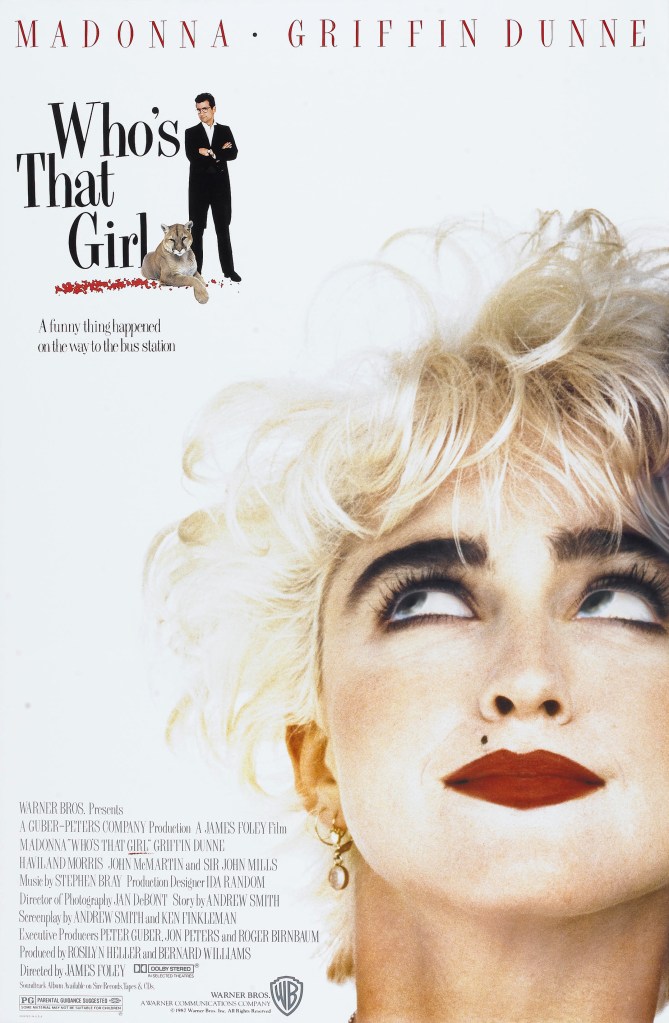
International pop sensation Madonna returned to the silver screen on August 7 with future Glengarry Glen Ross director James Foley’s poorly received screwball comedy Who’s That Girl? Having achieved critical aand commercial success with 1985’s Desperately Seeking Susan, Madonna would crash back down to reality with 1986’s Shangai Surprise, an adventure comedy she had starred in with new, real-life husband Sean Penn that tanked harder than the Titanic.
The story of a street-smart girl falsely accused of murdering her husband, Who’s That Girl? would co-star respected comic actor Griffin Dunne, star of Martin Scorsese’s offbeat comedy classic After Hours, future Speed director Jan De Bont signing on as cinematographer, but those involved were aware of the film’s lack of credibility going in, not least the director himself.
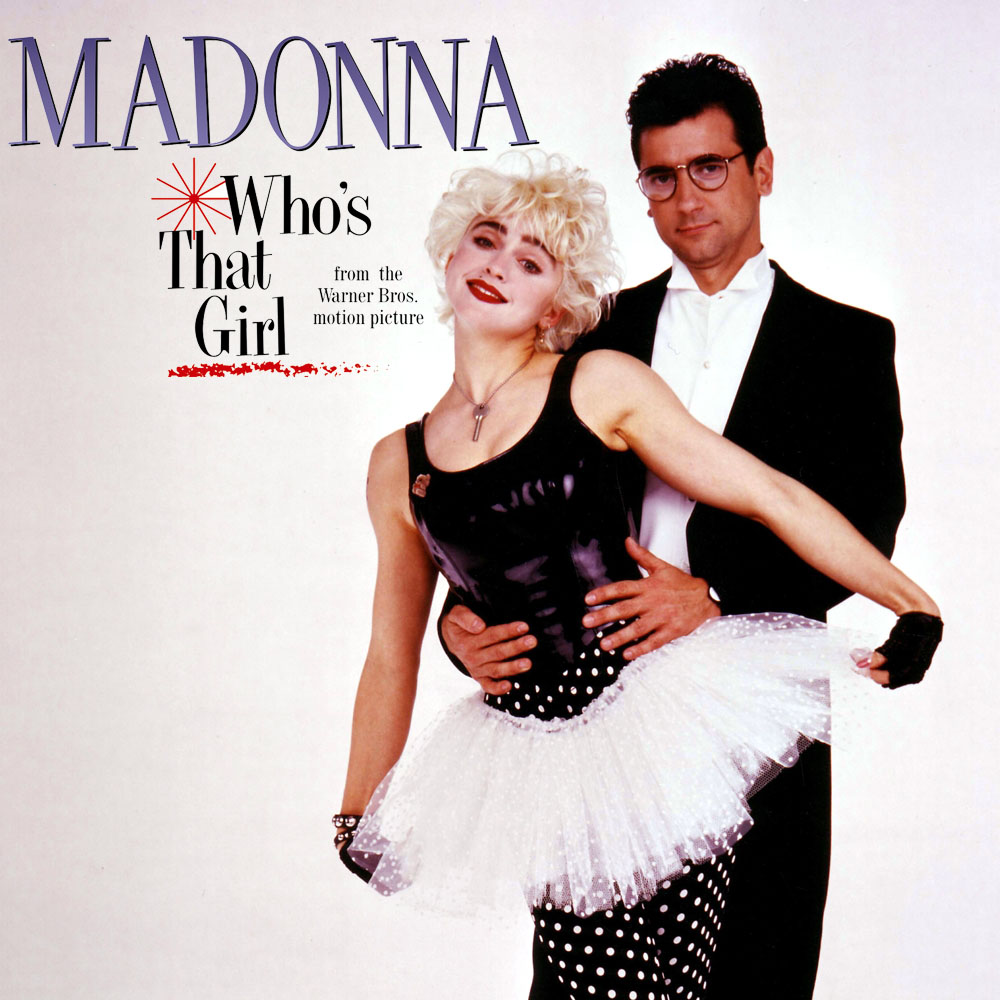
Speaking about his motivations for directing the film, Foley would say, “I was young, I was twenty-eight. So, being given the opportunity to work on a Warner Bros. film with a huge star was attractive to me for all the wrong reasons. Everyone has a bit of Hollywood lust in them. Warner Bros. approached me because they knew I knew Madonna and she had asked for me, and was convinced to do it. [Previous movie] At Close Range was a dark film, and going towards comedy was totally the wrong direction. But I didn’t care.”
Madonna, who was open about her lack of savvy when it came to choosing the right scripts, would annoy co-star Dunne no-end with her insouciant approach to takes, something that was somehow at odds with her attention to detail when it came to the micromanagement of her image. “[Madonna] likes her first take best. I think my best is around fourth.” Dunne would recall. “She always says, ‘You got it, you got it,’ and she was driving me crazy just like her character would. We had to make a compromise as to which take is the best.”
Who’s That Girl? recouped roughly a third of its $20,000,000 outlay, but the project proved incredibly fruitful for its star attraction. The movie’s titular soundtrack, released on July 21 of that year, sold six million copies worldwide, reaching the Billboard Top 10 in the US and eight other countries, the title track becoming her sixth number 1 single. The accompanying tour, which played to audiences totalling 1.6 million, grossed an incredible $25,000,000. It’s easy to forget just how big Madonna was in her 80s heyday.
August 14
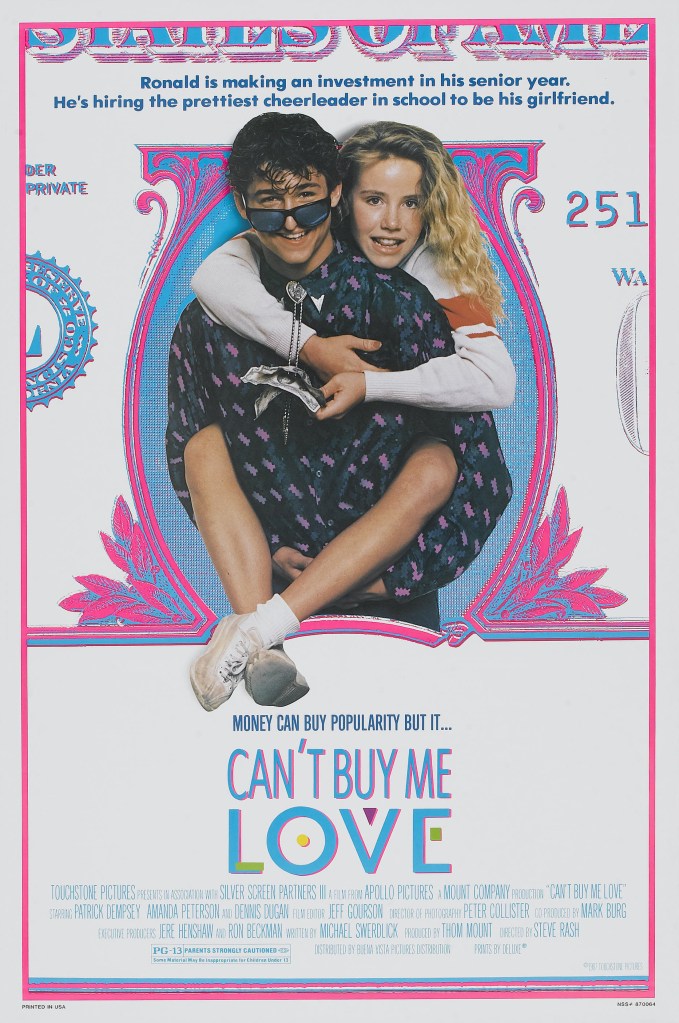
Taking its title from The Beatles song of the same name, Steve Rash’s romcom Can’t Buy Me Love, debuting on August 14, proved a box office hit in an era of hugely popular John Hughes teen films, though according to some of the industry’s leading critics, it didn’t live up to Hughes’s catalogue, or its domestic returns of more than $30,000,000 from a creative standpoint, Roger Ebert, who viewed the movie as being hugely materialistic, awarding Can’t Buy Me Love half a star from a possible four.
Caryn James of The New York Times was just as damning, writing, “Michael Swerdlick, the writer, and Steve Rash, the director … waste a chance to make the much deeper, funnier movie that strains to break through… [The film] has an identity crisis that’s a mirror-image of Ronald’s own. He thinks he wants popularity at any price, though he’s really a sincere guy. The film thinks it wants to be sincere, when all it truly wants is to be popular, just like the other kids’ movies, so it sells off its originality.”
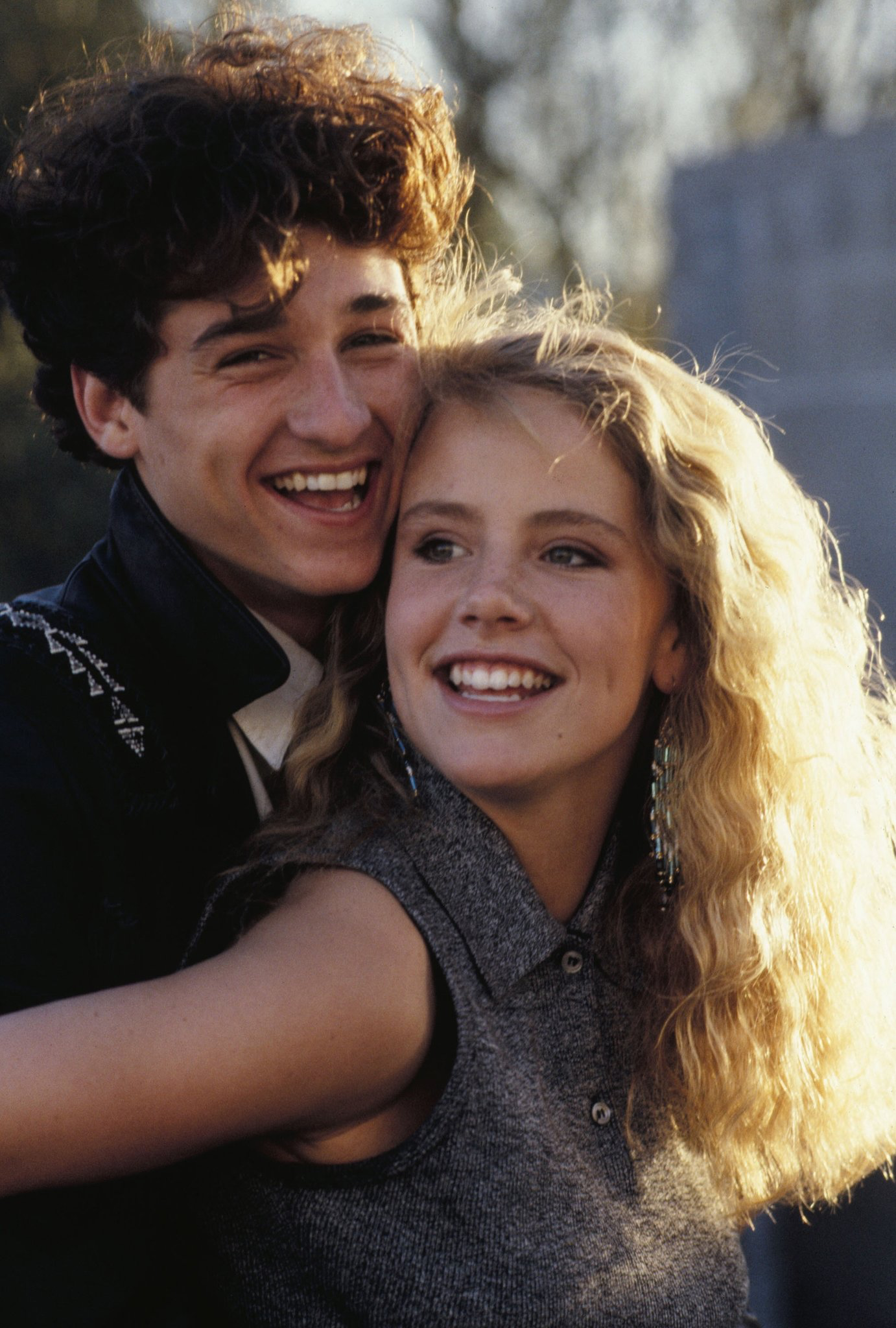
The story of a high school nerd who pays a drop dead gorgeous cheerleader $1000 to be his girlfriend for a month, the two ultimately overcoming high school popularity boundaries to fall head over heels in love, Can’t Buy Me Love starred Scream 3’s Patrick Dempsey and the late Amanda Peterson, whose life was tragically cut short in 2015 at the age of just 43.
Peterson, who had struggled with addiction early in life, was found dead at her home two days after she had been reported missing. While Peterson’s mother claimed that her daughter had been drug-free, the toxicology report determined that she had died from an accidental drug overdose following a hysterectomy. Peterson, who had been prescribed pain medication, was also taking morphine that she had obtained from a friend. The coroner’s report revealed a “morphine effect” that had triggered what would prove to be a fatal respiratory failure.
Peterson’s mental health had spiralled following an alleged rape when she was just 15. “She just felt so ashamed. She didn’t want people to know,” her mother, Sylvia Peterson, would reveal, “I think it affected her forever.” Amanda’s father, Dr James Peterson, also noticed huge changes in his daughter following the incident. “After that she became so defensive, less trusting. Some of the sparkle was gone.“
Peterson had retired from acting at the age of 23.
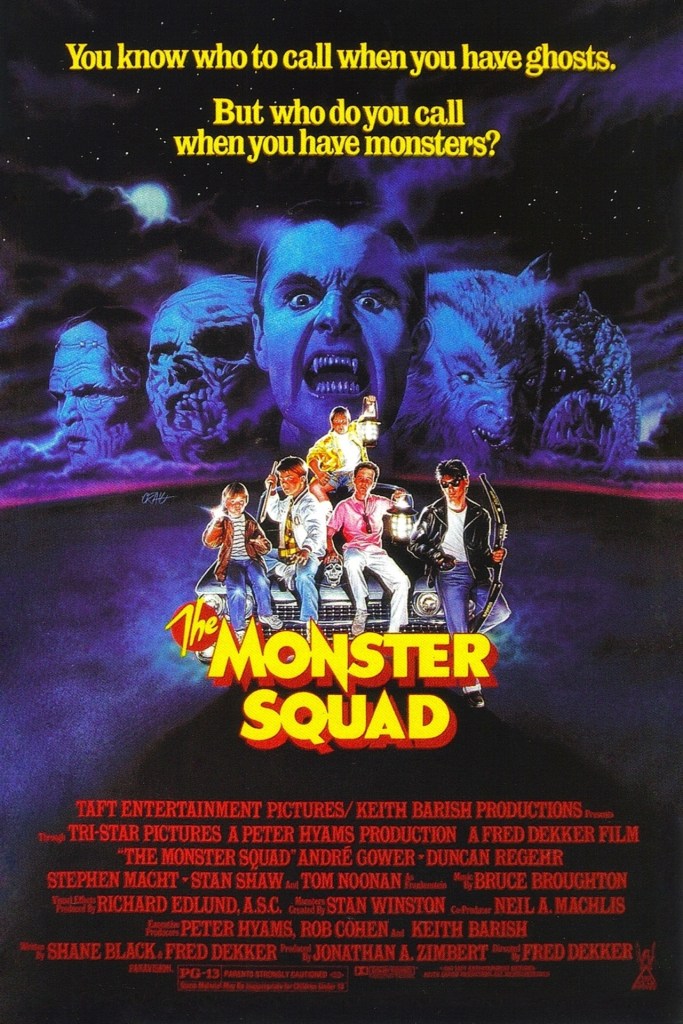
Cult horror director Fred Dekker turned to the hugely popular ‘kids in peril’ formula and the Universal Monsters of yore for cult horror comedy The Monster Squad, also released in the second week of August.
Penned by Dekker and Lethal Weapon scribe Shane Black, the movie has often been compared to Spielberg project The Goonies, featuring a group of child actors with a similar dynamic, but while lacking the blockbuster team of Spielberg, director Richard Donner and Chris Columbus, the movie is considered much darker and less micromanaged than its more famous and successful counterpart, receiving a PG-13 rating in the US and a 15 rating in the UK, something that alienated large portions of its target demographic.
Ironically, it was Spielberg who forced the founding of the PG-13 rating after two of his other projects, Joe Dante’s Gremlins and Indiana Jones and the Temple of Doom faced identical fates following a parental backlash. Rookie Black faced similar problems owing to his dark sensibilities with Lethal Weapon, his original script subjected to heavy re-writes by Donner go-to guy Jefferey Boam during the film’s initially tricky development.
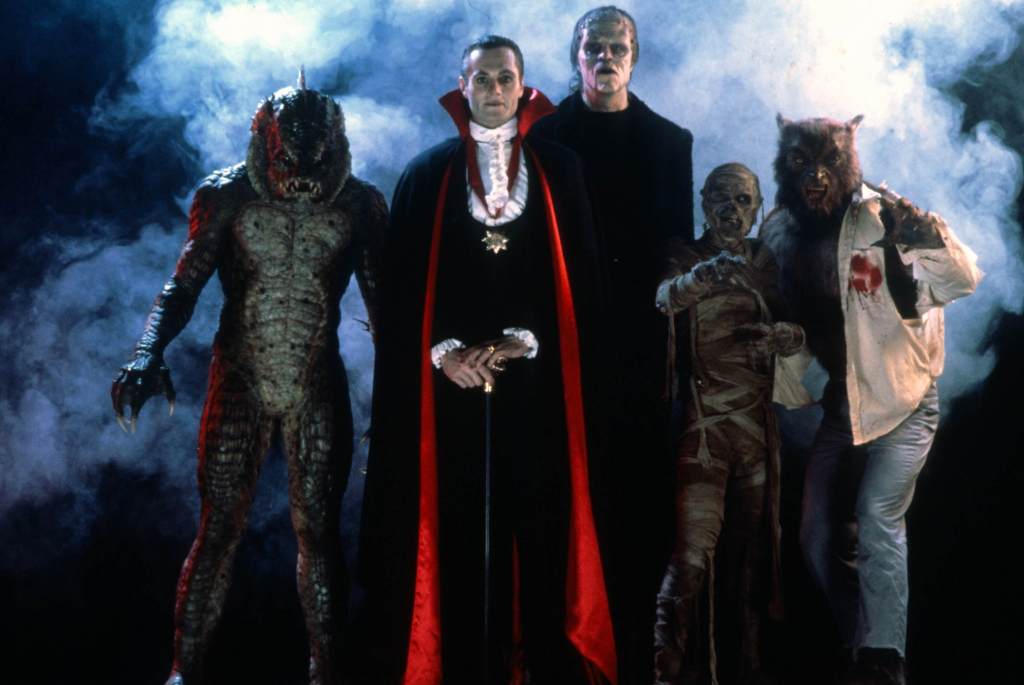
Unlike The Goonies, The Monster Squad featured a young cast that quickly fell into obscurity, Brent Chalem, who played the film’s answer to Chunk, tragically passing away from pneumonia at the age of just 22. The movie, which also stars Manhunter’s perennial creep Tom Noonan as Frankenstein’s monster, tells the story of a group of tween suburbanite horror fanatics who are tasked with banishing the returning Dracula and co and restoring the balance of good and evil by means of an amulet and an incantation from Van Helsing’s diary. Interestingly, Duncan Regehr narrowly beat a then unknown Liam Neeson to the role of monster leader Dracula.
The Monster Squad concept was devised after Dekker, looking to reboot a classic series such as The Little Rascals, decided on a crossover after watching and being taken with the 1948 Universal classic Abbott and Costello Meet Frankenstein. Produced by Taft Entertainment and distributed by Tri-Star Pictures, the project was initially pitched to Universal, who quickly passed on the idea.
For Universal it was a bullet dodged, The Monster Squad managing a paltry $3,800,000 against a budget of $14,000,000, something Dekker attributed to Taft’s poor grasp on feel-good marketing. The movie has since experienced something of a renaissance, becoming a cult classic for millennials high on 80s nostalgia.
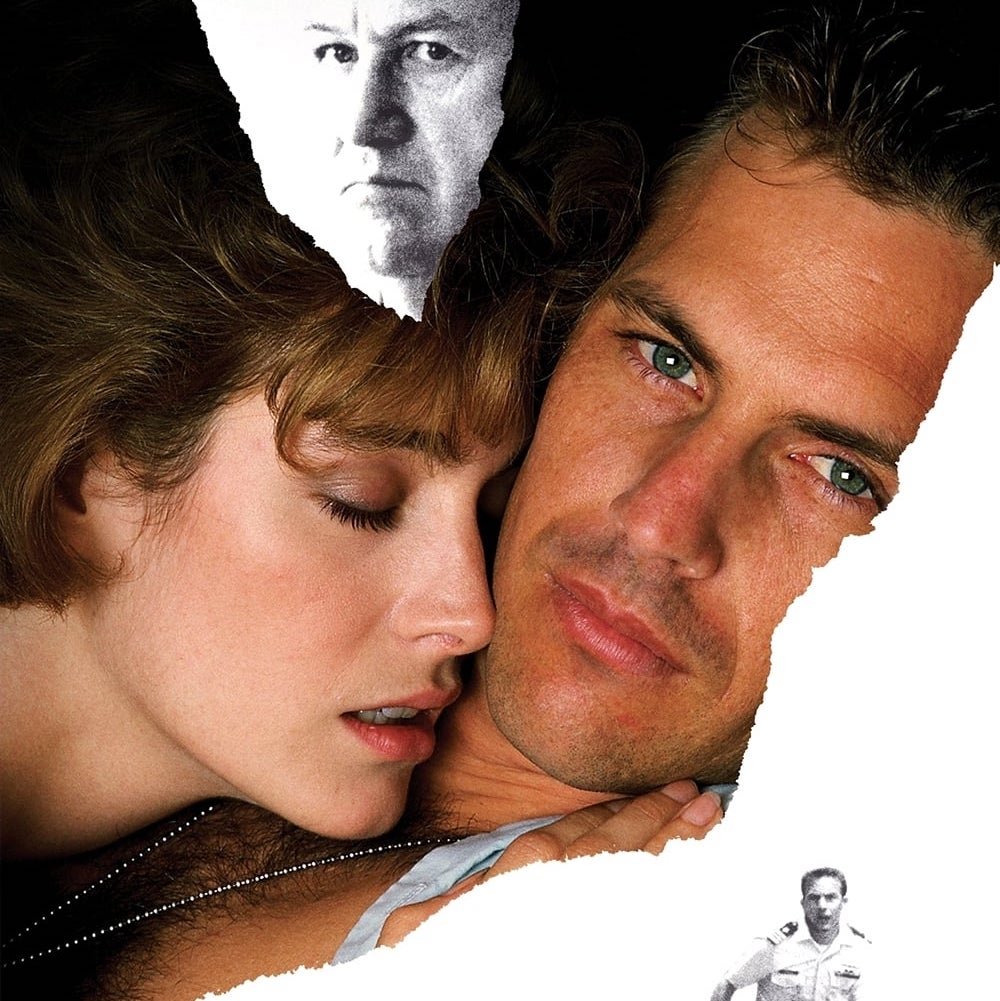
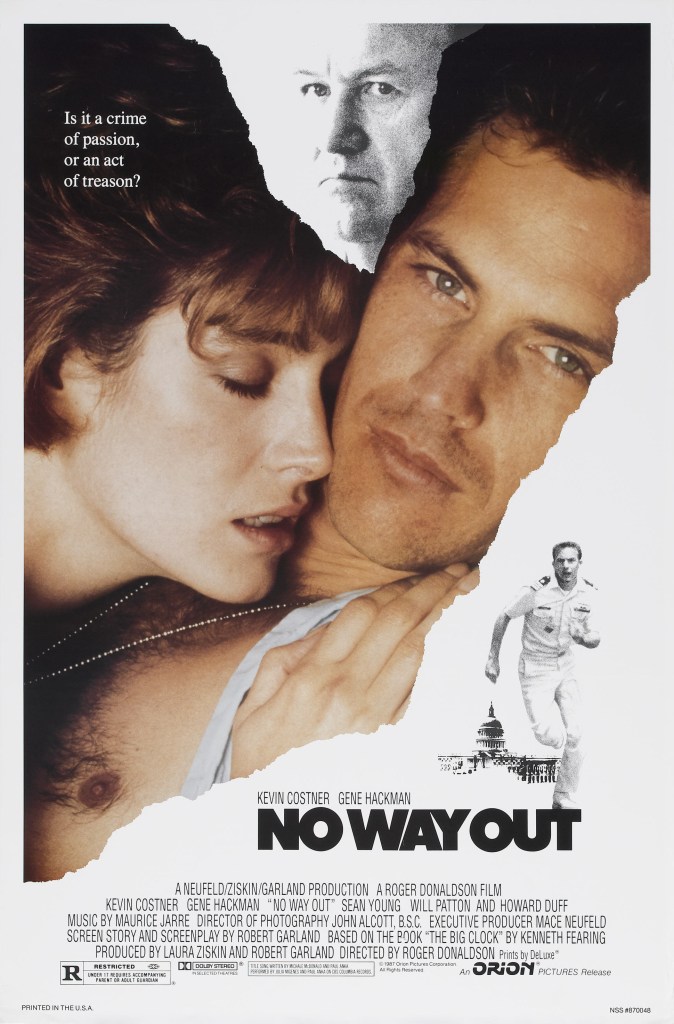
The brilliant and already veteran Gene Hackman would star alongside the hugely popular Kevin Costner in Roger Donaldson’s neo-noir political action thriller No Way Out, released nationwide to strong reviews on August 14. The film would debut at number two in the US, managing solid box office returns of $35,500,000 on a budget of approximately $15,000,000
Described by Roger Ebert as a “terrifying jigsaw puzzle” that is “truly labyrinthine and ingenious” and made in the Jagged Edge mode, the film, based on Kenneth Fearing’s 1946 novel “The Big Clock”, was dedicated to director of photography John Alcott, most famous for his collaborations with legendary director Stanley Kubrick, who died on July 28, 1986, after principal photography had wrapped. The one-time Oscar winner (Barry Lyndon) also worked on 2001: A Space Odyssey, A Clockwork Orange and The Shining. Quite the resume.
Alcott was also lauded for his work on Roger Spottiswoode’s golden age Canadian slasher Terror Train, devising a unique and ingenious method of lighting which solved the shoot’s locational restraints, allowing the movie a unique atmosphere that set it apart from the abundance of Halloween clones flooding the market. Alcott would rewire the entire train, mounting individual dimmers on the carriage car exteriors, thereby altering the efficiency of the lighting process. Alcott would also draw on his time working with Kubrick, utilizing the same small lens used on Barry Lydon to catch some of the trickier shots of working in such a confined space.
The story of an elaborate cover-up and witch-hunt following the accidental manslaughter of a politician’s mistress, the movie taps into the Hitchcockian set-up of a wrongly accused man who is forced to prove his own innocence despite almost insurmountable evidence to the contrary. Costner, who was praised for his complex performance, also performed his own stunts in the movie, one particular scene, which required the actor to death-defyingly roll of the hood of a car, raising the ire of an insurance executive, who according to the movie’s original press material lambasted director Donaldson, telling him “Don’t you ever… ever… EVER… do that again!”
Many consider Costner’s performance in No Way Out as the one that launched his career as a successful leading man, despite starring in Brian De Palma’s true crime gangster epic The Untouchables that same year.
August 21
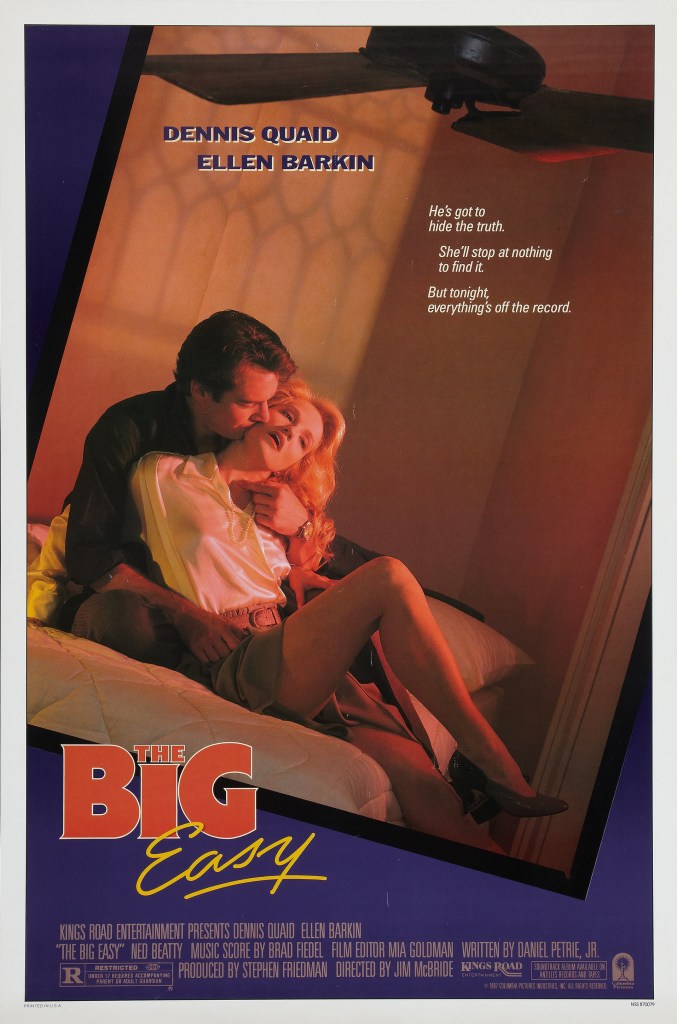
Later adapted into a short-lived TV series of the same name, Jim McBride’s critically acclaimed neo-noir thriller The Big Easy, famous for featuring one of the most erotic scenes of the era, arrived in theatres on August 21, though a limited release impacted its opening weekend, the film managing a paltry $353,259. Though it would recover with a not too shabby gross of $17,685,307, the movie was only in circulation for five weeks, hampering its commercial potential.
Featuring an exceptional warts and all depiction of New Orleans, The Big Easy, which stars Dennis Quaid and Ellen Barkin as a romantically entangled Detective Lieutenant and a state District Attorney embroiled in an investigation into alleged police corruption, was praised for its study of a series of deeply complex characters that includes Ned Beatty’s Captain Jack Kellom, John Goodman’s Detective Sergeant Andre DeSoto and Ebbe Roe Smith’s Detective Ed Dodge, all of whom are involved in a spate of murders as a cover-up for an illegal heroin smuggling operation. Former real-life New Orleans district attorney Jim Garrison, famous for his JFK assassination conspiracy theories, also makes a cameo appearance as a judge.
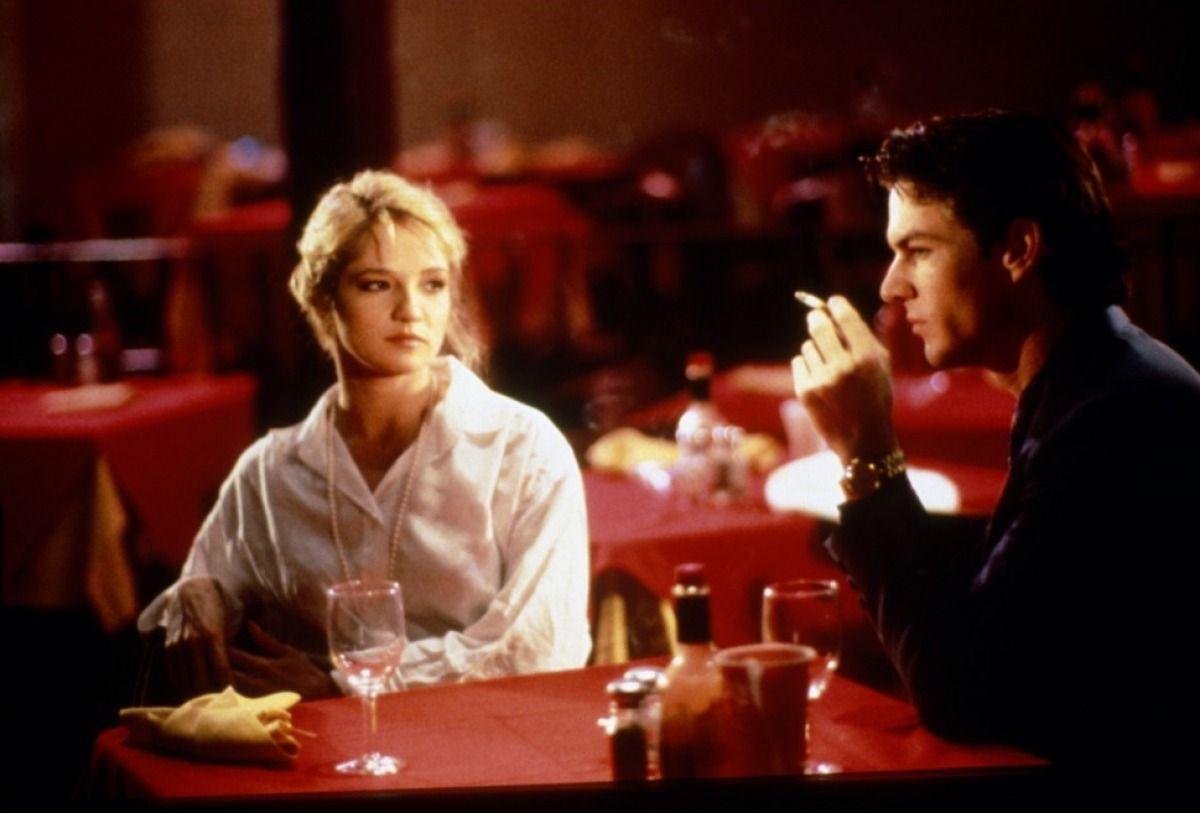
Gaining momentum on the 1986 film festival circuit, The Big Easy was picked up for distribution by Columbia Pictures, and, according to Sundance founder Robert Redford, was the first movie to be directly sold there. Originally titled The ‘Windy City’, the film was initially set in Chicago until McBride had a change of heart. “I came in just at the time they changed it,” Quaid would recall. “… I came and had a meeting with McBride and [producer] Steve Friedman, and in that meeting McBride said he would like to change the script to New Orleans and I immediately perked up because I’d always wanted to do a film there… the town is so rich and it had never been done right on film…they missed the real flavour of the town, and the reason I wanted to do the picture is because I believed McBride could portray New Orleans right for once because of what he did on Breathless, where he portrayed Los Angeles in a way I’ve never seen before.”
Both Quaid and Barkin would cite The Big Easy as one of the best films they ever starred in.
Receiving a maximum four stars from Roger Ebert, The Big Easy would receive mostly positive reviews, Sheila Benson of the Los Angeles Times writing, “Screenwriter Daniel Petrie Jr. sets up the conflict, and director Jim McBride fleshes it out with devastating, sexy assurance,” though Vincent Canby of The New York times wasn’t quite so impressed, particularly with McBride’s lack of commercial savvy. “Remy and Anne are made for each other, or would have been if The Big Easy were the sophisticated comedy it could have been,” he would lament. “[The Big Easy] was directed by Jim McBride, who one day is going to come up with a commercial movie that works all the way through, and not just in patches.”
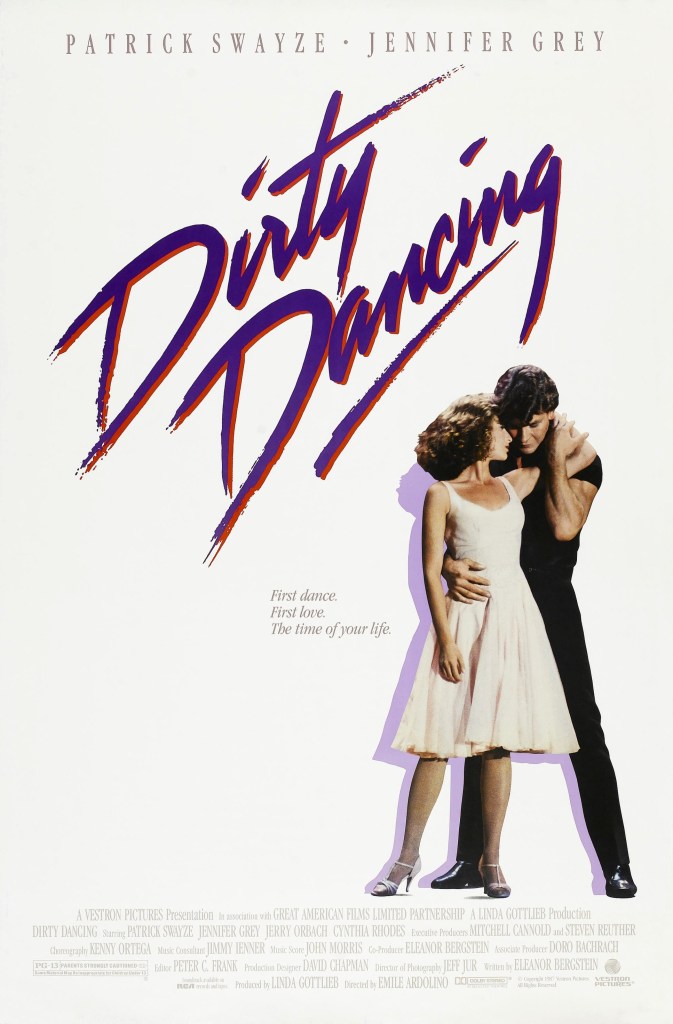
August’s runaway box office winner was cult romantic drama Dirty Dancing. While Emile Ardolino’s debut feature would prove the 12th most successful of the year with a domestic gross of $55,913,006, it truly shone overseas, becoming the third most successful movie worldwide with a gross of $213,893,795, even edging out Timothy Dalton’s James Bond debut The Living Daylights ($191,199,996). Only Adrian Lyne’s controversial thriller Fatal Attraction ($320,099,997) and Martin Brest’s blockbuster action sequel Beverly Hills Cop II ($276,665,036) would fare better in 1987.
A tale of class divide romance, Dirty Dancing tells the story of Frances ‘Baby’ Houseman (Jennifer Grey), a 17-year-old vacationer who falls for Patrick Swayze’s dance instructor, Johnny Castle, a working class outsider demeaned by resort owner and Houseman family friend Max Kellerman. After an unwanted pregnancy, a botched abortion and a case of mistaken paternal identity, Baby’s father forbids his daughter’s romance until the truth inevitably surfaces courtesy of a series of convenient micro dramas, leading to one of the most iconic dance finales in movie history.
Receiving mediocre-to-poor reviews from critics, including a scathing one star from Roger Ebert, who labelled the film a “tired and relentlessly predictable story of love between kids from different backgrounds,” Dirty Dancing would become a cultural phenomenon in the ensuing years, particularly among female audiences. Retrospective reviews were much more positive, with special mention given to the movie’s dance choreography. It has also been praised by abortion rights activists for its handling of such themes on a mainstream platform.

“Most movies about abortion are about a woman making a pregnancy decision. With Dirty Dancing, the decision has already been made, and the entire plot of the movie is driven by the protagonists’ desire to help Penny access the abortion,” claimed sociologist Dr. Gretchen Sisson. “No character ever questions Penny’s decision to get an abortion, and even Dr. Houseman treats Penny with compassion, provides follow-up care, and assures her that she’ll be able to have children in the future. This makes it unique among abortion movies to this day.”
A huge part of Dirty Dancing‘s appeal comes from its titular soundtrack, particularly the Academy Award-winning ‘The Time of My Life’, recorded by Bill Medley and Jennifer Warnes, which also bagged a Golden Globe for Best Original Song and a 1988 Grammy Award for Best Pop Performance by a Duo or Group. The Dirty Dancing album spent 18 weeks at number one on the Billboard 200 album sales charts. Selling more than 32 million copies worldwide, it went platinum an incredible 14 times. It even sparked a 1988 music tour titled Dirty Dancing: Live in Concert and the 2004 musical Dirty Dancing: The Classic Story on Stage.
Quite the feat for a low-key sleeper hit made on a budget of only $4,500,000. Find me a comparable film that can match that in today’s CGI-heavy, superhero-laden climate.
August 28
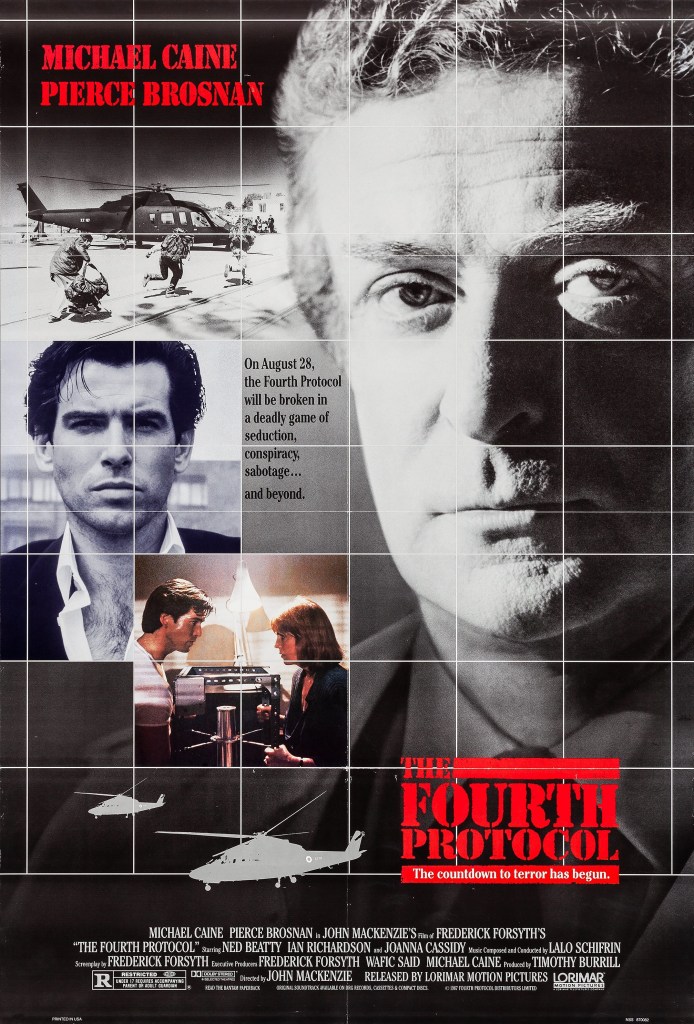
John Mackenzie’s British Cold War Spy Thriller The Fourth Protocol, released on August 28, stars Michael Caine as John Preston, a British Agent tasked with preventing the Russians from detonating a nuclear explosion next to an American base in the UK, a covert move designed to destroy relations between the long-standing allies at a time of ideological warfare.
The movie marked the end of a fine creative period for the actor, including memorable turns in Neil Jordan’s Academy Award nominated neo-noir crime drama Mona Lisa and Woody Allen’s critically acclaimed comedy-drama Hannah and Her Sisters, for which he bagged an Oscar for Best Supporting Actor. It was also the beginning of a brief critical dip that included roles in middling American comedies Surrender and Without a clue, and, most famously, a deeply regrettable leading role in toothless franchise killer Jaws: The Revenge, which famously led the actor to retort, “I have never seen the film, but by all accounts it was terrible. However, I have seen the house that it built, and it is terrific.” Charming!
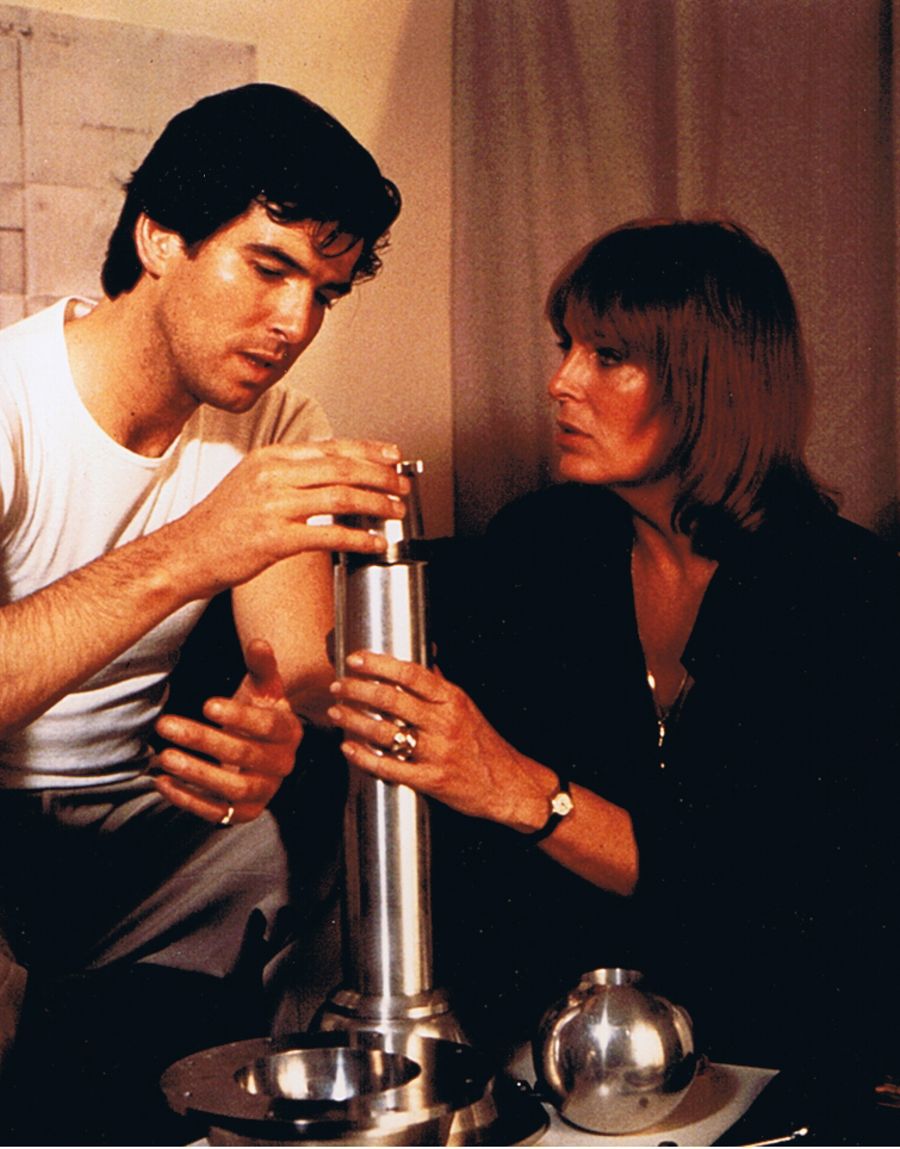
Based on Frederick Forsyth’s 1984 novel of the same name, The Fourth Protocol would co-star an up-and-coming Pierce Brosnan, who received special praise for his dark, brooding turn as key Russian operative Major Valeri Alekseyevich Petrofsky/James Edward Ross, Roger Ebert calling it “the best performance he has ever given”. Brosnan perhaps had special motivation owing to the fact that he famously missed out on becoming the next James Bond, Timothy Dalton instead landing the lead in The Living Daylights, released two months prior, and 1989’s License to Kill due to contractual obligations owing to an upcoming series of spy-fi TV drama Remington Steele. Brosnan eventually bagged the role of the irrepressible 007 for 1995’s Goldeneye, but it must have hurt knowing that Dalton was shooting The Living Daylights at the exact same time.
A distinctly low-key affair, The Fourth Protocol debuted at number 4 at the US box office, with overall domestic returns of $3,600,000, while The Living Daylights set a record 3-day opening for a Bond film with an estimated $11,000,000. Ouch!
Narrowing events to focus on a single platoon with a specific operation, John Irvin’s late-to-the-party Vietnam movie Hamburger Hill, also released during the final week of August, was praised for its attention to detail, Hal Hinson of The Washington Post crediting Irvin and his crew for what was described as a “deeply affecting, highly accomplished film”.
The proof was most certainly in the pudding, producer Marica Nasatir developing the movie based on the experiences of her son, who served in Vietnam, as did writer and co-producer James Carabatsos, who spent five years interviewing soldiers involved in combat as research for the film. Irvin also had vast knowledge of one of the most troublesome and regrettable wars in history, working on a number of documentaries in Vietnam in 1969.
Box office returns were not so positive, Hamburger Hill managing a not-so-impressive $13,800,000 during what proved to be a mini boom period for a second wave of ‘Nam’ films that included Stanley Kubrick’s cold and emotionally affecting Full Metal Jacket ($120,000,000) and Oliver Stone’s multi Oscar-winning Platoon ($138,000,000), movies that kept their lower profile contemporary firmly in the shadows.
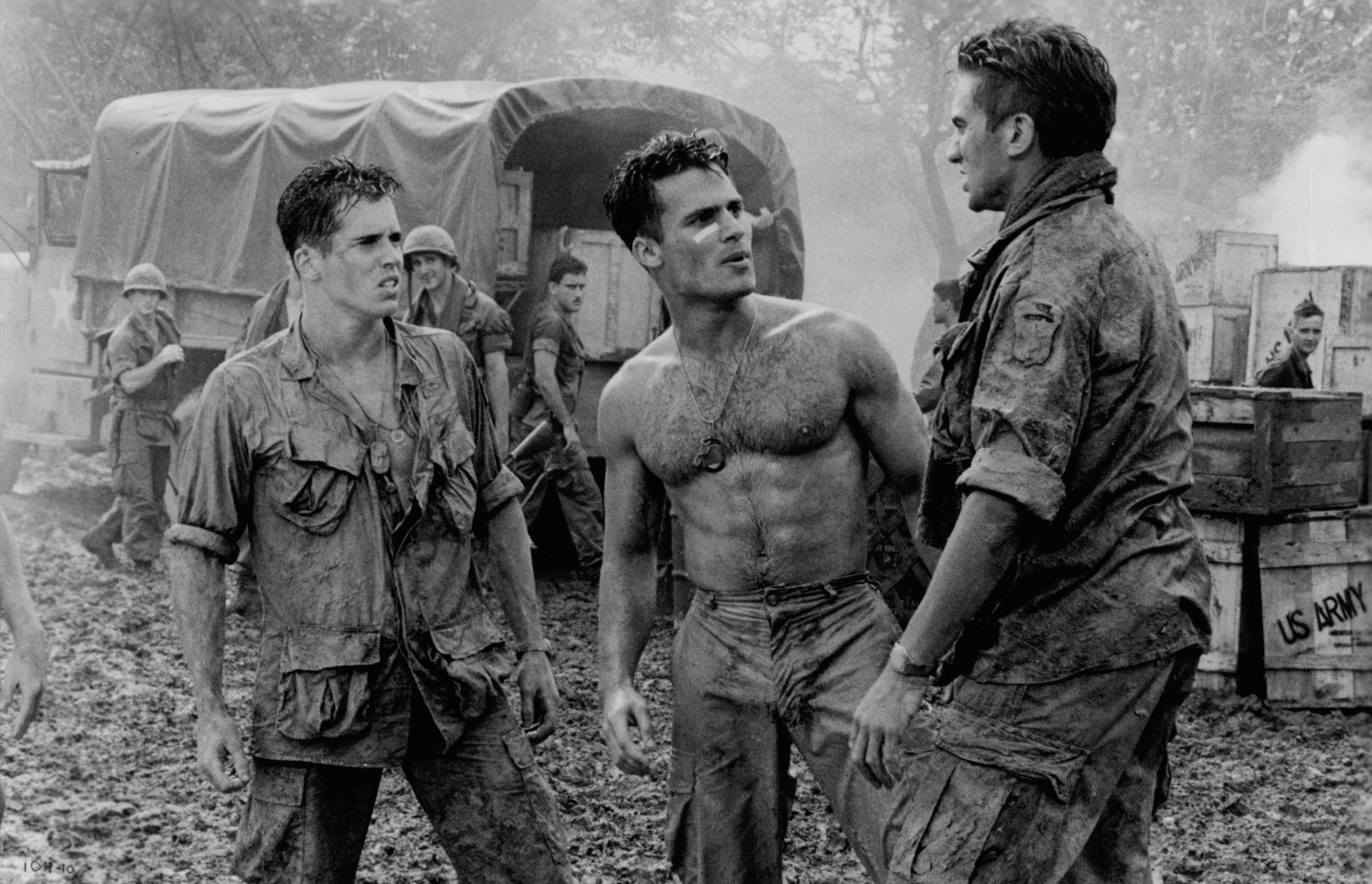
Paramount, who initially passed on the project, were criticized for their lack of bravery, Irvin believing that Hamburger Hill could have been released prior to its counterparts had they not waited to see how Platoon performed at a prickly time for the subject matter. Kubrick’s pull would see the film’s debut delayed further, the director pushing for Full Metal Jacket to be released first.
In a 2001 interview, Irvin would claim, “Actually, Hamburger Hill could have come out before Platoon. When I wanted to make the movie, every studio turned us down. Paramount said: This is not a Paramount picture. After we made the film independently, they said: This is a Paramount picture. We had raised the money for it through foreign sales and off we were to the Philippines. Having made the film, Paramount wanted to wait to see how Platoon did, because Vietnam was considered a very unpopular subject. Of course, Platoon came out and won Oscars. Then they said: We can’t come out so soon after Platoon, because audiences will be saturated. So, they delayed the release. At that point, Hamburger Hill was being processed in a laboratory in London. And the grader of the film was also Stanley Kubrick’s grader. Now, Kubrick was holding back the release of Full Metal Jacket for the same reason. The grader, being a friend of Kubrick’s, said to Stanley: You’ve got to get yours out, because Hamburger Hill is not half a bad film. Have a look at it. He actually took the print of Hamburger Hill in the middle of the night and screened it for Stanley in his screening room, after which Kubrick rang up Warner Brothers and said: You’ve got to get Full Metal Jacket out within two weeks. So, Hamburger Hill was pushed back yet again. We could have come out first, if Paramount had been a bit braver.”
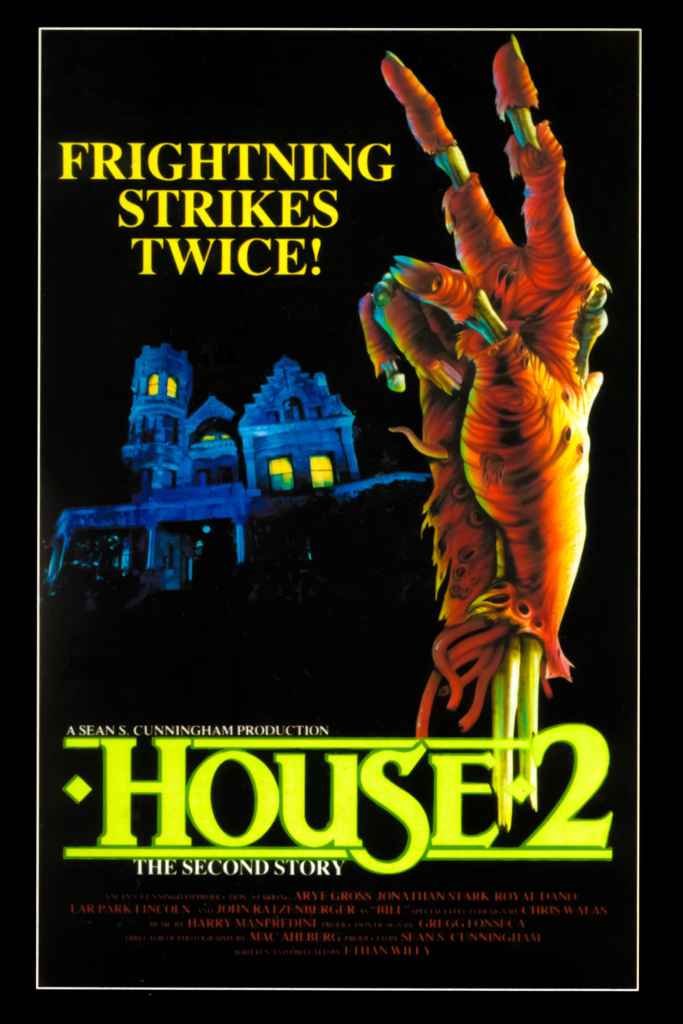
In an era of numbered sequel overindulgence, August was treated to a solitary effort, Friday the 13th creator Sean Cunningham’s initial punt at another hit franchise House II: The Second Story rounding off the month with a lighter, more comedic approach to the ever popular horror genre.
Written and directed by Ethan Wiley, House II: The Second Story is a standalone outing that has no direct connection to Steve Miner’s original 1985 hit House, also penned by Wiley, featuring a plot and characters that are completely unrelated. Developed from an original story by Fred Dekker, the film even takes place at a different location, despite an uncannily familiar promotional poster and a tagline that reads, ‘Frightening Strikes Twice!’
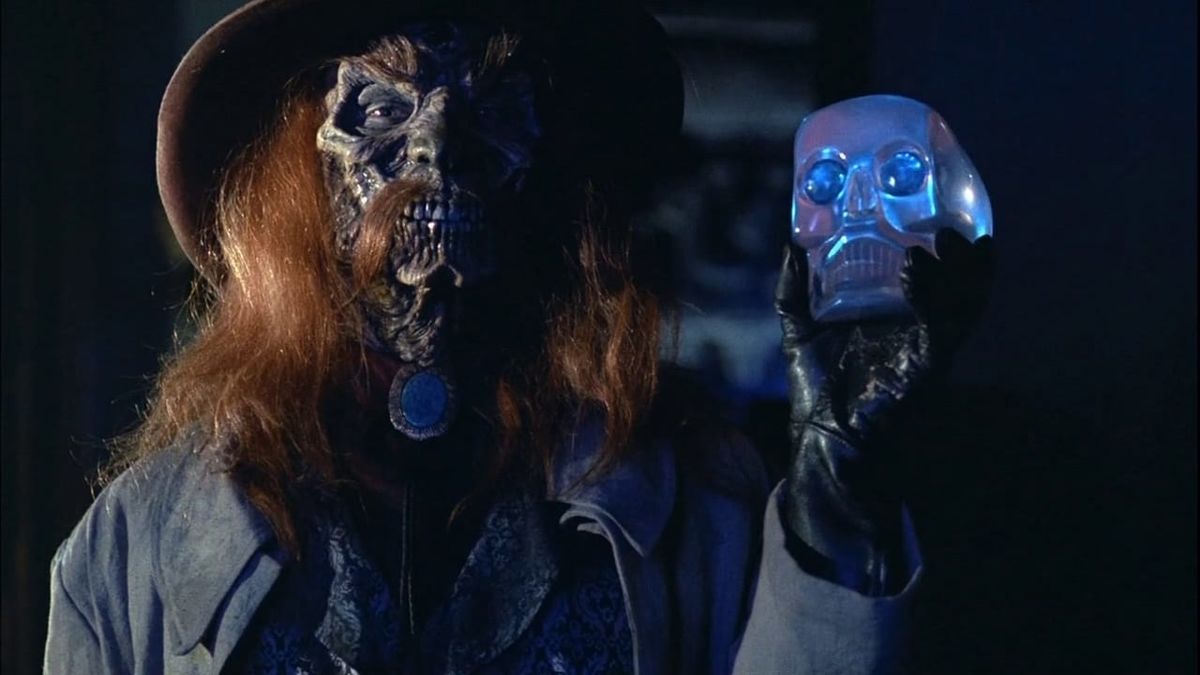
Starring Arye Gross and Jonathan Stark as a pair of yuppies who decide to the dig up the corpse of an ancestor in search of a crystal skull, the movie digresses into a time-travel adventure that sees the two friends travel to the Jurassic age, the Aztec Empire, and eventually the Wild West in what was a huge departure from the original movie’s tale of a Vietnam vet turned horror novelist returning to his aunt’s home to do battle with evil spirits. The movie was even adapted into a Marvel Comics release.
This being a Sean Cunningham production, the movie also stars Friday the 13th Part VII‘s final girl Lar Park Lincoln, several pieces of music recycled from Friday the 13th Part VI, released the previous year.
Though disregarded by critics, House II: The Second Story, which managed a serviceable $10,000,000 on a budget of only $3,000,000, would go on to spawn two further sequels, though 1989’s House III: The Horror Show and 1992’s deliciously titled House IV: The Repossession barely made a dent.
In the tradition of the first sequel, House III, the story of a back-from-the-dead serial killer, held no narrative connection to the previous movie, and while House IV did feature a returning William Katt as original House protagonist Roger Cobb, the links were loose at best, resulting in one of the most baffling horror franchises of the era.
I think I’m due a marathon.







 vhsrevival.com