


Avildsen’s superlative underdog story taps out with a whimper as the ageless Ralph Macchio finally outgrows his gi
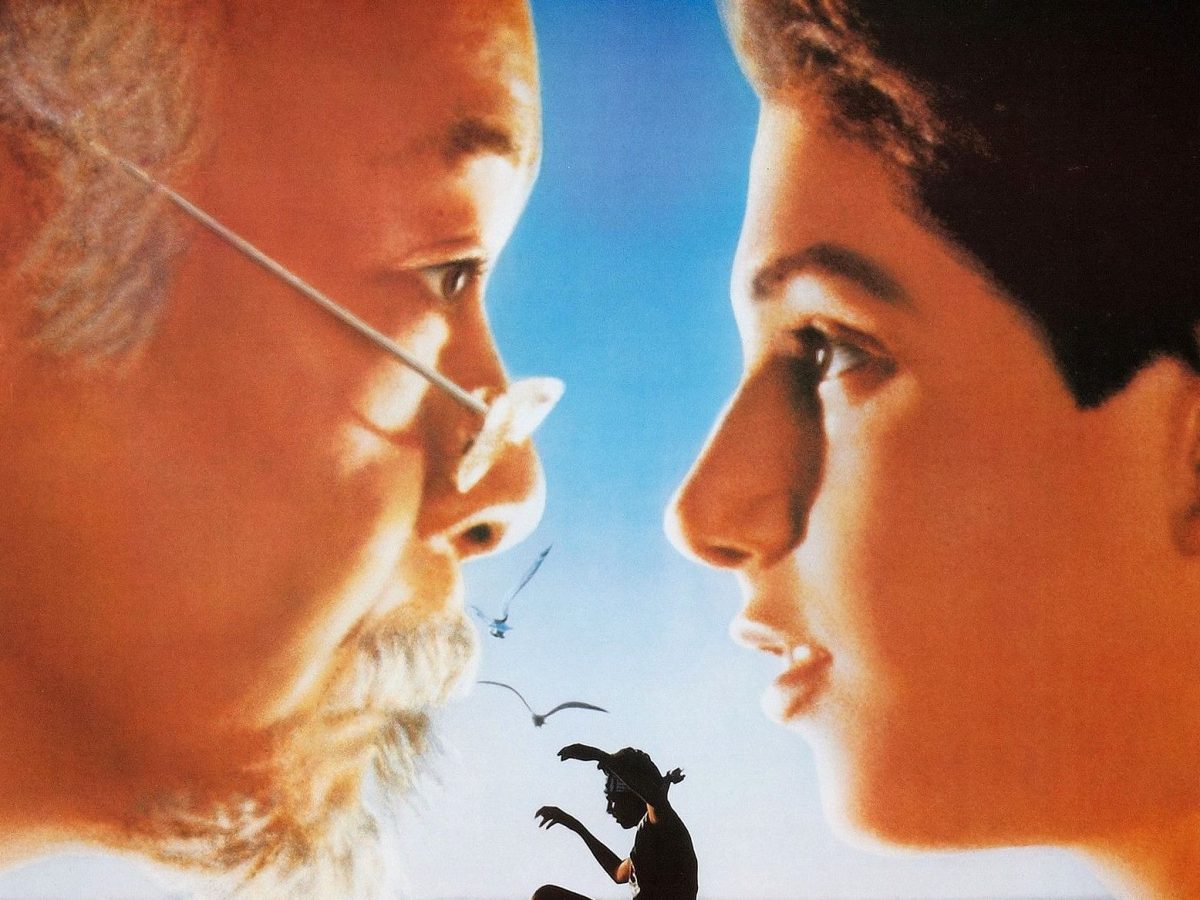
Generally speaking, a good sequel retains the winning elements that endeared us to an original movie while offering something fresh and rewarding. The Karate Kid was one of the surprise hits of 1984, far surpassing its familiar set-up and corny title with an endearing fish out of water tale that had heart in abundance. So impressed was an originally dubious Roger Ebert that he correctly predicted an Oscar nomination for star performer and former comedian Pat Morita, much to the mocking delight of long-time partner Gene Siskel, who saw the movie as predictable and uninspired. In 1985, The Karate Kid became the biggest VHS rental of the year. The rest, as they say, is history.
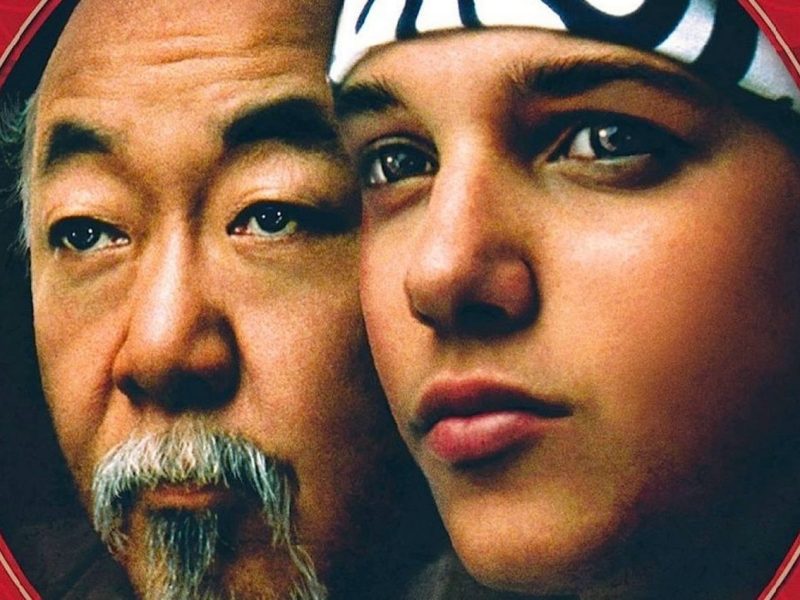
Beneath the sweeping stereotypes and commercial gimmickry, The Karate Kid is a gem of a movie — the story of bullied teenager Daniel Larusso (Ralph Macchio) and his unlikely friendship with surrogate father figure Mr Miyagi (Morita), an apartment complex handyman who uses martial arts as a platform to teach his student the values of life. The success of the movie guaranteed a sequel, and while The Karate Kid Part II lacked the freshness and underdog spirit of the original, it featured great locations and immaculate staging, revealing more about Miyagi’s past and how he evolved into the sagacious martial arts master who we would quickly grow to admire. It showed the almost mystical figure’s human side, ultimately bringing the two characters closer together.
Even rarer than a rewarding sequel is a rewarding trilogy. In 21st century cinema, trilogies have become somewhat quaint, replaced by reboots, seemingly endless franchises and whole cinematic universes with truly limitless lifespans, but I recall a time when the once-rare trilogy was the subject of almost scholastic debate. The same questions always arose. Which did you prefer? The Alien trilogy, the Die Hard trilogy, the Lethal Weapon trilogy? Further sequels have since made such questions somewhat moot, as would Christopher Cain’s highly unnecessary The Next Karate Kid starring a young Hilary Swank, but John G. Avildsen’s original trilogy never came up in those discussions, the main reason being 1989‘s belated and equally unnecessary The Karate Kid Part III.

By the time The Karate Kid part III hit theatres, Ralph Macchio was 27 years old. No longer the dimpled, adorable type squirming in the armlock of adolescence, an overweight Macchio was finally beginning to show his age, the dynamic of the movie doomed as a consequence. This was made even more icky by the fact that love interest Robin Lively was only 16 at the time of filming and still a minor, which meant that her role was altered to place her character, Jessica Andrews, a Tiffany lookalike who loiters like a shy and gullible schoolgirl around the movie’s central narrative, firmly in friend territory. It’s all so tentative and peculiar and just a little disconcerting. Add to this a ludicrous story, forced moralities and a contrived screenplay which only serves to sully the integrity of its characters, and you’re in for a mostly dissatisfying end to what could have been one of the finest trilogies of the decade.
You know, this is the 80s, Mr. Miyagi. You can’t be so damn passive!
Daniel Larusso
Despite its freshly exotic feel, The Karate Kid Part II had already begun to show the effects of sequelitus. This was most notable in the film’s opening scenes as Daniel and Miyagi rushed to fill in the narrative blanks before fleeing to the sunny shores of Okinawa (Hawaii if you want to get technical), but more debilitating than rushed explanations for the absence of actress Elizabeth Schue, who had just been accepted into Harvard and was unable to rekindle her onscreen courtship with LaRusso, was that anticlimactic feeling that follows any successful underdog story. Daniel had found balance and love in what proved to be a defining summer, the highs of that victory and the immediate creative fallout sending him, and his audience, crashing back down to Earth. The fact that Ali had suddenly run off with the captain of the football team, though true to the fickle nature of young love, was a sobering notion indeed, the seductive spell of their endearing relationship undone almost immediately.
Though featuring a token romance that saw the series quickly descend into formula for the sake of Hollywood’s mega bucks, the first sequel was a fair ride that, an absent Ali notwithstanding, refused to jeopardise character integrity, Daniel’s rebound fling on foreign shores understandable and actually rather touching. Much of that was due to the undeniable chemistry between Macchio and Asian heartbreaker Tamlyn Tomita, who, thanks to the lush cinematography of James Crabe, Avildsen’s Fairytale direction, Bill Conti’s typically magical score and a memorable hit single by Peter Cetera that flooded MTV screens, enjoyed a more cinematic courtship that still maintained some of the everyday sweetness of the original movie. The fact that Daniel’s holiday fling was obviously short-term was both good and bad news for a potential third outing. There would be no tacked-on story explaining away Daniel’s love interest this time, but a third fling within a year would be hard to buy into unless it was meaningful in a way that offered at least a modicum of closure for the trilogy. Sadly, it doesn’t come close.
Ultimately, The Karate Kid Part II would prove to be Miyagi’s story. Away from the complacency of everyday Los Angeles, in many ways Daniel became Miyagi’s rock as he was forced to confront the ghosts of his past, but Daniel’s underdog story was mostly a watered-down re-tread with fresh faces. The Karate Kid Part III is guilty of the same crimes and then some. After the heady events of his homeland return, Miyagi is facing joblessness and bankruptcy until a typically loyal and irrational Daniel sacrifices his college fund to realise his mentor’s dream — to own his own Bonsai store. Anyone with even a modicum of business sense would tell you that such a project was doomed to failure at a time when Reagan’s global model was pushing small businesses out to sea, never mind a cautious martial arts master with wisdom coming out of his ears. The original Miyagi would never have been so short-sighted, especially with the future of his student on the line. He’s just spent the best part of eighteen months teaching Daniel responsibility, and now he’s willing to raid his piggy bank for a run-down store specialising in niche products.

Even dumber is Daniel himself, who seems to have forgotten pretty much everything Miyagi-Do has taught him. Daniel suffers just as much as his sensei in terms of character integrity. His holiday fling with Tomita’s Kumiko may have tread familiar ground to some extent, but the lure of Japanese tradition and cross-cultural discovery kept affairs somewhat fresh. His quasi-romance with Jessica is severely stale. It’s a huge comedown from Daniel’s first real holiday fling, the kind of memory that will last a lifetime, and the relatable magic of first love Ali is totally absent. Thanks to its legal limitations (the kind that make it almost completely unnecessary), it’s more bizarre than anything, which ironically proves the most interesting element of what is uninspired, paint-by-numbers stuff. LaRusso becomes Jessica’s Miyagi, teaching her the ways of his master while simultaneously turning his back on them after Miyagi refuses to train him for the returning All Valley Championship. Miyagi reasons that his student has nothing left to prove. In a storyline sense, he’s bang on the money.
Even Daniel and Jessica’s coming together is rushed and tacked-on. Jessica’s family run a similarly doomed store operating directly across the street from Miyagi’s, which coincidentally specialises in painting plant pots, a fact that gives the terminally precocious Daniel a quite staggering idea. Jessica agrees to take part in their moronic do or die venture, and with the aid of a few crappy tables and flimsy Japanese decorations, Miyagi’s store is up and running in record time. With the dynamic of our dysfunctional family developing nicely, things seem to be falling into place without a hitch, the road ahead finally free of all obstacles after months of senseless conflict. They should have known better.
It seems that our favourite duo can’t turn a corner without getting mixed up in some karate-related drama, and we quickly discover that Miyagi is not the only one who’s fallen on hard times. After his appalling behaviour following the previous All Valley Karate Championship, former enemy and Cobra Kai proprietor John Kreese (Kove) is ostracised from the community, losing his business and hitting the bottle as his 80s slogan of striking first fizzles without a trace. Luckily for him, former Vietnam buddy and megalomaniacal entrepreneur, Terry Silver (Thomas Ian Griffith), is there to lend a nefarious hand, funding an exotic oversees vacation for his friend in an effort to sober him up (in reality, Kove had prior commitments that prohibited him from taking part beyond a few scenes, another reason why the movie often seems patched together).
Is okay lose to opponent! Must not lose to fear!
Mr. Miyagi
Taking time out from his millionaire lifestyle and toxic waste-dumping discrepancies, Terry sets about plotting the perfect act of vengeance, one so elaborate it borders on super villainy. His first move is to hire hotshot fighter Mike Barnes to antagonise Daniel into defending his title. Once Daniel has been suitably shaken, Silver steps in to lend a helping hand for their not-so-epic encounter, exploiting Daniel’s relationship with his estranged mentor by introducing him to a series of brutal, self-defeating training methods that are designed to cripple him for the big tournament. Under Terry’s tutelage, Daniel becomes the kind of bully that his newly relinquished Miyagi-Do philosophies go directly against, ruthlessly laying out a stooge who Silver pays to come onto Jessica at a local dance. Not only has Daniel forgotten the moral teachings of his sensei, he’s on the side of the enemy. He’s actually joined Cobra Kai!

I don’t buy Silver’s role, either. Sure, the horrors of war can form lifelong, do-or-die bonds that last forever, but would a millionaire entrepreneur really stoop so low as to systematically destroy a teenage boy, hanging around school dances with the contrivance of a soap opera character, conveniently stumbling upon revelation after revelation, and more to the point, would he have the time? It works for the transparently self-aware and beautifully ironic Cobra Kai, an inspired TV series that finally gave the otherwise priceless Silver the platform that he deserved, but no such self-awareness exists here. The fact that Silver was shoehorned in to accommodate Kove’s schedule probably goes some way to explaining the character’s contrived nature.
That’s not to take anything away from Griffith, who proves the malevolent lifeblood of a movie that generally treats characters like idiots. It treats Silver like an idiot too, but Griffith puts in a colossal turn as the film’s sneeringly malevolent, braggadocious tyrant, proving the only bright spark of a decidedly low-key sequel of largely listless performances. Also worthy of a mention is The Bold and the Beautiful’s Sean Kanan as the latest hothead to test LaRusso’s resolve, a relentless pest beset on regional domination, but there’s only so many times you can swallow the same old bullying angle before it grows just a little stale.
After single-handedly taking on Terry, Kreese and Barnes in one of the few scenes that utilises Morita’s wonderful comic abilities, Miyagi inevitably agrees to train his protégé and the old dynamic is vaguely rekindled in a rushed sequence which fails to capture the trademark magic of previous instalments. Bill Conti is back on score duties, once again delivering some of his best work, but despite a masterful effort to instil the action with purpose and majesty on his part, where the movie really falls flat is during its not-so-grand finale, a lifeless karate event that skimps on the symbolism, delivering a hollow victory that put the series down for a nine count. A somewhat muted conclusion to what began as a wonderful tale of morality, honour and friendship, there is little to distinguish The Karate Kid Part III as a notable entry in the franchise. There are embers of the old magic, a couple of first-class villains to temporarily stoke the fires, but it all feels just a little unnecessary. Finding balance is no longer of importance, it seems.
Director: John G. Avildsen
Screenplay: Robert Mark Kamen
Cinematography: Steve Yaconelli
Music: Bill Conti
Editing: John G. Avildsen &
John Carter





 vhsrevival.com