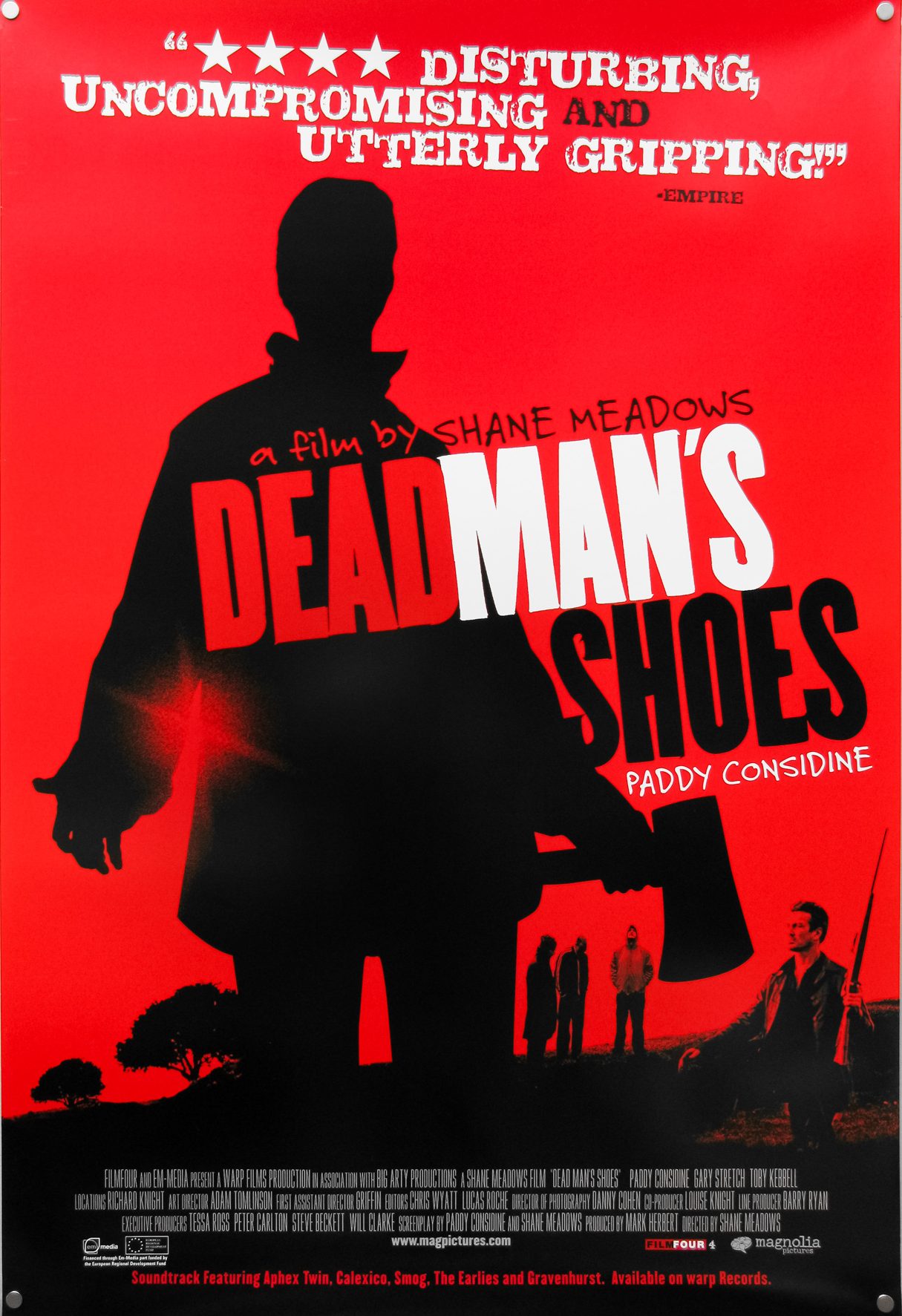
Shane Meadows delivers a remorseless revenge story that is not for the weak of heart, though Dead Man’s Shoes certainly has plenty of it
Shane Meadows is one of the most neglected filmmakers on the planet. That’s because his movies inhabit a very distinct, everyday underbelly of Britain, one that rarely makes it to the screen in any way meaningful. There are no cockney gangsters, charming Hugh Grant types or aristocratic romances to be found here; no rhyming slang, disapproving, well-mannered biddies or royalist, flag-shagging bootlickers pledging their allegiance. His films are so far removed from the likes of Downton Abbey that they may as well exist on an entirely different planet.
I’ve scoured forums with the aim of discovering exactly why his films are so misunderstood outside of the UK, and one point seemed to crop up everywhere, particularly when it comes to arguably his most underappreciated movie, the incomparable genre pastiche Dead Man’s Shoes. ‘The characters are unrealistic’. ‘The actors are too comedic and unconvincing.’ ‘These people don’t exist anywhere in the real world’. Well, I for one, can assure you that they do. I grew up around them. They fester in every small town in the neglected suburbs, big fish in small bowls who reign supreme, at least in their own minds, over small, defenseless communities. Those who have never spent significant time in these places think that all British people are polite, pompous, tea-sipping ninnies or hackneyed cockney caricatures, but nothing could be further from the truth.
Meadows mainly draws from independent British film heritage. His movies are grounded in gritty ‘Kitchen Sink’ realism, a British cultural movement from the 1950s and early 1960s that gave a crude, unapologetic voice to the downtrodden working classes living on the fringes of polite British society. They were dramas focusing on class conflict, generational rebellion, and taboo social issues like abortion and single mothers, women who were used, abandoned and forced to live in squalor and shame. Such innovative movements don’t really exist anymore, certainly not in the mainstream, and neither do filmmakers like Meadows, as working class artists are continually pushed out to sea in a society that’s built on nepotism.
Though very much British In sentiment, Meadows draws from multiple influences, both lovingly and effectively. In the case of movies such as 2002’s romantic comedy Once Upon a Time in the Midlands and gut-wrenching revenge horror Dead Man’s Shoes, Meadows mixes kitchen sink drama with American genre films such as slashers, spaghetti westerns and urban vigilante flicks; a heady, unusual mix that is likely to catch non-British moviegoers off-guard, particularly since much of the action is improvised using indie actors who aren’t forced to disguise non-universal accents that much of the world may struggle with.
God will forgive them. He’ll forgive them and allow them into Heaven. I can’t live with that.
Richard
That’s not to say that Meadows hasn’t worked with well-known, brilliant actors; a testament to his stock as a profound and affecting filmmaker on the British independent scene. British legend and Oscar winner Bob Hoskins and Trainspotting favourite and former James Bond villain Robert Carlisle immediately spring to mind. Meadows also deserves more than a little credit for the rise of both the immensely talented Stephen Graham, who would make his name in arguably the director’s most famous film: the raw, historical, coming of age tale This is England (2006). Graham would go on to work with such legendary Hollywood figures as Martin Scorsese, Al Pacino, and Leonardo Di Caprio, as well as playing major roles in classic mainstream TV endeavours, such as the fabulous, Scorsese-produced prohibition-era gangster epic Boardwalk Empire.
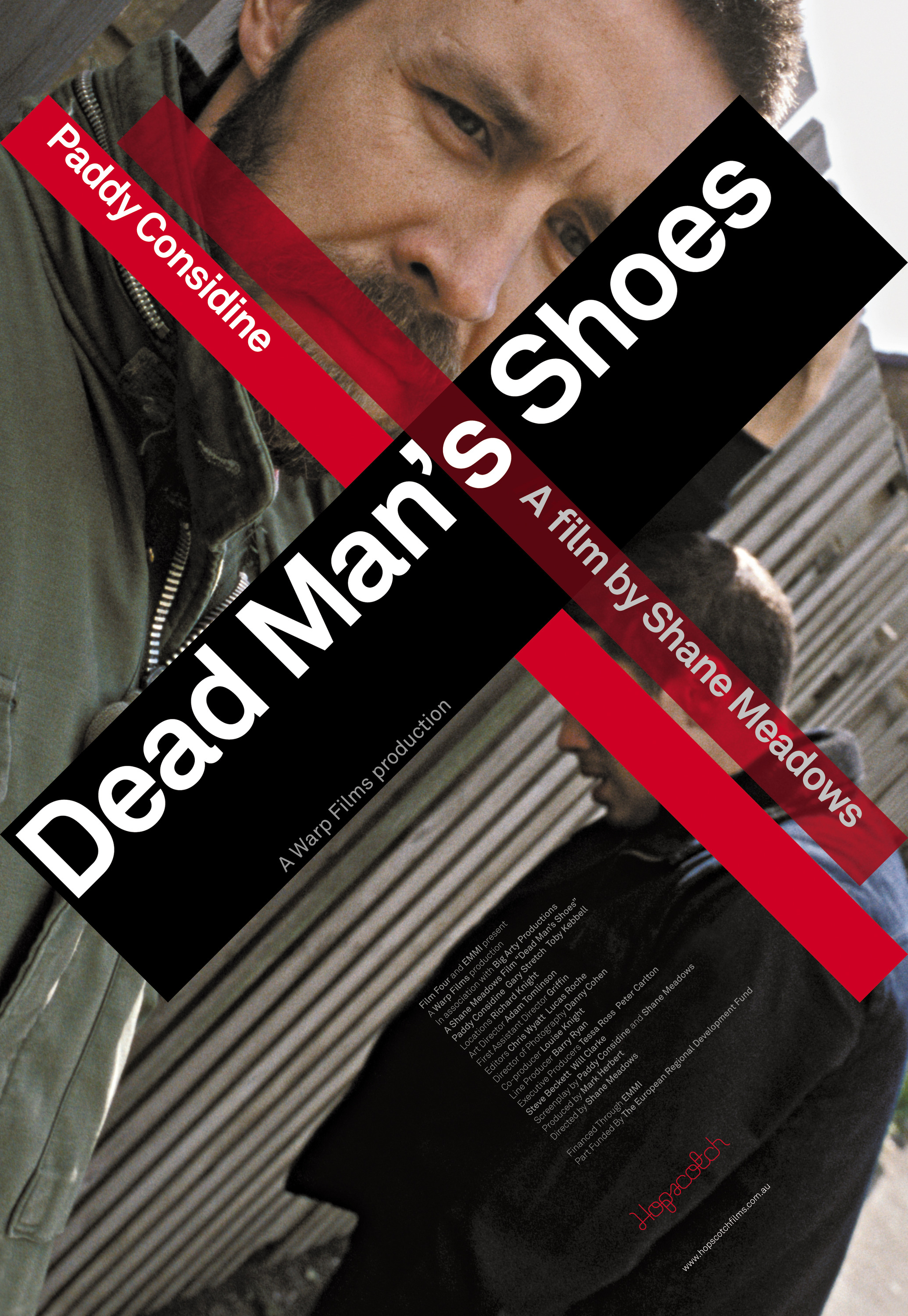
Then there’s the star of Dead Man’s Shoes, Paddy Considine of Peaky Blinders fame, an incredibly versatile actor who would soon find himself all over Hollywood, with significant roles in films like 2005’s Cinderella Man, and 2007’s The Bourne Ultimatum. In terms of versatility and raw emotion, it doesn’t get much better than Considine, who in all honestly can go up against pretty much anyone on any given day. Meadows may have missed out on Hollywood himself, but like a grassroots coach who helps spot and propel talent to the very top, his influence is everywhere.
In typical Meadows fashion, much of the action in Dead Man’s Shoes is shot with a raw, often mundane, sometimes gut-wrenching sense of reality, one complemented by a cast of unknowns who shoot from the hip guerrilla style. Cast as much for their endearing, relatable personalities as they are their acting abilities, they manage to bring a much-needed, comical relatability and sense of levity to proceedings. True story: I once knew an aspiring actor in Manchester who went to the same acting class as This is England‘s Joseph Gilgun. Gilgun had been out on the piss and had wildly overdone it the night before his big audition. He turned up stoned and disheveled, edgy from a night of debauch. After a panicky wait, he was immediately upfront with Meadows about his condition and was cast on the spot. Meadows could see that he was perfect for the role of likable skinhead, Woody, a character he would go on to play in the phenomenal This is England TV spin-off series, a continuation of the movie that saw the franchise spanning seven fictional years from 1983-1990, all of which Stephen Graham would return for as the deeply conflicted, former skinhead-turned-martyr Combo. This is England may be Meadows’ most renown film based on its pull-no-punches account of Thatcher’s Britain, which was set against a hopeless backdrop of mass unemployment and the Falkland’s War, but Dead Man’s Shoes, co-written by Meadows, long-time collaborator Paul Fraser and Considine himself, is arguably his most shocking, and not in a way that flatters to deceive.
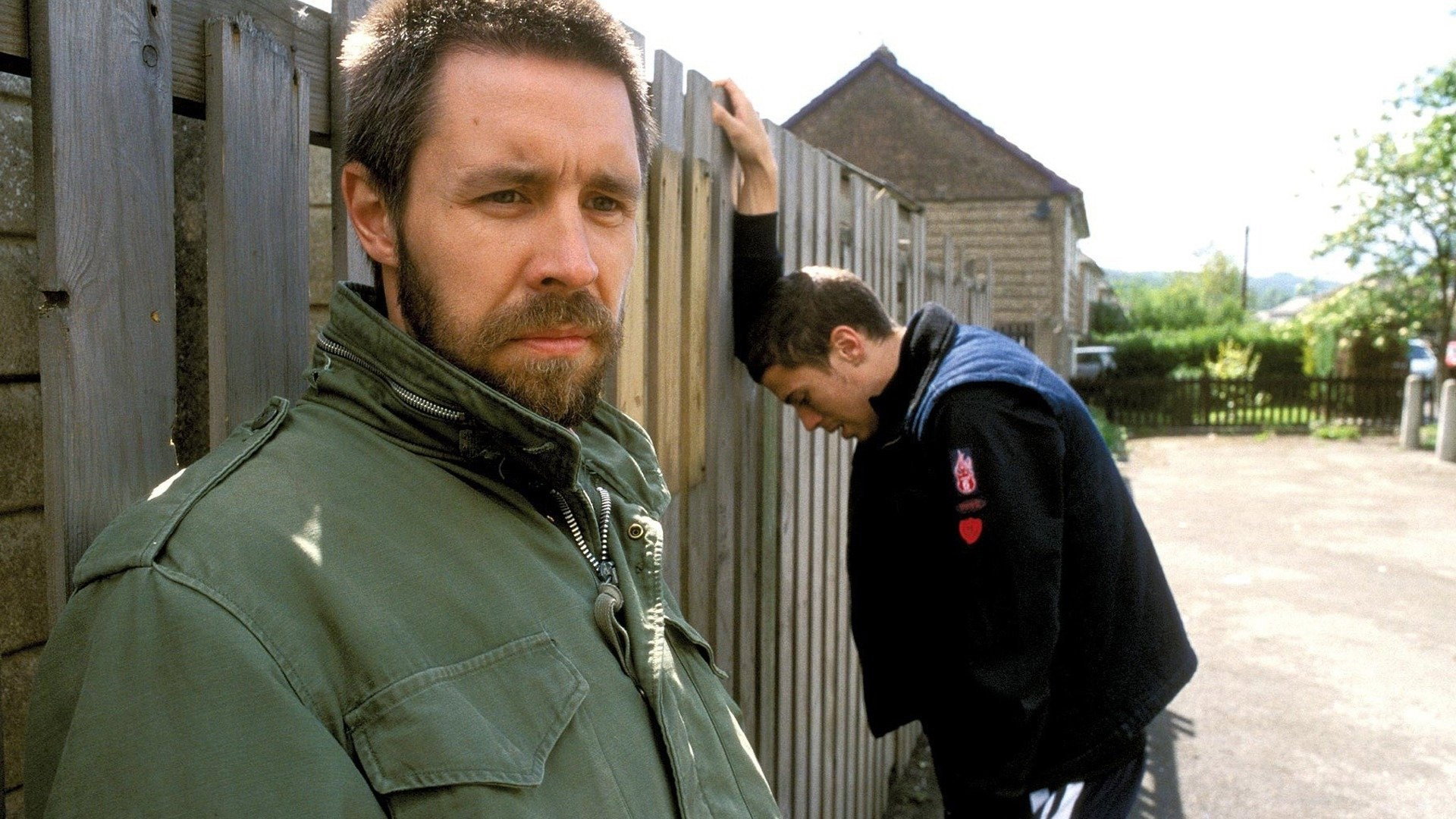
Considine is the beating heart of Dead Man’s Shoes. He plays Richard, an army veteran who returns to his hometown like ‘the man with no name’ in an effort to avenge his younger brother, Anthony, a shy kid with severe intellectual disabilities who’s been brutally bullied by the town’s local thugs and drug dealers, while Richard has been away on duty. We’re not talking Tony Montana here, Stringer Bell from The Wire, or even one of his many underlings. We’re talking local losers who barely scrape by selling scraps to kids under the yoke of local tough, Sonny.
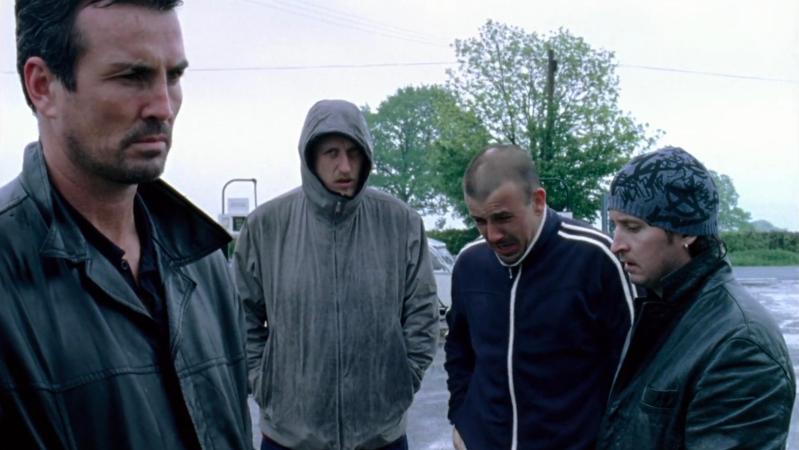
Played by real-life WBC International Super Welterweight champion, Gary Stretch, despite his reputation, Sonny is a man of slender means in a paper kingdom that will soon catch fire. His lieutenants, ‘Gypsy’ John (Gary Newton) and ‘Big Al’ (Seamus O’Neill), a pair of pot-bellied, middle-aged men who spend their lives drinking cheap bitter and scoffing down kebabs, are over the hill bullies who don’t stand a chance against Considine’s, lean, mean, combat-trained vengeance machine, and as for Sonny’s three lickspittles, they spend their time popping acid and snorting Parmesan cheese, stuffed into a ludicrous-looking, mint green and white, 1987 Citroën 2CV 6 Spécial Dolly, blasting out rap music like a pack of idiot wannabees with an irony that is completely lost on them. They wouldn’t last a second on a big city council estate.
Richard is an ugly, almost supernatural shadow in the Clint Eastwood vein, slowly analyzing the situation and playfully teasing his prey. When he sees the fools he is up against, he is eager to terrify them the way they have his defenceless brother, slowly but surely closing in for the kill. He also carries a lot of regret, masterfully and subtly portrayed amid so much extreme violence and chaos, all of it cast against a series of grainy, black and white flashbacks that reveal the horrors and sheer cruelty that Anthony was subjected to for kicks, simply out of boredom. Peer pressure, physical, emotional and even sexual abuse, Sonny and his lackies stop at nothing in their quest to torture and humiliate Anthony, particularly Sonny, the alpha who always takes the joke too far, who grows dark in his most pathetic moments, forcing Anthony into one awful situation after another. At one point, he knocks a defenceless Anthony out cold for no good reason as he stands there cowering and confused, unable to look his agitator in the eye. A returning Richard is fuelled by anger for not only their actions, but through regret for his own decisions. Richard cannot forgive them or himself for what happened to his brother. He left him behind, vulnerable to the world, and, you sense, partly to escape the burden of his condition. This is not your average performance.
Dead Man’s Shoes features one more standout performance, which, along with that of Considine, some inspired thematic cinematography that craftily underscores the film’s mood and underlying themes, and one hell of an affecting soundtrack, provides the movie with its emotional weight amid a barrage of profound, creative violence, off-the-cuff camaraderie and a juxtaposing sense of everyday humour. Cast on short notice after the original actor dropped out due to concerns that the role was too complex, Toby Kebbell, who plays Anthony, had no such problems. To even come close to his performance in Dead Man’s Shoes, even with all the time in the world to prepare, you would have to be at the very least accomplished, but he goes far beyond that. He is absolutely fearless. His speech, his manner, every expression and nuance is so authentic that you would be forgiven for thinking that a person with severe intellectual disabilities had actually been cast. The empathy, pity and downright anger that his performance inspires is the driving force behind the film, and the reason why someone as cruel, calculating and unforgiving as Richard is ultimately a sympathetic character and not looked upon like the devil incarnate.
I’m not threatening you mate. It’s beyond fucking words.
Richard
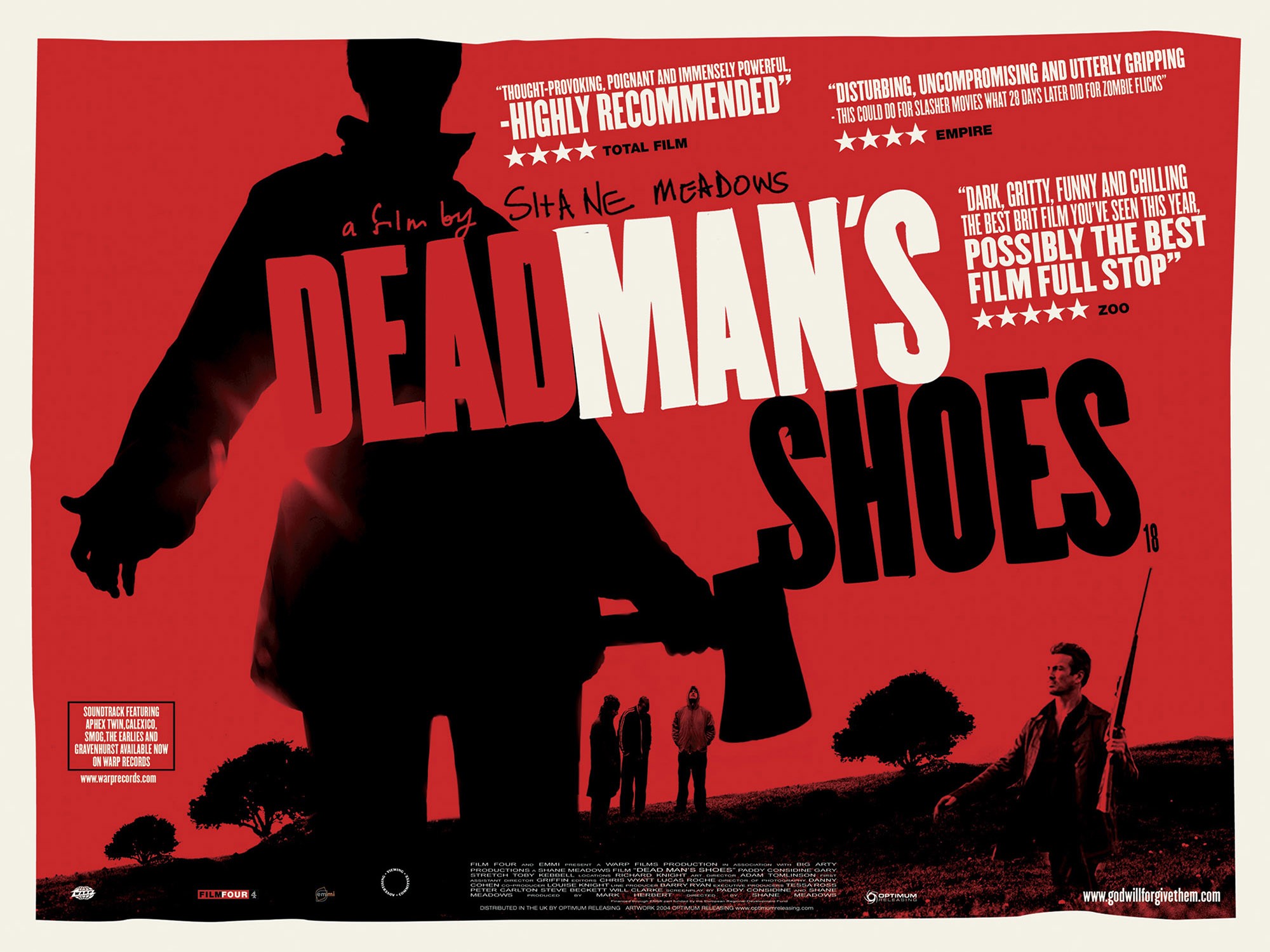
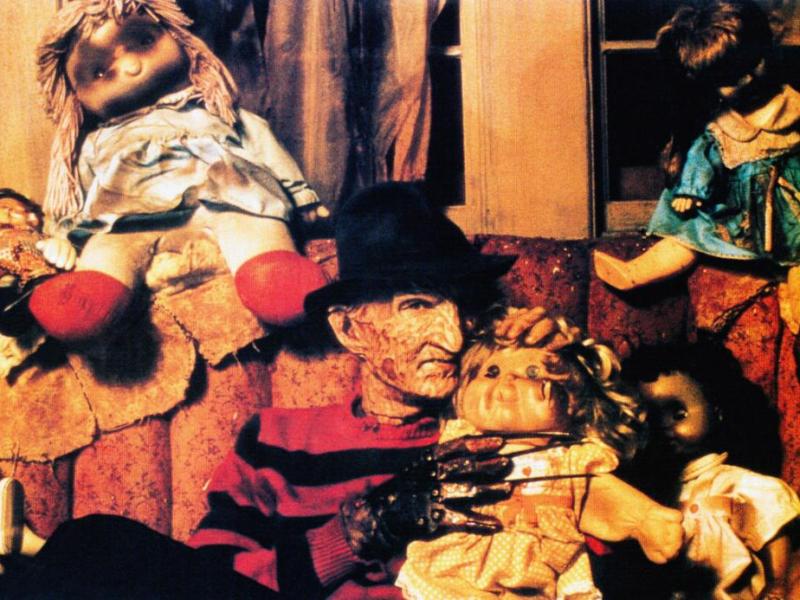
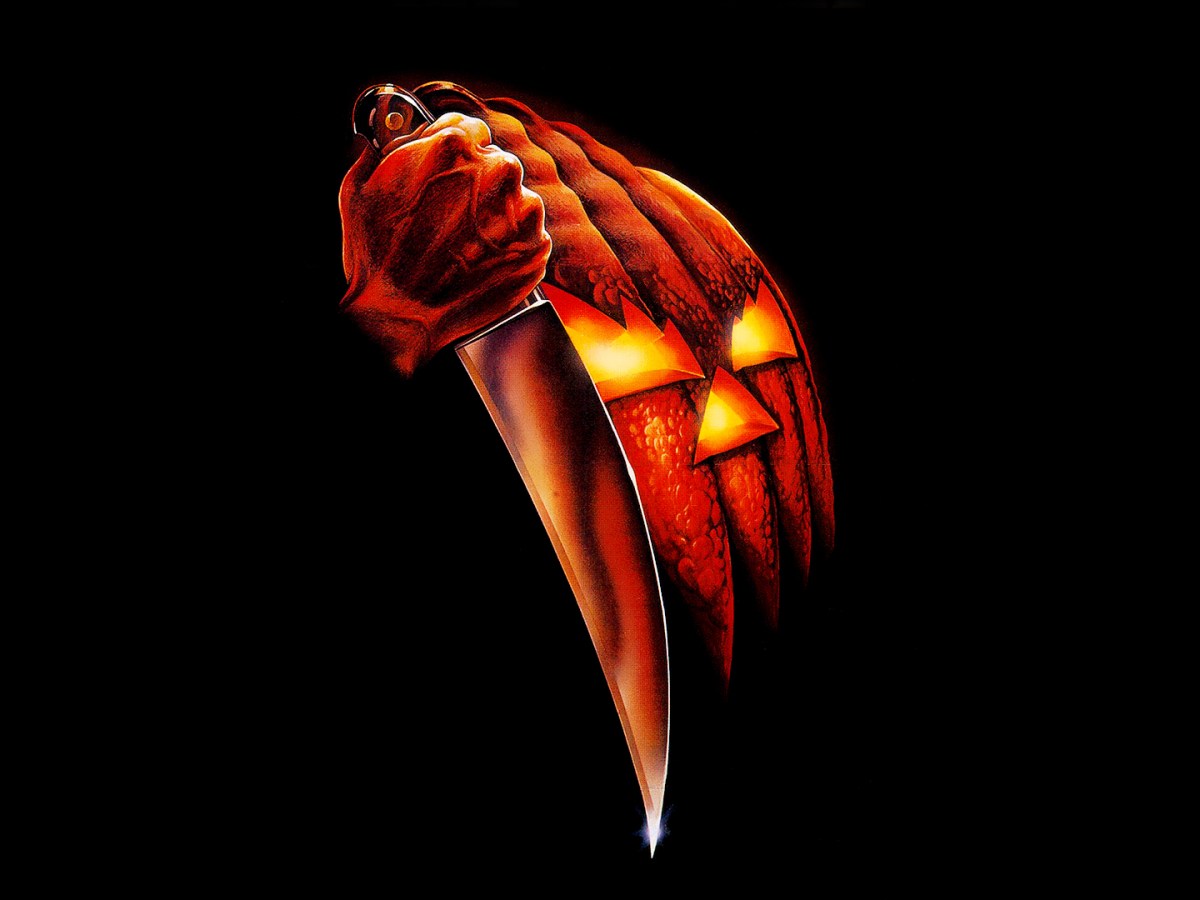
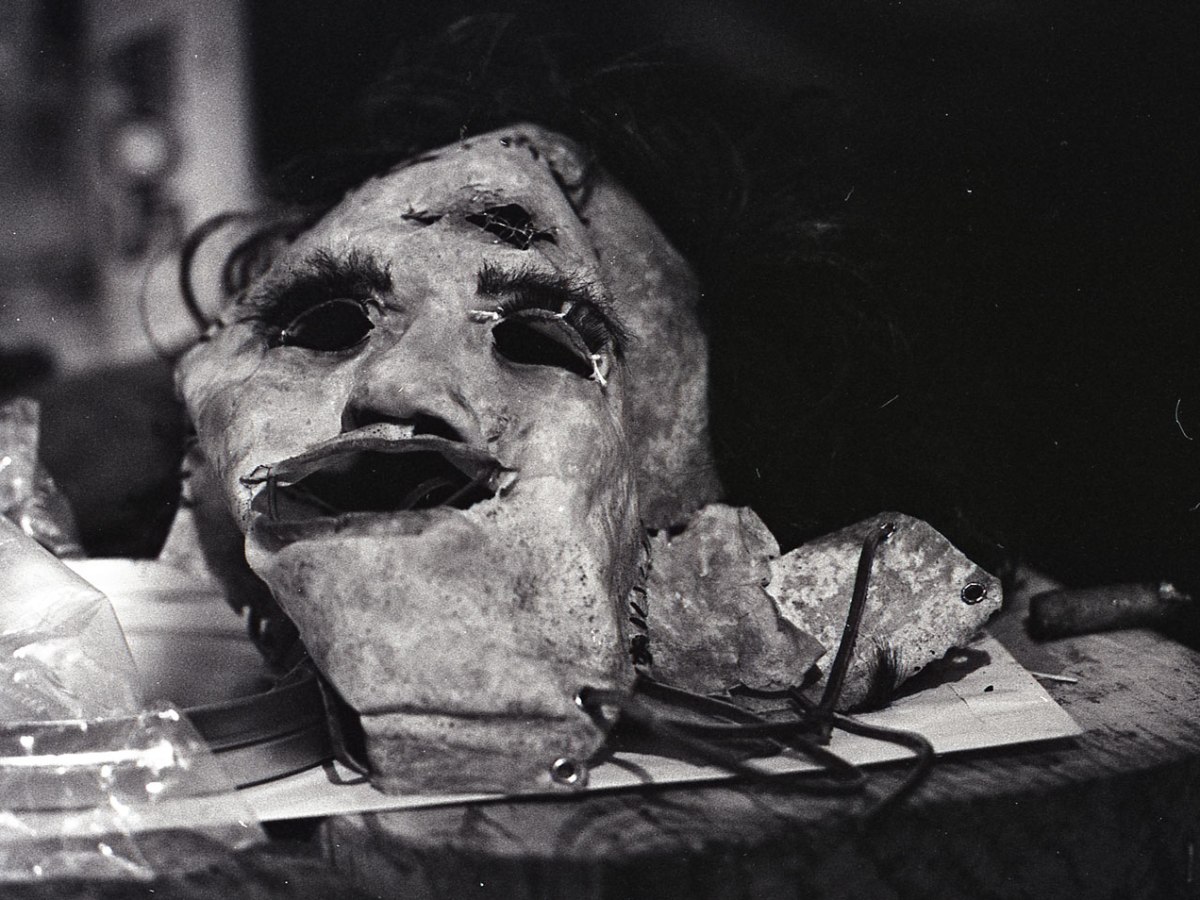
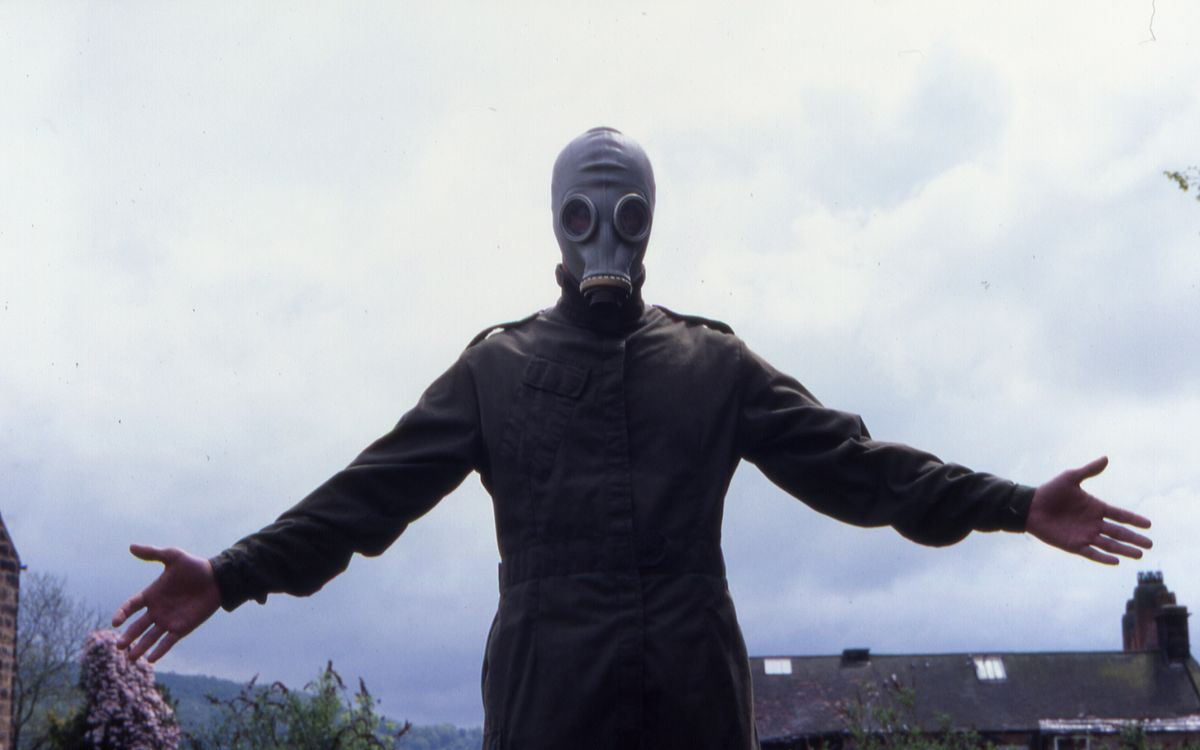
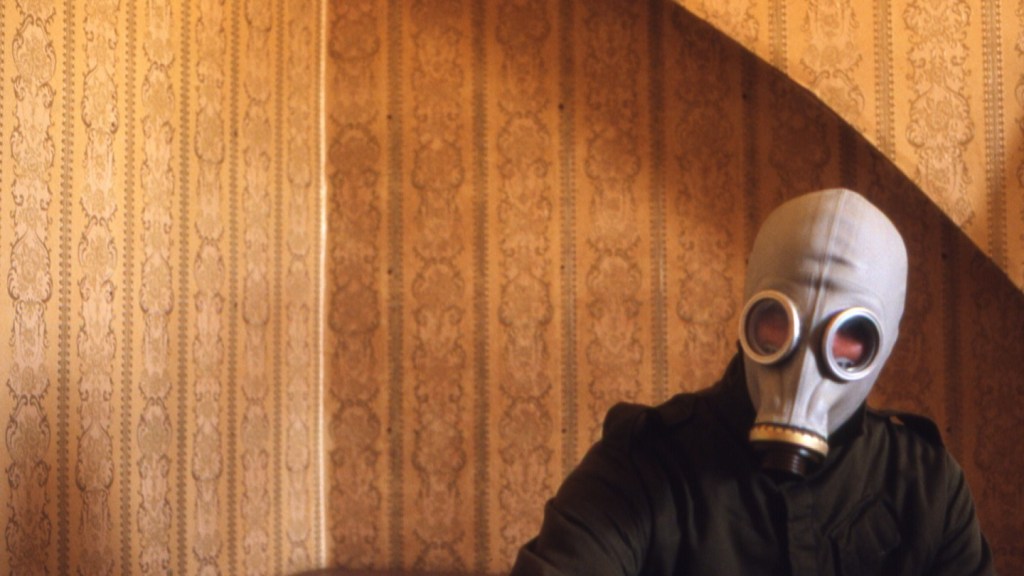
The golden age slasher influence in Dead Man’s Shoes is so strong and on the money that it may very well be the finest ever made. There are no MPAA or BBFC cuts here, just sheer, sliced to the bone slaughter. Like all great slasher villains, Richard’s alter ego, described as ‘an elephant’ by Stuart Wolfenden’s cowardly drug lackey, Herbie, while high as a kite and paranoid on cocaine and amphetamines, wears a mask. In what might be considered a cheeky nod to Joseph Zito’s controversial 80s classic The Prowler, Richard stalks his prey beneath a filterless, Cold War-era Russian GP-5 gas mask that is twice as intimidating as anything the 80s coughed up.
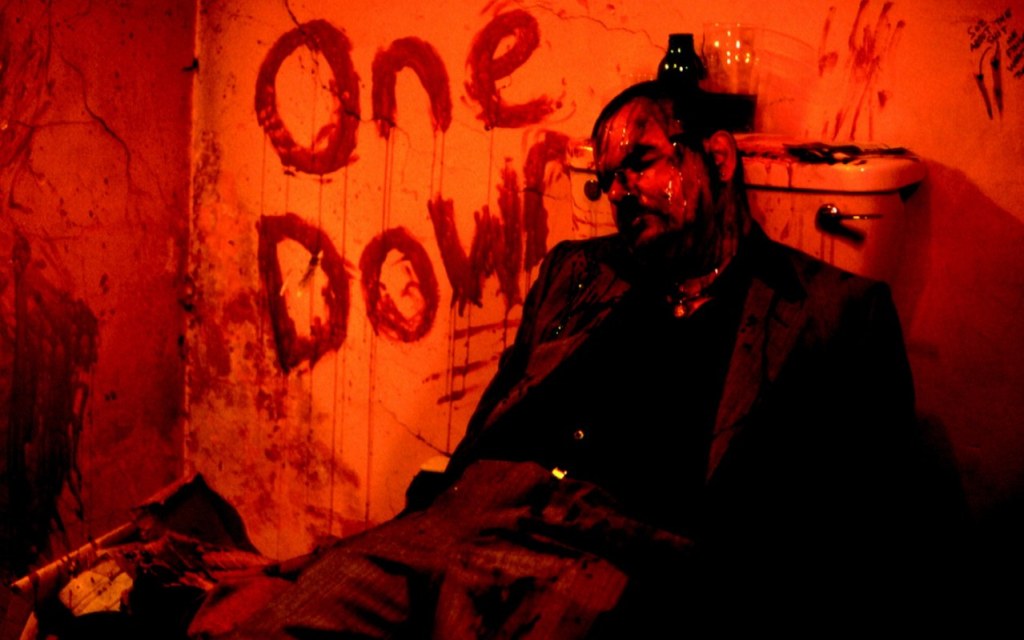
Initially devised as a based-on-reality, black comedy about a heroic social worker, the movie grew much darker as the trio fell deeper into development. Originally titled The Skull, the script was nothing but a series of rough drafts when they finally went into production, which lends the movie an organic realism that best defines it. Golden age slashers were condemned due to their own disturbing sense of reality when compared to the fantastical monsters of yore, but with brutal stabbings, ax murders, executions at point blank range and remorseless bludgeonings that paint the grubby walls crimson, Dead Man’s Shoes takes it to the next level. It even makes modern Hollywood, with all of its spectacular bloody effects, appear silly by contrast.
As shocking and as cold-hearted as Dead Man’s Shoes is, as brutal and as nasty as Richard’s revenge turns out to be, it’s surprisingly easy to get behind him on a vicarious level, to the point in which you sometimes feel like you’re holding the knife yourself. It’s tough going on occasion, and you often feel a deep sympathy for some of the movie’s antagonists, particularly Sonny’s foolish trio of underlings, who while culpable, aren’t exactly violent and twisted like their leader and his equally pathetic lieutenants. It’s safe to say that the three idiots of the group haven’t hurt anyone physically in their lives, and they certainly don’t have it in them to kill anyone.
Neil Bell’s Soz and Paul Sadot’s Tuff, both of whom are dispatched with in sickeningly blunt and brutal ways, aren’t even dealers. They just hang around and love to get high, only acting tough by association. Herbie, who peruses the local working men’s clubs selling small quantities of street drugs, acts the hard man whenever he feels threatened, like he does during a startling early scene in which he half-heartedly confronts Richard and is abruptly sent packing with more than his tail between his legs. By the end you can’t help but feel sorry for them as they inevitably meet there maker in long, excruciatingly drawn-out ways. They regress into helpless children by the movie’s end, just like Anthony.
You feel no such sympathy for Sonny, a bully who can probably handle himself in a one-on-one street fight, or his beer-bellied henchmen, a pair of imbeciles who are way past it, but who should know better because of that fact. Even if they hadn’t been so past their primes, they wouldn’t have stood a chance against a monomaniacal Richard. In his mind, he’s already come to the end of his journey, and nothing but a bit of unfinished business, the kind that will condemn his soul forever, is standing in his way.
One of the movie’s most memorable and satisfying scenes plays out when Sonny confronts Richard face-to-face, cornering him with threats and a final warning. In that moment, Richard is a monolith of justice, not only in the eyes of Anthony, but in the eyes of Patti (Emily Aston), a local slut who is used and abused and continues to be terrorised long after she has grown up and moved on as a mother, and everyone else, fictional or non-fictional, who has ever been terrorised by such arrogant, oppressive losers. In that moment, Richard is fearless, immovable, implacable. He’s there until the bitter end and Sonny has dealt with enough wannabe hard men to sense it. Considine lives and breathes this scene with every facet of his being. He’s so open and earnest and in your face that he makes his masked alter-ego seem almost tame by comparison. He’s a man so far beyond the edge that he can no longer see it.
You have to feel for Meadows. His similarly forgotten 1999 film A Room for Romeo Brass failed to even make it past the DVD format before falling into obscurity, despite featuring another disturbing performance from Considine, who flips between awkward comedy and distressing realism with an incredible authenticity. Although not quite to the same extent, Dead Man’s Shoes also flies depressingly under the radar. A planned 4k Ultra HD release of the film was recently cancelled, much to the dismay of the movie’s humble, diehard cult following, but it finally made it onto regular Blu-ray thanks to a Second Sight Films Limited Edition released on August 10, 2026. Any slasher fan who hasn’t seen this movie would be doing themselves a huge disservice to not seek it out, and believe me, you don’t want ‘the elephant’ coming after you, and you certainly don’t want Richard turning up on your doorstep, dead-eyed and beset on vengeance with a shiny blade twinkling in the mundane midlands daylight, his face an image of controlled malevolence. You may just end up in a suitcase.
Director: Shane Meadows
Screenplay: Shane Meadows, Paul Fraser &
Paddy Considine
Cinematography: Danny Cohen
Music: Clayhill &
The Leisure Society
Editing: Celia Haining, Lucas Roche &
Chris Wyatt