Director: William Asher
18 | 1h 30 min | Action, Martial Arts
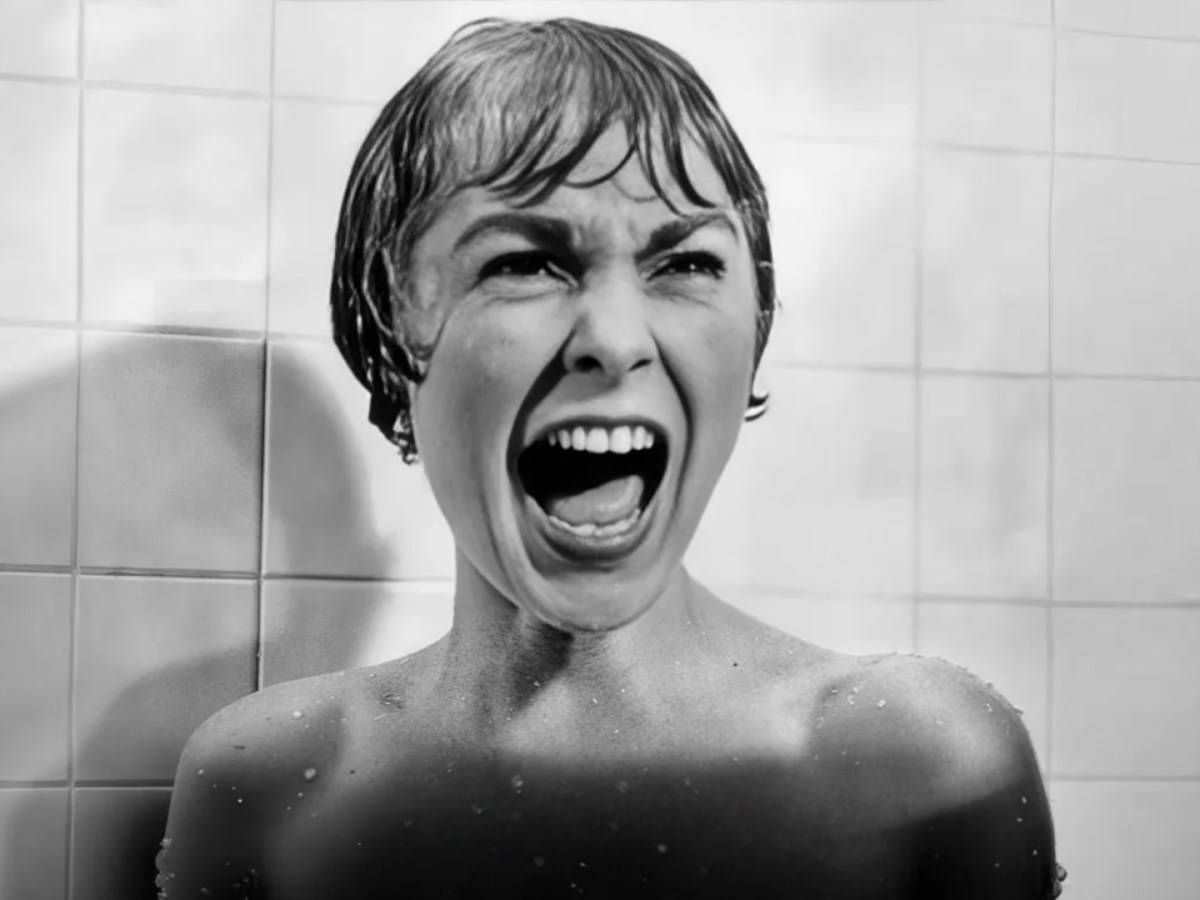
Poor Billy Lynch. If Norma Bates had in fact been an oppressive, knife-wielding killer, rather than the oedipal victim of son Norman’s lurid, bloodthirsty fantasies, she would have been something like Cheryl Roberts, the supposed aunt of a boy who, miraculously, seems healthy of mind when we first meet him as a teenage basketball prospect with an equally good-natured high school sweetheart. The fact that his parents were murdered in an act of vehicular sabotage while he was still a toddler should have been enough to mess the kid up for life, but that, unfortunately, is the very least of his problems.
Affairs begin innocuously enough. Cheryl seems a little overprotective from the outset, which isn’t exactly surprising given Billy’s formative trauma, but when the kid has his head turned by the prospect of long-term romance and the chance at a full university scholarship in Denver, a fuse is blown, or, as we will soon come to understand, re-blown in a way that leaves her wild-eyed and marauding like she’s just chewed on a 600kV DC voltage power cable. The woman is completely out there.
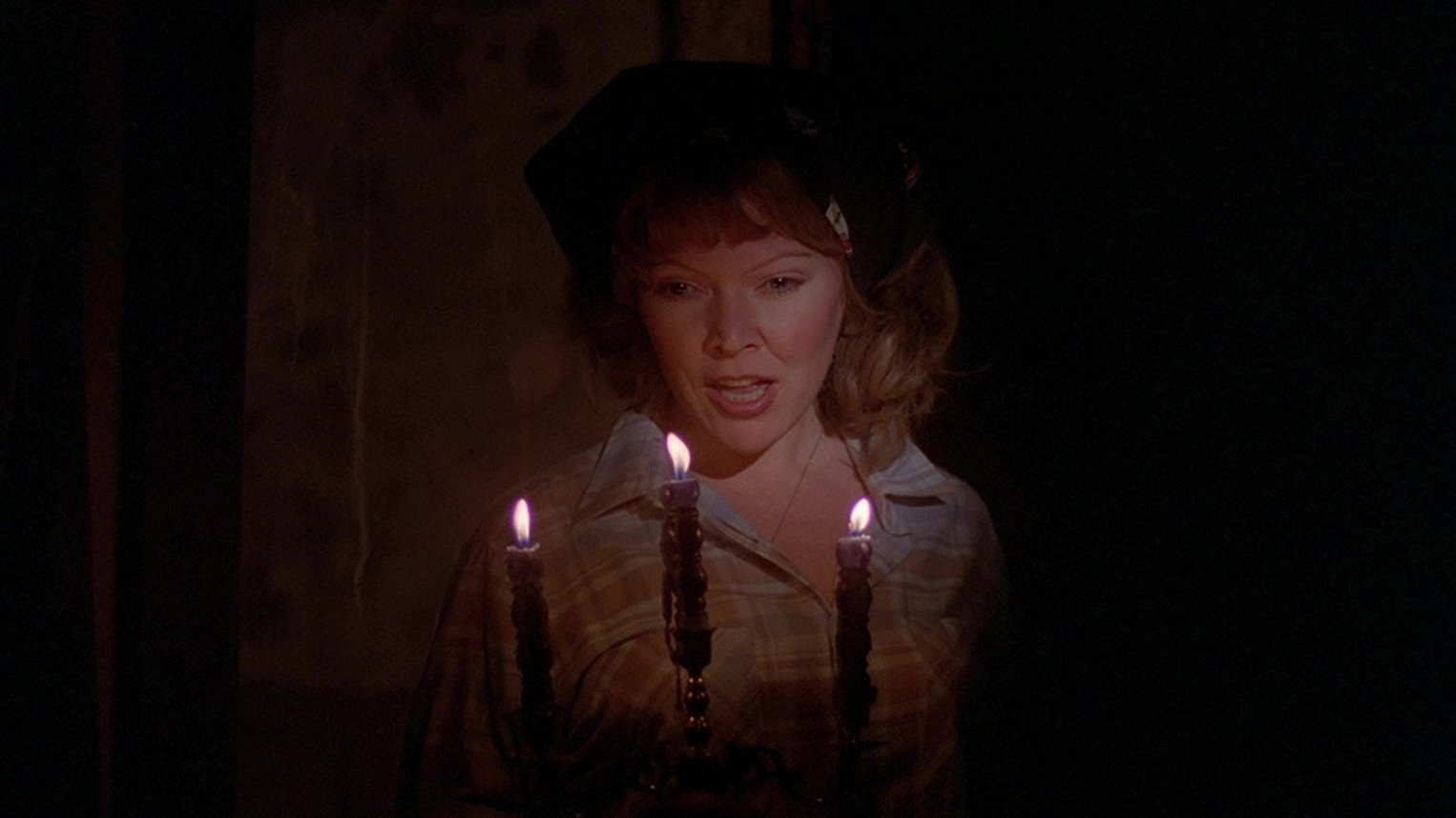
Cheryl is played by Susan Tyrrell, who was cast based on her brilliant turn as belligerent barfly, Oma Lee Greer, in John Huston’s critically acclaimed sports drama Fat City (1972), though her performance here, as you will no doubt realize very early on, is based on Bette Davis’s grim, borderline farcical turn as Baby Jane Hudson from Whatever Happened to Baby Jane? And believe me when I write that Tyrrel more than does justice to her inspiration. Her performance is disturbing, daunting and wretched, with a gallows humour that often treads a fine line. It’s almost vaudevillian at times.
Cheryl stops at nothing in her attempts to prevent the only man in her life from upping sticks and leaving her on her lonesome. Her first act is just desperate enough to pull the wool over everyone’s eyes, including a naive, 17-year-old Billy, though you have to think that the act itself was already festering in her twisted subconscious. Coming onto a local repairman in a desperate plea for companionship, Cheryl is crushed to be flat-out rejected after she practically strips naked in front of him, lashing out in a brutal attack with a butcher’s knife just as Billy arrives home. Cheryl cries attempted rape, which a naturally supportive Billy lies about witnessing. That’s when another, equally malicious scourge comes into Billy’s life. And this one’s carrying a badge.
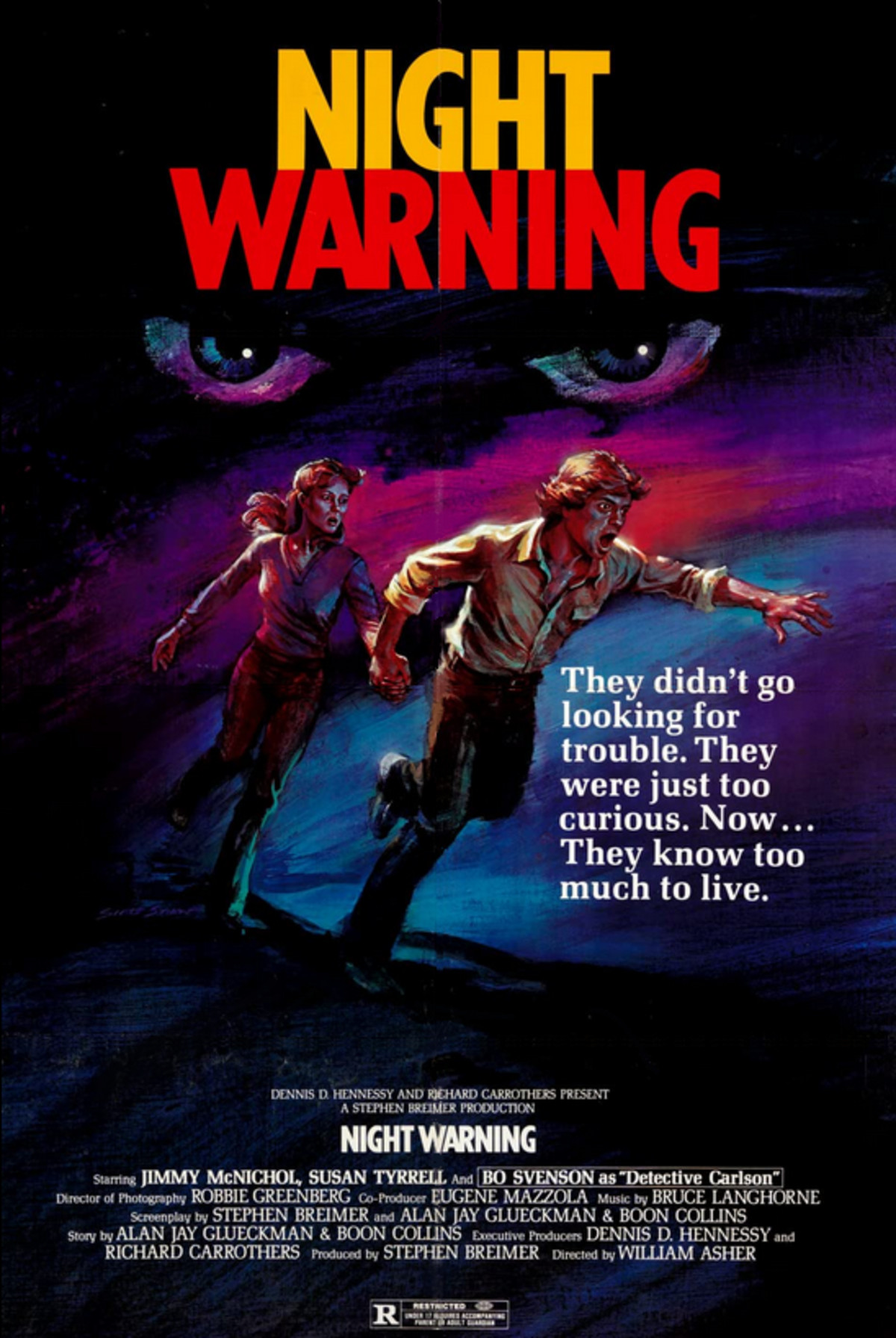
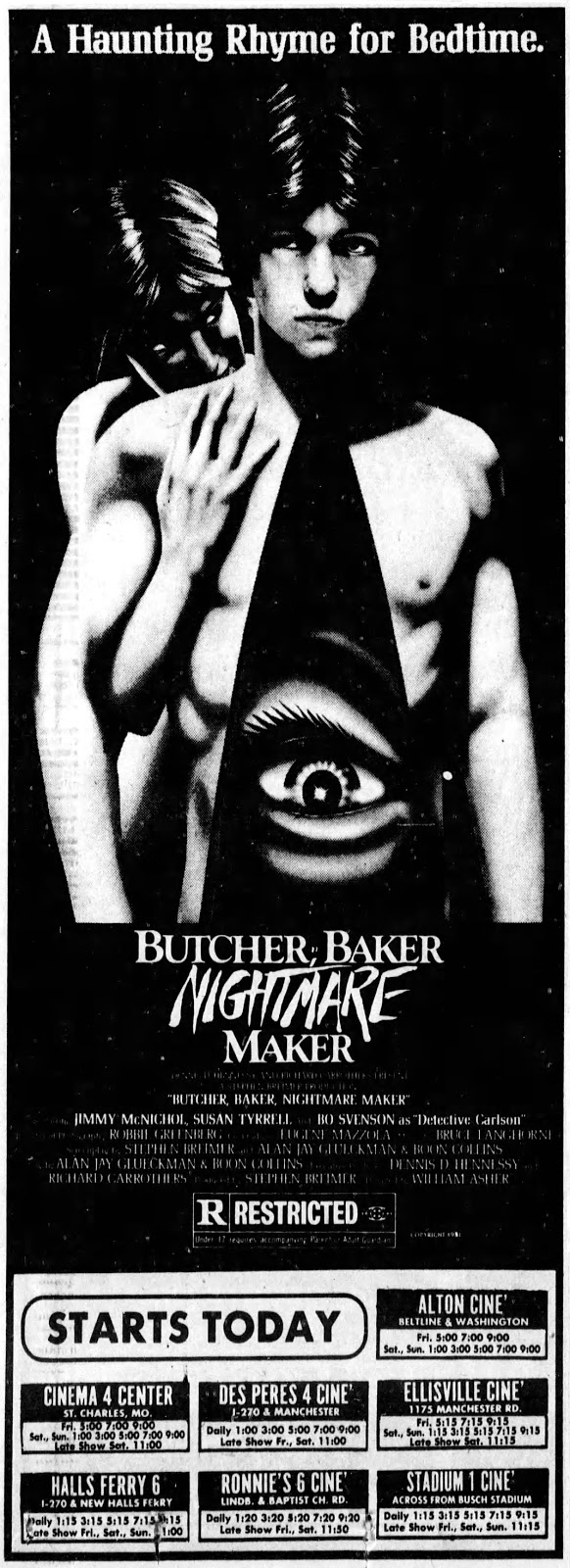
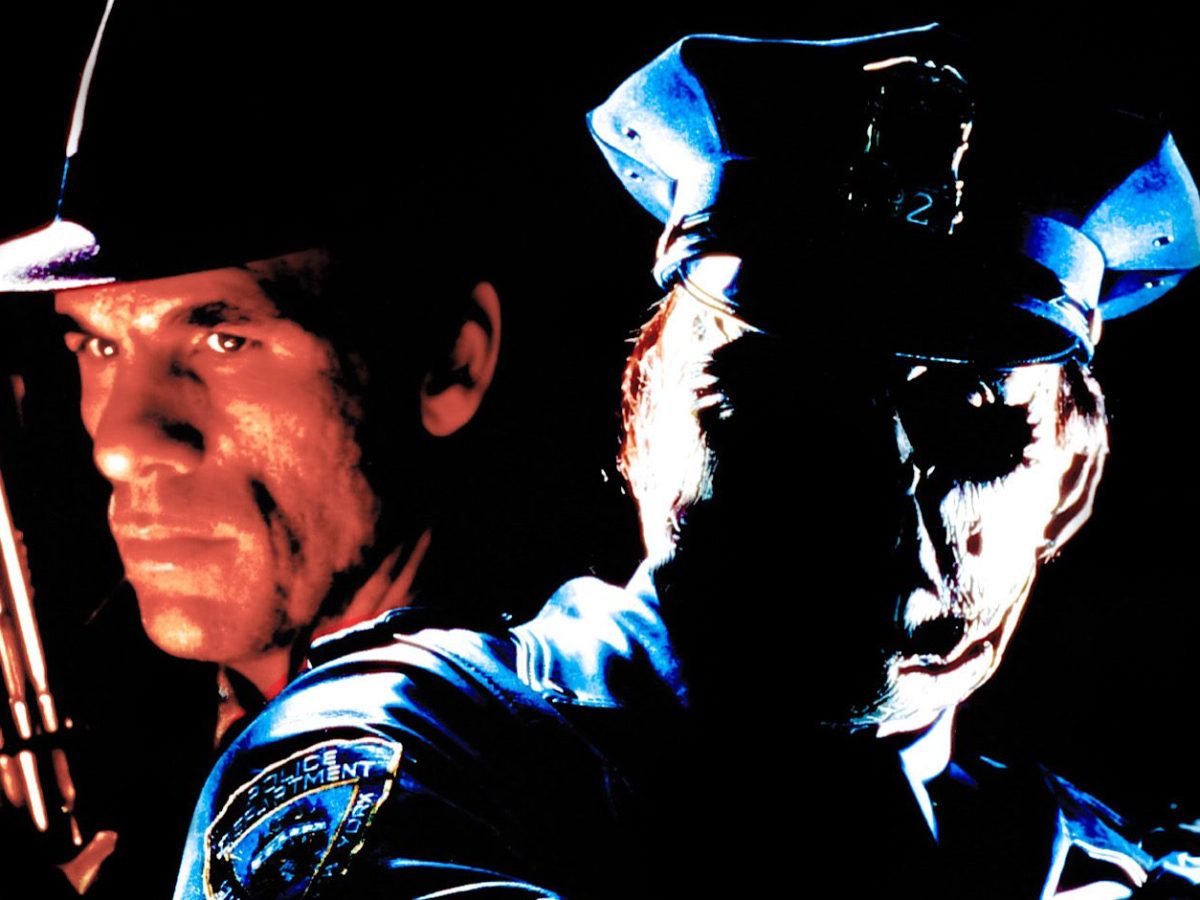
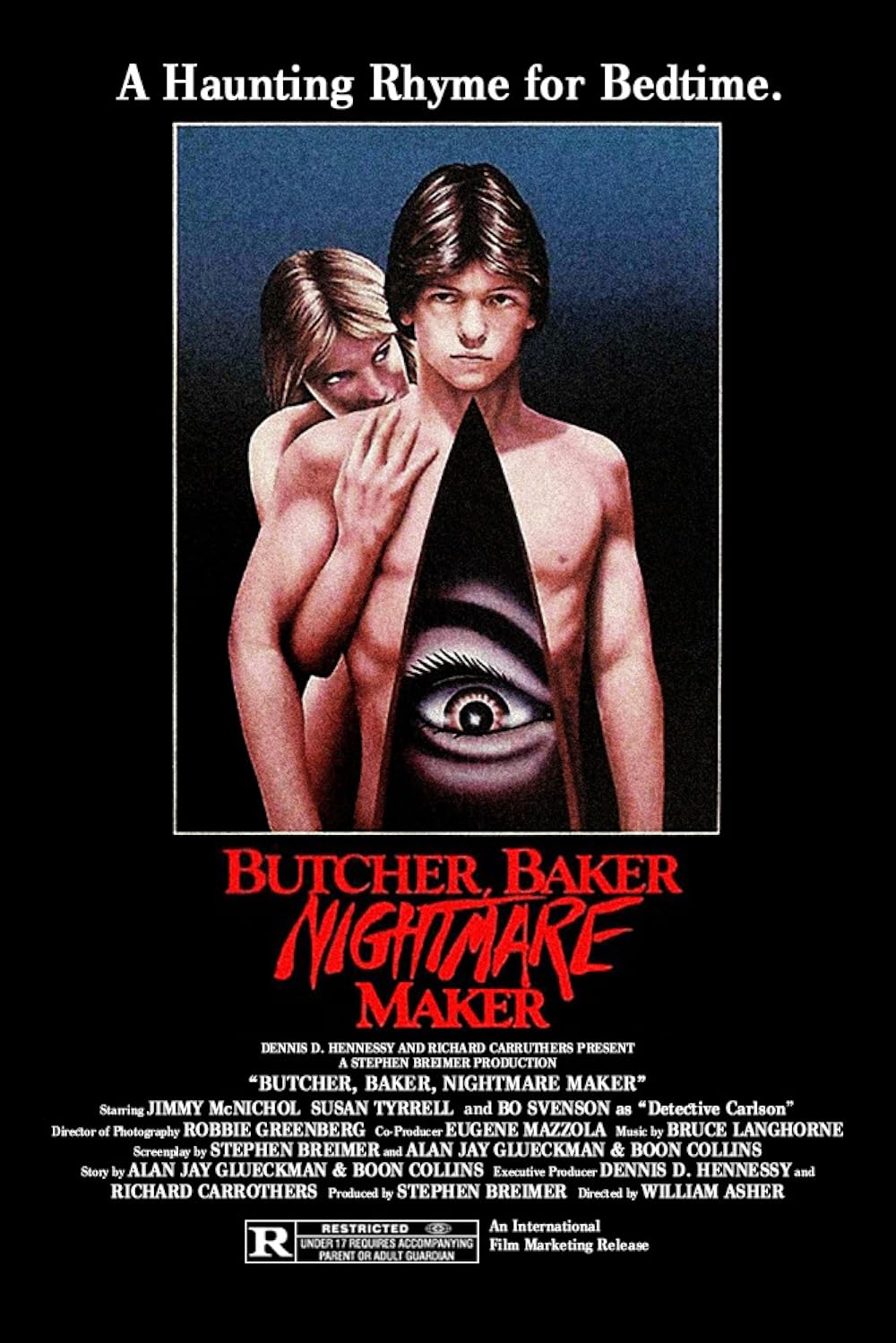
Butcher, Baker, Nightmare Maker, later re-released under the title Night Warning following an extended theatrical run, may be low-budget and occasionally err on the side of silly almost half a century after its initial release, but it was also something of an innovator that would lead to widespread critical praise and academic discourse. The film is notable for its early positive portrayal of a gay character, namely Tom Landers (Steve Eastin), a high school basketball coach and mentor to Billy who is unceremoniously bullied into quitting his job by bigoted homophone and possible closet homosexual Detective Joe Carlson (Bo Svenson), a relentless tyrant who uses the derogatory slur ‘fag’ so many times, his character may well have set a world record. In Carlson’s mind, gay equals dishonest and perverted, just the kind of person who should be nowhere near a class of minors, but he may as well be looking in a mirror.
Based on the Athenian tragedy ‘Oedipus Tyrannus’ by Sophocles, the movie’s screenplay doesn’t demonize Tom for his sexual proclivity, as was commonplace in the 1980s, nor is he ridiculed or written as a lazy stereotype for comedic effect. He is sensible, mild-mannered, helpful, and outwardly unfazed by the town’s narrow-minded views. In one scene, Cheryl describes homosexuals as ‘very, very sick’, which plays into the movie’s subtext of Billy as a potentially gay character in a world devoid of trust and teeming with prejudice, particularly when it comes to authority figures, folk of ostensible reverence who are supposed to know better. Ultimately, Billy ends affairs in a heterosexual relationship, but his character is certainly an inversion of the classic final girl trope, his girlfriend, Julia (Julia Duffy), conversely taking on the role of the plucky, boyish protector.
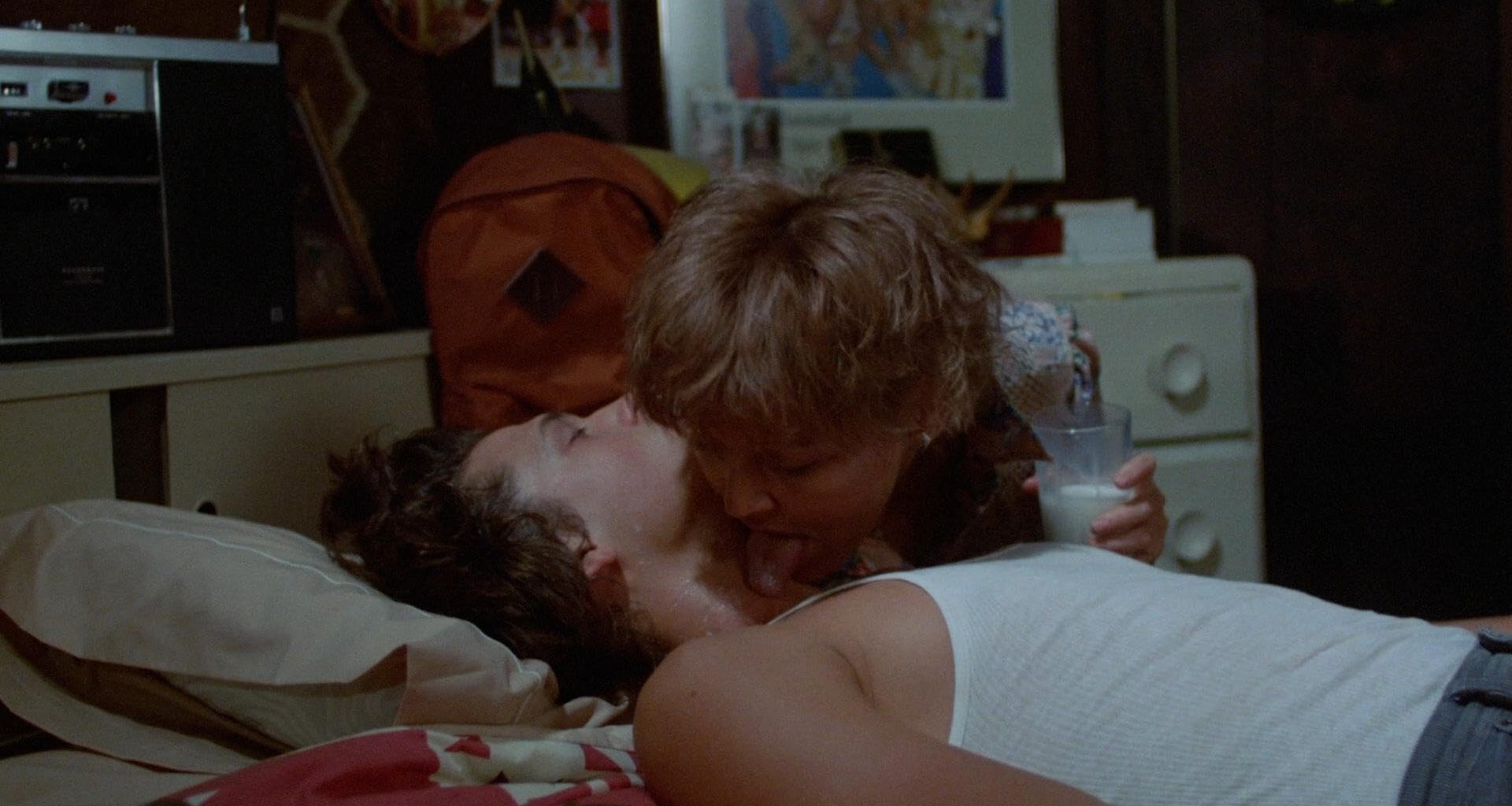
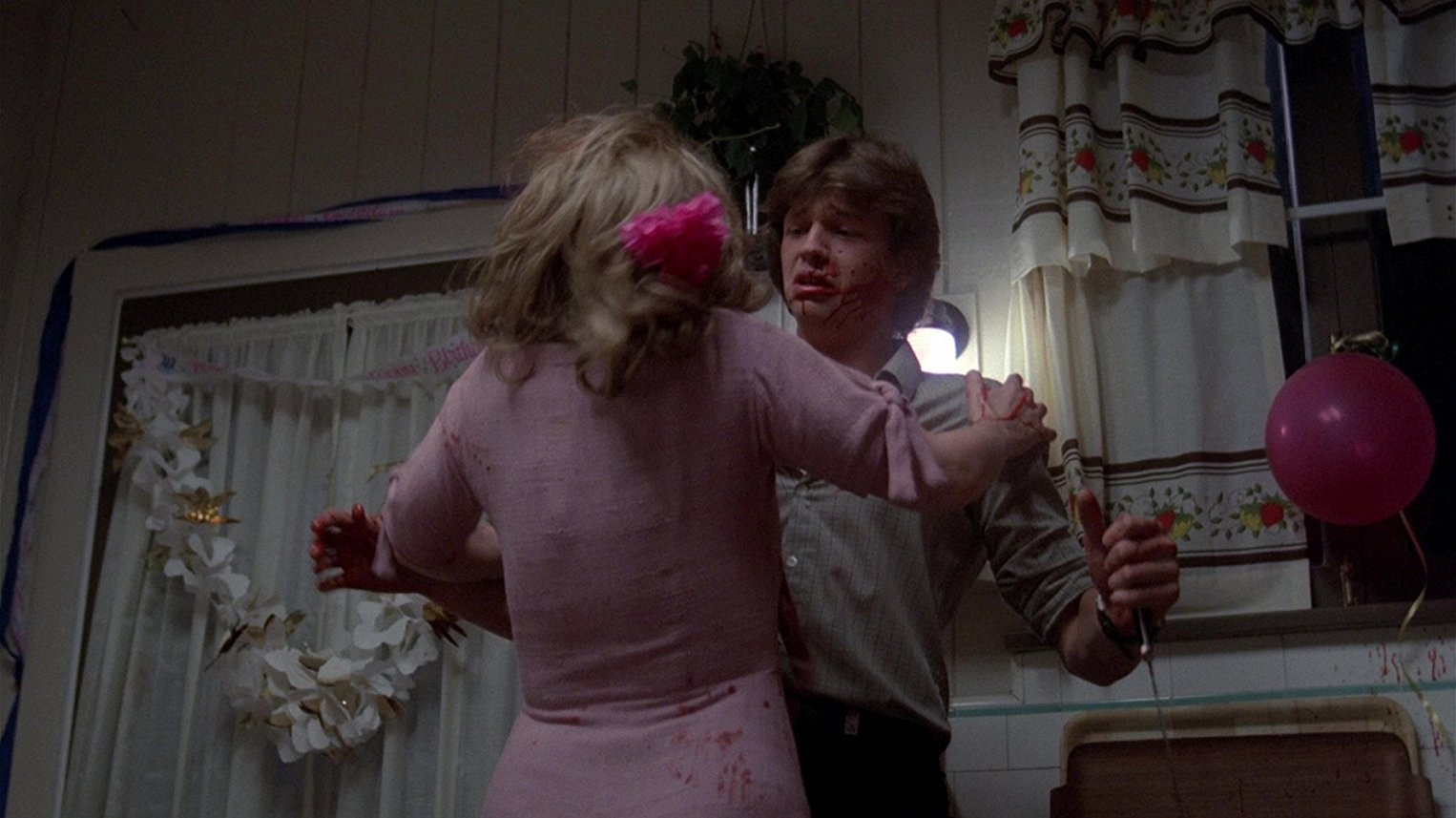
Cheryl lends herself to the stereotype that overprotective mothers produce gay sons. Her relationship is also weirdly incestuous, something that continues to reveal itself more and more overtly, from slightly misplaced displays of physical affection to lascivious face-licking and full-on kissing. As her psychological debris continues to crumble around them, she even states that she is in fact his girlfriend after running a naked Julia out of their home, accusing her of being a slut, and in her mind presumably a homewrecker. A phallic battle during the film’s deranged, blood-soaked climax even ends in a suggestive sexual position, all of it weirdly tied to the idea of motherhood.
Affairs get sticky for Billy when the relentlessly dismissive Detective Carson fingers him for the film’s opening murder, two witnesses, a local couple who are forced to walk on eggshells around an often severe, no-nonsense Cheryl, having found him in possession of the murder weapon upon arriving at the scene. Firstly, Carson assumes that Billy’s aunt is covering for him, but then his intentions become more twisted, the precinct’s narcissistic renegade soon concocting a story about a gay love triangle involving Billy, coach Landers, and Cheryl’s alleged first victim, repairman Phil Brody, who it is later revealed was once in a sexual relationship with Landers. Evidence continues to suggest otherwise, but the practical police work of Sgt. Cook (Britt Leach) not only falls on deaf ears, it becomes a source of anger and even contempt on the part of the increasingly obtuse Carson, who by this point is determined to dish out a deluge of erroneous justice based on his own prejudices.
Tyrrell delivers an often mesmerizing performance as Cheryl, who, in a development worthy of real-life serial killer Ed Gein, keeps the skeletal remains of a former boyfriend in a hidden shrine next to his decapitated head, which floats, fully preserved, in a jar in the attic like a pickled egg well past expiration. Tyrrell’s slow deterioration into the throes of frenzy significantly elevates an otherwise workmanlike film, as she continues to oppress her nephew, actually her biological child and son of the decomposed corpse resting but a few feet away, with lies, acts of violent retribution, and a slow, physically debilitating poisoning, administered using milk in a motherly way than continues to infantilise Billy and threaten his future as a potential basketball star.
A couple of early brutal kills aside, Butcher, Baker, Nightmare Maker is sparse with the slaughter until the movie’s frenetic final act, focusing more on the script’s homosexual subtext and Tyrrell’s incredible descent into all-out insanity. A menacingly belligerent performance, courtesy of Svenson, also adds to the tension, both sexual and non-sexual, as a perfectly cast Jimmy McNichol, who was preferred to pre-fame co-star Bill Paxton – here reduced to a bit-part player as basketball nemesis Eddie – makes a perfect pawn for the insidious machinations of Billy’s oppressors.
Though such themes would be tackled more famously in 80s films such as Arnold Schwarzenegger’s camp action classic Commando, Robert Harmon’s cat and mouse road thriller The Hitcher and Jack Sholder’s controversial A Nightmare on Elm sequel Freddy’s Revenge, it would not be inappropriate to crown Butcher, Baker, Nightmare Maker as the unrivalled queen of the ‘gay panic’ era.
At Loggerheads
Despite remaining unaccredited, Butcher, Baker, Nightmare Maker‘s original director, Michael Miller, was promptly ditched after producers bemoaned his apparent slow pacing and replaced by prolific TV director William Asher. Ironically, the scene in question, an ill-fated car journey that sees Billy’s dad emphatically smashed in the face with a flying tree log, is one of the movie’s finest.
Future blockbuster cinematographer and Speed director Jan De Bont, who would go on to lend his considerable talents to movies such as The Jewel of the Nile, Die Hard and Lethal Weapon 3, and was also fired from production along with Miller, was the man behind the camera.
Butcher, Baker, Potential Star Maker
While a pre Weird Science Bill Paxton would make his credited debut in a smaller role than first anticipated, showing Chet-level potential as Billy’s doltish high school nemesis, Eddie, other recognizable faces were not so lucky, future Blade Runner star Daryl Hannah, who had already worked a small role in Brian De Palma’s 1972 movie The Fury, and The Breakfast Club‘s Ally Sheedy both turned down for the role of valiant love interest Julia.
Very, Very Sick
Plenty gruesome and controversial for the time, Butcher, Baker, Nightmare Maker aka Night Warning was banned in the UK and dubbed a ‘Video Nasty’ following the 1984 UK Video Recordings Act.
Based on a True… Nah
After a hyperbolic climax featuring a body count that would make Leatherface blush beneath his mask of human skin, Butcher, Baker, Nightmare Maker brings us crashing down to reality, with epilogue title cards that read (spoilers):
Billy Lynch stood trial for the slaying of Lieutenant Carson. The proceedings lasted only four days and the jury unanimously acquitted him on the grounds of temporary insanity. Julie Lyndon and Billy are currently attending the university of Denver.
All’s well that ends well, I suppose.
A progressive outlier in the pantheon of golden age slashers,
Edison Smithbenefits from a ferociously alarming lead performance, interesting subtext, and deliciously dark humour, all while satisfying camp gore hounds with its ravenous, uncompromising climax. The queen is dead, long live the queen!