It’s Bon Voyage as Jason bows out with Paramount’s tepid, disingenuous eighth installment of the Friday the 13th franchise
By 1989, horror fans, and even Friday the 13th fanatics, were becoming a little weary with Paramount’s most dependable, low-risk franchise. After hijacking the zeitgeist with 1980’s commercial eureka Friday the 13th, upstart producer Sean Cunningham, who would famously call writer Victor Miller with the message, “Halloween is making incredible money at the box office. Let’s rip it off”, would look to exploit the genre further by ditching original villain Pamela Voorhees in favour of a commercially durable masked killer in the Michael Myers mode. Pamela’s presumed-dead son, whose death had been the catalyst for her initial murder spree, would have been out of the question for any other franchise, but Cunnigham was willing to set the bar low from the very beginning, after previous effort, My Bloody Valentine, failed to make waves at the box office, and it’s safe to say that, for the most part, many of us are glad that he did.
How Jason had survived in the wilderness and evaded detection for so long in such a confined space, all while feeding and clothing himself, was besides the point. There was a connection, a lore to exploit, however tenuous or beyond the realms of logic. Jason’s transition from Myers wannabee to iconic 80s slasher villain wasn’t immediate. Nor was it as commercially fruitful as Cunningham and Paramount had first envisioned. 1981’s Friday the 13th Part 2, while one of the better entries in the franchise, gave us a version of Jason who was still fighting for an identity, a wimpier, less immortal, more fallible Jason, his famously disfigured head hiding beneath a peephole pillowcase tied with rope; something closer to the Phantom Killer from The Town that Dreaded Sundown. Friday the 13th Part 2 raked in a moderately impressive $21,700,000 at the box office. While nothing to be sniffed at on a budget of only $1,270,000, the first sequel managed approximately a third of the original’s $59,800,000, and it was pretty much all downhill from there for Paramount.
Never one to lie down and except defeat, even having been wrestled by trees, electrocuted, drowned in a puddle, struck with all manner of heavy furniture, headbutted by a decapitated victim, crushed by a porch, smashed through a staircase, hung from a ceiling, burnt alive, blown up and shot several times with a pistol, the character who truly genericised the slasher was in it for the long haul, hacking his way through the infamous golden age, that forgettable, oversaturated middle period, and the desperate, self-aware reinvention of the sub-genre at large. Jason would even soldier on through the barren early 90s with New Line Cinema’s completely misguided but admittedly fun Jason Goes to Hell: The Final Friday and 2001’s Scfy channel cheap, crackpot celestial foray Jason X, stopgaps that plugged the leak as the long mooted Freddy vs Jason remained in development hell for what would be more than twenty years. Ironically, that particular movie, finally released in 20003, would become the most successful in the franchise.

All kinds of gimmicks were invented to prop up the franchise, year after year, an incredible eight installments released in under a decade, which back in the 80s, a decade that birthed the numbered sequel phenomenon, was completely unheard of. Paramount’s first attempt came during the Reagan era 3-D revival, which harkened back to the 1950s as Conservative Party America promoted a return to traditional values, centered on the American nuclear family, individual liberty, and devout religious faith. In turned out to be a disaster due to unjustifiable costs and technical issues both in front of and behind the camera. Of the three big horror franchises to embrace the technology, Friday the 13th 3-D landed in the middle in terms of profit, managing a not too shabby $36,700,000 on a budget of only $2,200,000. Though Jaws 3-D raked in a not disastrous $88,000,000 on a budget of $18,000,000, the movie was hammered creatively, mostly because of its over-reliance on some less than stellar 3-D effects, which quickly became a plot-contriving burden across the board. When the atrocious Amityville 3-D managed as little as $6,300,000 during its short, pitiful run, the writing was daubed on the wall with the blood of the studio’s decision makers, or at least their expendable underlings as a face-saving exercise. One thing that came out of Friday the 13th 3-D was Jason’s iconic mask, a future horror movie artifact that almost singlehandedly guaranteed Jason’s longevity going forward.
Go ahead. Take your best shot, mofo.
Julius Gaw
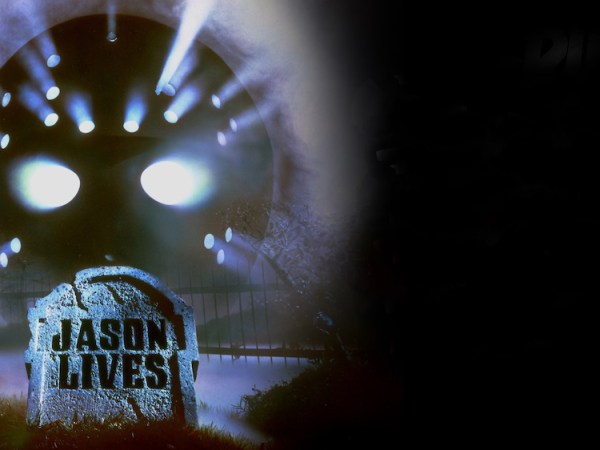
With pressure mounting from the Motion Picture Association of America (MPAA), as well as from unions who had begun specifically targeting films with violent titles and marketable mainstream properties like Friday the 13th, Paramount would subtitle the fourth and apparently final installment as The Final Chapter, and as honest as their intentions may have been initially, it was never going to pan out that way, influential critics and prudish cynics proven right less than a year later with the absolutely potty Friday the 13th Part V: A New Beginning, a Scooby Doo style whodunit that replaced Jason with an impostor killer who was somehow completely bald and ten feet tall behind the mask, only to be demonstrably mortal with a full head of hair when unmasked. Such a backhanded reveal almost universally pissed off even the most loyal Jason fans, which affected interest in Tom McLaughlin’s priceless, self-aware, Universal monsters – esque revamp Friday the 13th Part VI: Jason Lives! and the totally bloodless, Days of Our Lives style Friday the 13th Part VII: The New Blood, a shameless Carrie clone crossover that replaced the first Freddy vs Jason proposal after New Line Cinema, flying high after A Nightmare on Elm Part 3: The Dream Warriors and about to embark on their most financially fruitful sequel to date, couldn’t come to terms on a deal. Incredibly, the Freddy vs Jason concept went all the way back to the late 1980s.
And so we arrive at Jason’s lowest ebb, Friday the 13th: Part VIII: Jason Takes Manhattan, which is almost universally regarded as the very worst of the original Paramount run, which in itself is no easy feat. Jason Takes Manhattan was a complete and utter disaster on almost every level, finally slaying Paramount’s interest in a low-cost, dependable property that had guaranteed significant annual returns on very little outlay. It was just that bad. The main problem lay in the movie’s ultimately misleading title. As it turned out, Jason didn’t take Manhattan due to New York’s notoriously expensive shooting fees and Paramount’s unwillingness to invest significant money into a franchise that they had secretly been ashamed of for years, constantly duping fans with silly concepts, inconsistent timelines and, in association with the MPPA, the kind of self-censoring that completely defeated the purpose of even making a slasher in the first place. It’s worth noting that Paramount pumped more money into Jason Takes Manhattan than any previous installment, but $5,000,000 was peanuts in 1989 in ‘the city that never sleeps’.
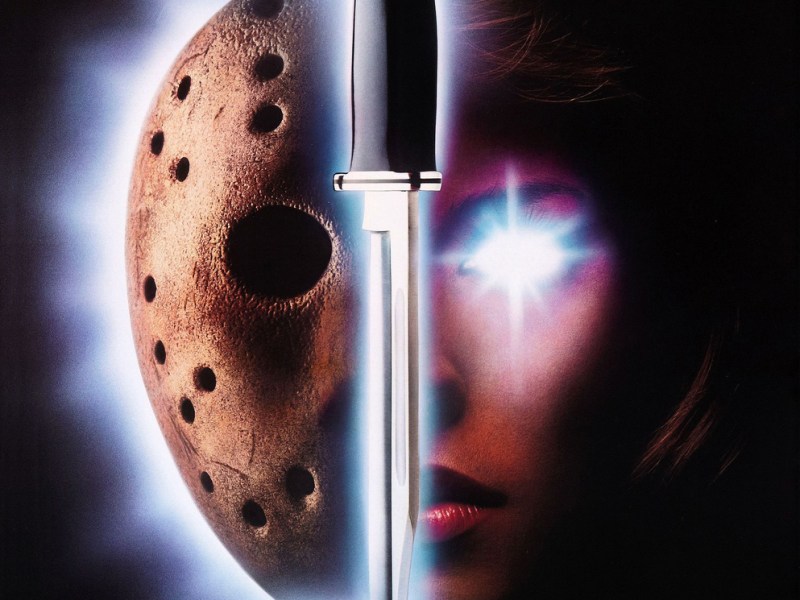
Interestingly, perhaps tragically, Jason Takes Manhattan almost never existed as a Friday the 13th installment. A special effects artist who had honed his craft working for Charles Band’s now defunct, low-budget production company Empire Pictures, collaborating with cult filmmaker Stuart Gordon on gore-heavy horror flicks From Beyond and Re-Animator before taking to the camera for Troll (1986) and Cellar Dweller (1988), John Carl Buechler, most notable for directing previous Friday the 13th entry The New Blood, had pitched a sequel that caught up with former final girl Tina Shepard (Lar Park Lincoln), the telekinetic Carrie clone who had kicked Jason and real-life portrayer Kane Hodder’s asses, thanks to some priceless practical effects and some particularly nasty stunt work. Lincoln, who would return to the series unnoficially in 2021’s fan movie 13 Fanboy, would also co-pen another script with her husband, in which Tina Shepard became a psychologist whose practice would focus on troubled girls of a similar ilk. If that wasn’t enough, New Blood co-star, Kevin Spirtas, who played love interest Nick, would write a third screenplay designed entirely to advance his own career, one in which Nick returns as a psychopathic killer who finally sees Tina off. And here I am criticizing Jason Takes Manhattan!
Paramount eventually settled on writer/director, Rob Hedden, a young rookie who had somehow landed one of the most famous horror franchises in history. It may have been a series in such decline that it bordered on the moribund, but for a debut feature it was a huge opportunity nonetheless. His first instinct was to move Jason out of a Camp Crystal Lake setting that had been done to death. Described by Hedden as “a little bit of Das Boot and a little bit of Aliens”, his original idea was to unleash Jason on the lower levels of a cruise ship, but the prospect of New York, a novelty that was almost guaranteed to give Hedden a commercial leg-up, was too much of a temptation to pass upon. Being new to the business, Hedden decided to make a combination of both, which is where the troubles began for Jason Takes Manhattan, which slept-walked into an unfocused plot so contrived that we are meant to believe that Camp Crystal Lake isn’t a lake at all, but a part of the Atlantic Ocean that would lead yet another gaggle of doomed teenagers all the way to New York City. It sets the tone quite fittingly.
With a budget that quickly turned to dust, Jason Takes Manhattan all but takes Manhattan out of the title entirely. Most of the film is set on a less than spectacular boat, Jason picking off half the cast in a series of uninventive, mostly invisible ways. Due to the MPPA and Paramount’s borderline pious self-censoring, most of the kills that may have been worth a damn succumb to brutal cutaways. And we’re not talking Val Lewton, less is more suspense here. Friday the 13th was rarely suspenseful beyond the fourth installment, and Jason Takes Manhattan is so self-aware, Hedden’s hands tied so tightly behind his back, that the camera spends most of its time fetishising Jason in a way that makes suspense impossible. It’s like a late 80s MTV video with such a weak concept that it deserves its own category at the ‘Razzies’. Jason even acquires the ability to teleport, much like Fred Krueger in the realms of dreams, but without explanation or meaning. It may be a cool idea superficially, but it kills any kind of tension dead in favour of a cheap jump scare, and even that fails to land a blow.

The movie’s cast are just as anemic, their characters completely forgettable, even more so than the usual stereotypes that moviegoers were accustomed to and for the large part overlooked. The perfunctory script and inspired settings don’t help, but by the movie’s end you’ll be hard-pressed to remember any of their names or anything about them. Plucky, young pugilist Julius Gaw (V.C. Dupree) is perhaps the one exception, thanks mostly to a reasonably memorable scene on a rooftop, in which the lucky young sucker has his head punched clean off his shoulders into a nearby dumpster. Token bitch and resident prom queen Tamara Mason (Sharlene Martin) is half-memorable thanks to an uncomfortable relationship with Disney-mean coward, Dr. Charles McCulloch (Peter Mark Richman), uncle of final girl Rennie Wickham (Jensen Daggett) and victim to Jason’s only other memorable kill involving a barrel of toxic waste, which just so happens to be situated in an alleyway in the city. It’s Mr. Burns from The Simpsons level ludicrous, but about a million times less funny.
Bookworm and aspiring author Wickham has to be the least memorable final girl in Friday the 13th’s entire Paramount run. She’s too proper to appeal to the T&A crowd and too uninteresting to inspire reverence. An aqua-phobic Wickham is plagued by empathetic visions of a young Jason because she was once attacked by a full-sized, chained to the bottom of Crystal Lake Jason after she was pushed in by wicked uncle Charles, which leads to a quite improbable final encounter with the masked maniac in which he is dissolved in acid, not to the bone, but into a completely clean, fully formed child who just lies there on his belly. Why? By this point I was past the urge for explanations. It would be great material for any aspiring author though, if, of course, you are completely devoid of imagination and common sense. As for the biography, it’s probably best to keep this little incident to yourself, unless you fancy spending the rest of your life in a home for the clinically insane.
Welcome to New York.
New York Waitress
Hedden originally had big plans for Jason Takes Manhattan, and when I write big, i mean hyperbolic, out of this universe big. The original screenplay embraced pretty much everything a fan could dream of when it comes to a concept that sees Jason unleashed on the ‘Big Apple’, which on paper was a match made in heaven.“Everything about New York was going to be completely exploited and milked,” Hedden would reveal in series retrospective Crystal Lake Memories: The Complete History of Friday The 13th. “There was going to be a tremendous scene on the Brooklyn Bridge. A boxing match in Madison Square Garden. Jason would go through department stores. He’d go through Times Square. He’d go into a Broadway play. He’d even crawl onto the top of the Statue of Liberty and dive off.”

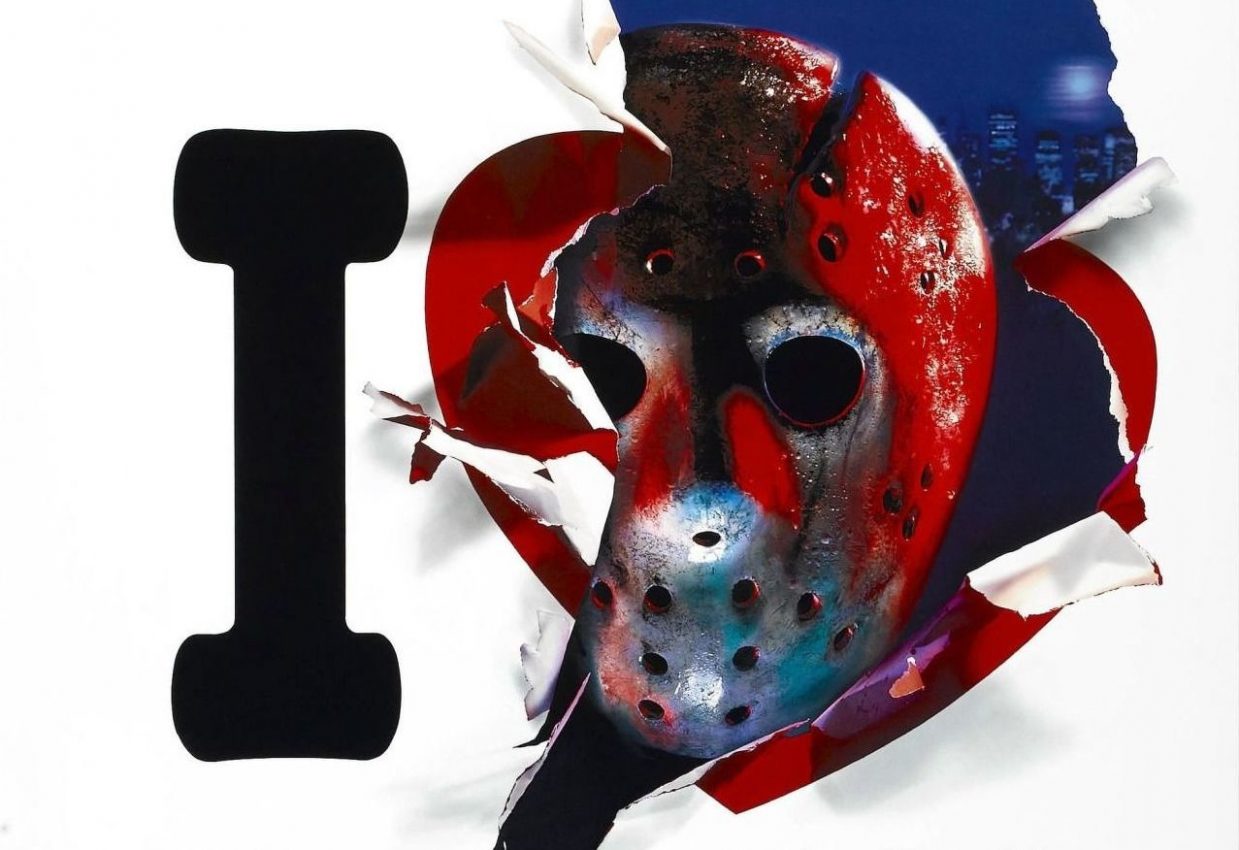
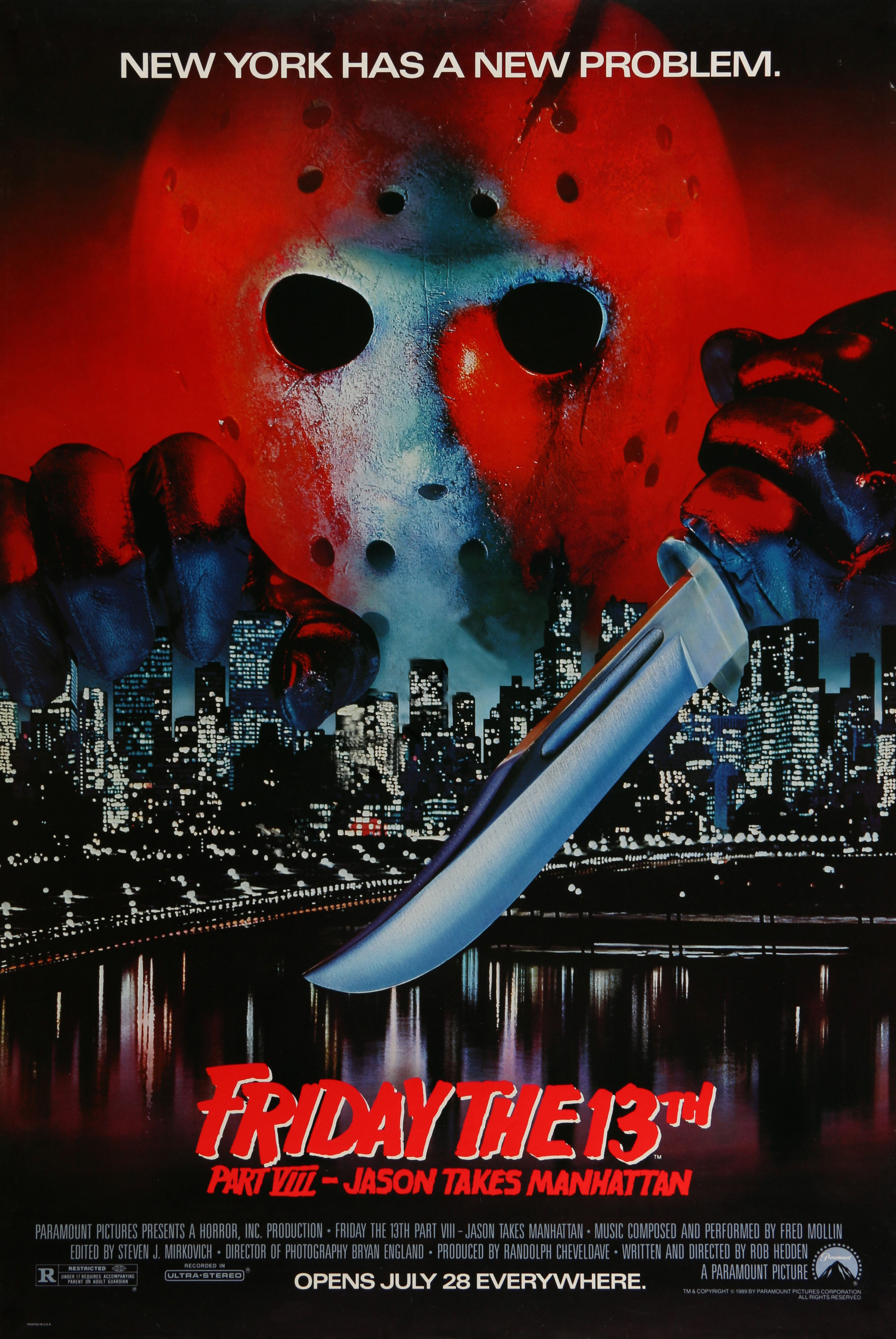
Though it determined the direction of much of the film, cost wasn’t the only headache caused by America’s most famous city. A cute marketing campaign, embodied by the above promotional poster, an image which shows Jason tearing through the iconic ‘I heart NY’ motif popularized by former Beatle John Lennon, whose murder in 1980 ironically led to a crackdown on movie violence in the US, was scrapped after distribution and replaced by an image of Jason ominously overlooking the New York skyline. This was after Paramount were hit with a complaint from the New York tourism committee, which is a shame because it was the best thing attached to the whole movie. A young and eager Hedden was snake bit from the outset.
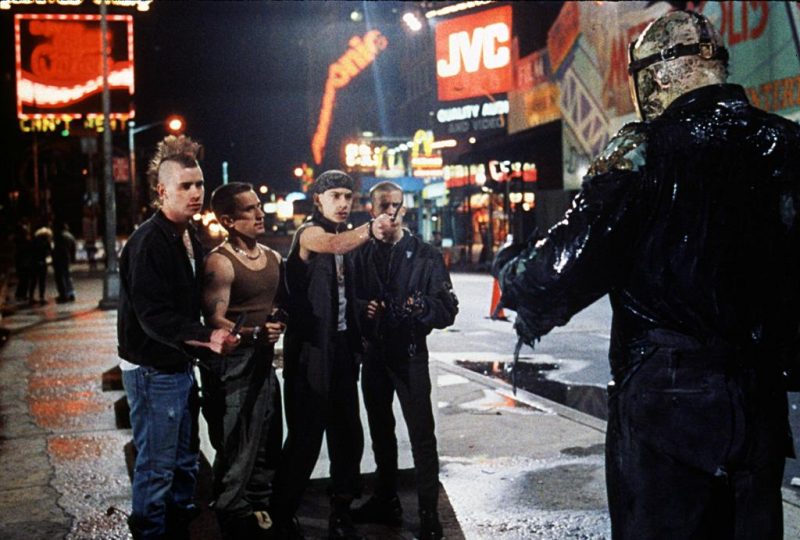
In the end, after roughly an hour stuck on a lousy boat with very little for Jason to work with beyond the red hot implements of a sauna, only a few scenes were shot in New York City, most notably those in Times Square, which led to the famous moment in which Jason scares away a gang of thugs after revealing his disfigured face to them. Other scenes were shot in various locations in the United States, mostly Los Angeles, but the film’s primary location was the relatively cheap to shoot in Vancouver, British Columbia, Canada. The movie was so far off achieving its promise that the crew couldn’t even get into the country.
So, the mighty Jason Voorhees, the unrelenting, superhuman scourge of a generation, went out with little more than a whimper, but to be fair to Hedden and his crew, he did get us out of Crystal Lake in search of more epic pastures, only for it to blow up in his face. But by 1989, the Friday the 13th series was already a ticking time bomb. Mainstream audiences were tired of the same old formula, diehards, treated with nothing short of contempt through Paramount’s shameless hacking to pieces of those brutally cut scenes, dismayed as a series of potentially thrilling kills sluiced through the cutting room floor without a trace. Even long-time composer Harry Manfredini failed to turn up, replaced by former collaborator Fred Mollin, but at the end of the day, it was all about returns for Paramount, and when they posted the worst yet after their highest ever investment, Jason was dead in the water, for real this time.
We all know who the real killers are.
Director: Rob Hedden
Screenplay: Rob Hedden
Cinematography: Bryan England
Music: Fred Mollin
Editing: Steve Mirkovich