
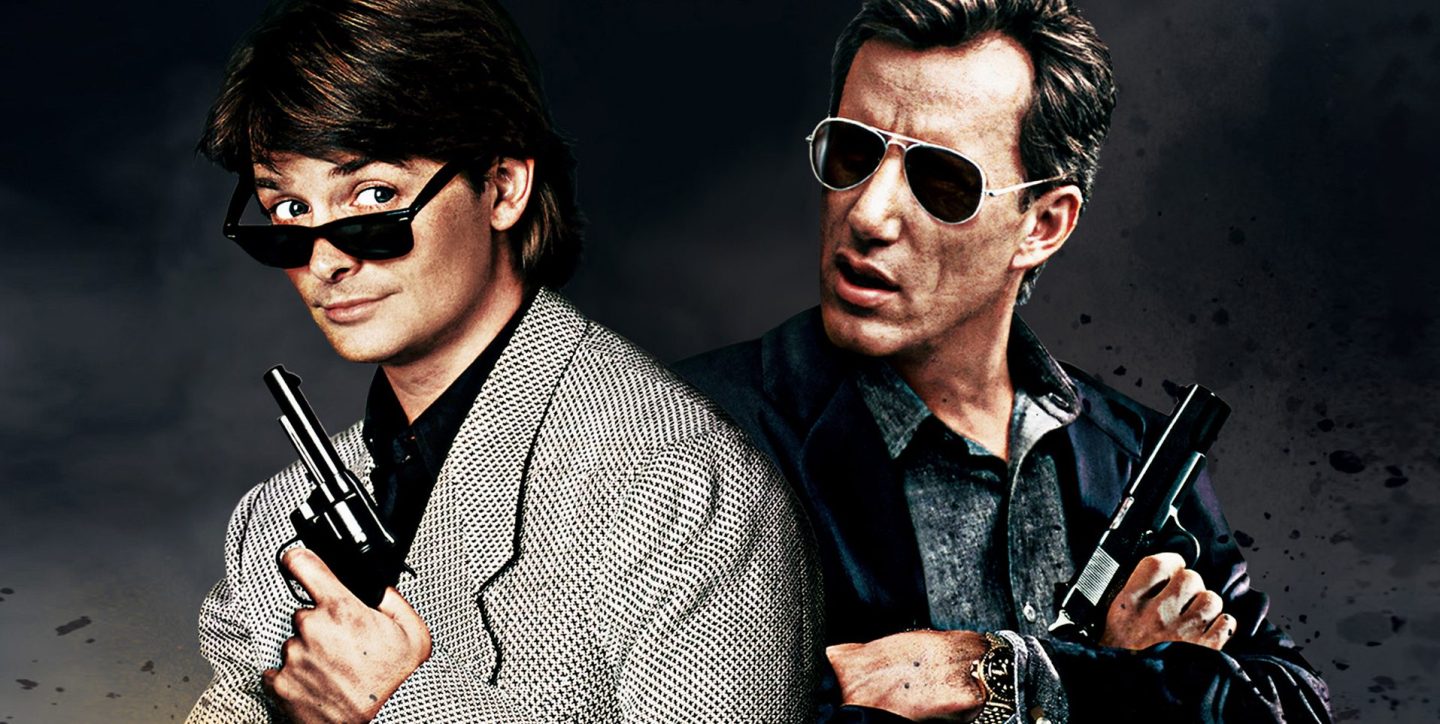

John Badham’s energetic comedy delivers a healthy dose of satire and a buddy pairing for the ages
Can you separate the person from the artist? In an era of great political division, it’s a question that many of us have pondered. Former Smiths frontman Morrissey has recently come under fire for his outspoken political views, and when you go around making comments like, “Everyone ultimately prefers their own race,” it should come as no surprise when former band mates distance themselves from you and everything that you stand for. It’s ironic since Morrissey was once a vocal proponent for solidarity and a beacon of hope for the downtrodden youth of Thatcher’s Britain. And there’s no denying the relevance of his words back then, which were lyrical and poignant and blossoming with the dead-on contrarianism of Oscar Wilde.
Over in the US, the same can be said of actor James Woods. Many view 21st century Woods as a mean-spirited bigot, his outspoken social media activity alienating him from long-time fans. The main problem is the current definition of ‘freedom of speech’ and what it stands for in the minds of many. The freedom to express one’s opinions is essential to democracy, but using language that discriminates jeopardises the freedom of others, masquerading as democratic free speech when in reality millions must suffer as a consequence.
Whatever your opinion of Woods, there’s no doubting the guy’s acting ability. Just think of the films that he’s starred in over the years, from iconic cult movies like David Cronenberg’s techno-surrealist body horror Videodrome to rewarding, low-key affairs such as Stephen King horror compendium Cat’s Eye (Woods was made for King’s cynical brand of short fiction). He even threatened to steal the show going up against peak De Niro and Joe Pesci in 1995‘s whirlwind gangster epic Casino. Drama, comedy, action, sci-fi, horror ― he’s done it all at one time or another, and he rarely, if ever disappoints.

Despite such a breadth of diversity genre-wise, Woods is typically cast to fit a very particular profile, roles that cater to his slippery, hyperactive energy. In Videodrome the actor plays a sleazy purveyor of snuff-tinged pornography; in Cat’s Eye a neurotic smoker battling nicotine addiction, a role he would marginally tweak for his inspired turn as a cocaine-addicted real-estate hustler in Harold Becker’s 1988 drama The Boost. In Casino he played parasitic pimp and fevered drug addict Lester Diamond, a master manipulator dripping with shyster bravado. Those roles were essentially variations of the same breed of character. When you hire James Woods, you get James Woods, regardless of the specificities.
You get to go back to your million dollar beach house and your bimbos and your blow jobs and you get 17 takes to get it right. We get one take. It lasts our whole lives. We mess it up and we’re dead.
John Moss
Woods tends to play soulless bottom feeders, icky creations who explore the uglier side of humanity, but there’s typically a comic edge to his characters, which makes him a perfect fit for the action comedy traditions of the late-80s/early-90s. In John Badham’s largely forgotten and sorely underrated buddy cop movie The Hard Way, which possesses the kind of onscreen chemistry that most can only dream of, he has the frenetic, cynical hard ass down to a fine art, riding a tenuous line between endearing comedy and complete emotional breakdown. The film was originally set to star Gene Hackman and A Fish Called Wanda‘s Kevin Kline, which in itself is a mouthwatering prospect, but it’s hard to imagine the two living up to the film’s eventual pairing. I hope casting agent Dan Ursu received a much-deserved bonus for this one.
The second part of our duo is just as adept at portraying comedic hyperactivity, only the pint-sized Michael J. Fox typically excelled as the good-natured kid skidding from one calamity to the next. Marty McFly is all about slipping and sliding, dodging one impossible situation after another with an irresistible ‘boy next door’ charm. Teen Wolf, Doc Hollywood, The Frighteners ― they all featured variations of the same character. Again, when you hire Michael J. Fox, you get Michael J. Fox; like Woods, he does what he does better than anyone. Admittedly, I never would have thought of pairing the two actors in a comedy movie. They’re fundamentally different in the sense that Fox is typically the plucky young underdog and Woods the grizzled, maladjusted type, but they possess the same boundless energy. I figured that the two together had the potential for overkill.

In reality the two are like poetry in motion. Woods does what Woods does best, only with the volume turned up to eleven. Sometimes it feels like he’s performing a send-up of himself, as if he’s consciously accentuating every trait synonymous with his typical onscreen persona ― ironic since his character in The Hard Way, a no-nonsense detective named John Moss, is a closed book who refuses to confront himself. Moss lives his life like a shark, embracing a constant state of activity in order to avoid self-analysis. The genius of The Hard Way is that Fox’s character, Nick Lang, is a hotshot Hollywood actor living in a bubble of privilege who seems obsessed with self-analysis, self-improvement, anything to do with self. When he is partnered-up with Moss during a very personal, high-profile case, imitating everything that the obsessive super cop does in preparation for his latest role, claustrophobia sets in. Moss couldn’t have picked a worse time to quit smoking.
For Moss, looking at Lang is like looking into a none-too-flattering mirror. Everything he yearns to avoid about himself is right there in front of him, pecking away like a pigeon at his ankles, minute after minute, hour after hour. Not only does Lang record everything on a highly intrusive Dictaphone, he sifts through Moss’s personal belongings, copies his expressions, his mannerisms, the way he eats, and the worst thing about it is that it’s all a game to Lang. Today he’s playing cops and robbers, tomorrow he’s lording it up in his disgustingly opulent mansion in the Hollywood Hills, surrounded by vegan food platters, gorgeous models and a whole entourage of obsequious assistants reassuring him that his shit smells like potpourri.
In the ultimate irony, Lang is famous for playing action movie hero “Smoking” Joe Gunn, a universally lauded character who always prevails, despite the kind of impossible odds that simply don’t apply in the real world. Moss is the antithesis of this. On the streets he can’t do right for doing wrong. He is too driven, too reckless, and as he so passionately expresses in one of the film’s funniest exchanges, he doesn’t get 17 takes to get it right. His romantic life is even more of a catastrophe thanks to his girlfriend’s distrusting daughter Bonnie (Christina Ricci). Naturally, loverman Lang is great with kids, even becoming a confidant to Bonnie’s conflicted mother, Susan (Annabella Sciorra). It’s a wonderful set-up that results in so many classic moments, forging the kind of friendship that doesn’t come easy, and as a consequence will surely last forever.

Sciorra is typically captivating as the down to Earth, fiercely independent woman caught in the middle, more than holding her own as the anchor tasked with stabilising the film’s relentless siege of action/comedy. Not the easiest role when faced with two high-octane personalities and a screenplay that is catered to their inimitable charms, but she is the heart and soul of this movie a times, and she’s such an effortless talent who holds the lens so naturally. Susan is the essential ingredient that unites our two polar opposites. There’s a wonderful scene involving Woods and Fox in which Lang imitates Susan in a bar and challenges Moss to open up to him. Moss thinks he needs Lang like he needs a pimple on his ass, but in reality he lacks the new age philosophies required to land the woman of his dreams, and, begrudgingly, that’s where Lang comes in.
The Hard Way was something of a digression for Fox as he eased his way out of the adorable teen category. He’s essentially the same plucky young underdog, but being a man of wealth and leisure he has to earn that title, which isn’t easy in a precinct that includes energetic loudmouth Billy (LL Cool J), a brash alpha cop who quickly makes Lang the butt of the joke, prodding Moss with a stick at every opportunity. Lang wants to be taken seriously as an actor but isn’t quite prepared for the reality of life on the streets. He may be a superhero in the public eye, but in the concrete jungle he’s easy prey, a fact beautifully outlined when Lang, a cop in the eyes of lunch date Susan, is confronted by some armed thugs on the subway with only a rubber gun to protect his ass. “Somebody call a cop!” Lang shrieks as the bad guy closes in on him. “I mean another cop… besides me!” It’s a priceless moment, the kind that Fox delivers so exquisitely.
In Back to the Future, Fox is the courageous little scamp overcoming seemingly insurmountable odds. In The Hard Way he begins as a helpless coward who quickly discovers that the art of imitation and make-believe doesn’t hold up in the badlands of New York City, regardless of how great an actor you may be. When Lang shows up in disguise, sporting a costume straight out of of a TV cop show with a lousy, rat-tail moustache, Moss immediately realises how real the nightmare is. Hollywood may be a fickle mistress ready to discard you at a moment’s notice, but out on the streets it’s life or death. There’s no room for phonies or hangers-on. This is the real deal.

Ironically, Fox would face very serious real-life issues later that year after displaying symptoms of early-onset Parkinson’s, a disease that would rob audiences of one of Hollywood’s shining lights at the very peak of his powers. Fox wasn’t officially diagnosed until 1992, and his turn as Nick Lang is one of the actor’s last great, unaffected comedy performances. Given what seemed like a life sentence at the age of 31, Fox would turn to the bottle, toiling with years of depression before embracing sobriety and finally going public with his condition more than a half decade after his diagnosis.
Fox would continue to pull off fine performances, particularly as seedy paranormal investigator Frank Bannister in Peter Jackson’s cruelly underappreciated horror comedy The Frighteners. He would also find success in the long-running American sitcom Spin City, returning to the medium that triggered his meteoric rise. Since Fox typically played frenetic characters in perpetual motion, the actor was able to disguise his illness for many years. It is a testament to his determination that was he was able to embrace the mainstream when the temptation for many would have been to go into hiding and stay there.
Somebody call a cop! I mean another cop… besides me!
Nick Lang
Today, you don’t hear much love for The Hard Way, at least not to the same degree as other mainstream comedies of the era, but for me it stands shoulder-to-shoulder with countless movies that have achieved classic status while The Hard Way has been reduced to something of an also-ran. It can feel a tad dated at times, particularly with its cartoonish depictions of gang culture, but Stephen Lang is exquisitely psychotic as the morally conflicted and utterly meticulous ‘Party Crasher’, a renegade serial killer who informs the cops of his intentions before embarking on cat-and-mouse chases for the sheer thrill of it. In Moss he finds the perfect foil, the Batman to his Joker. It can be a little cliché at times, and Lang’s dark side can come across as a little jarring given the screenplay’s otherwise jovial antics, but you can’t knock the film’s more self-aware action sequences, particularly its super-tense, deliciously ironic climax, one that sees Fox hanging from a giant 3-D billboard for his coming attraction ‘Smoking Gunn II’.
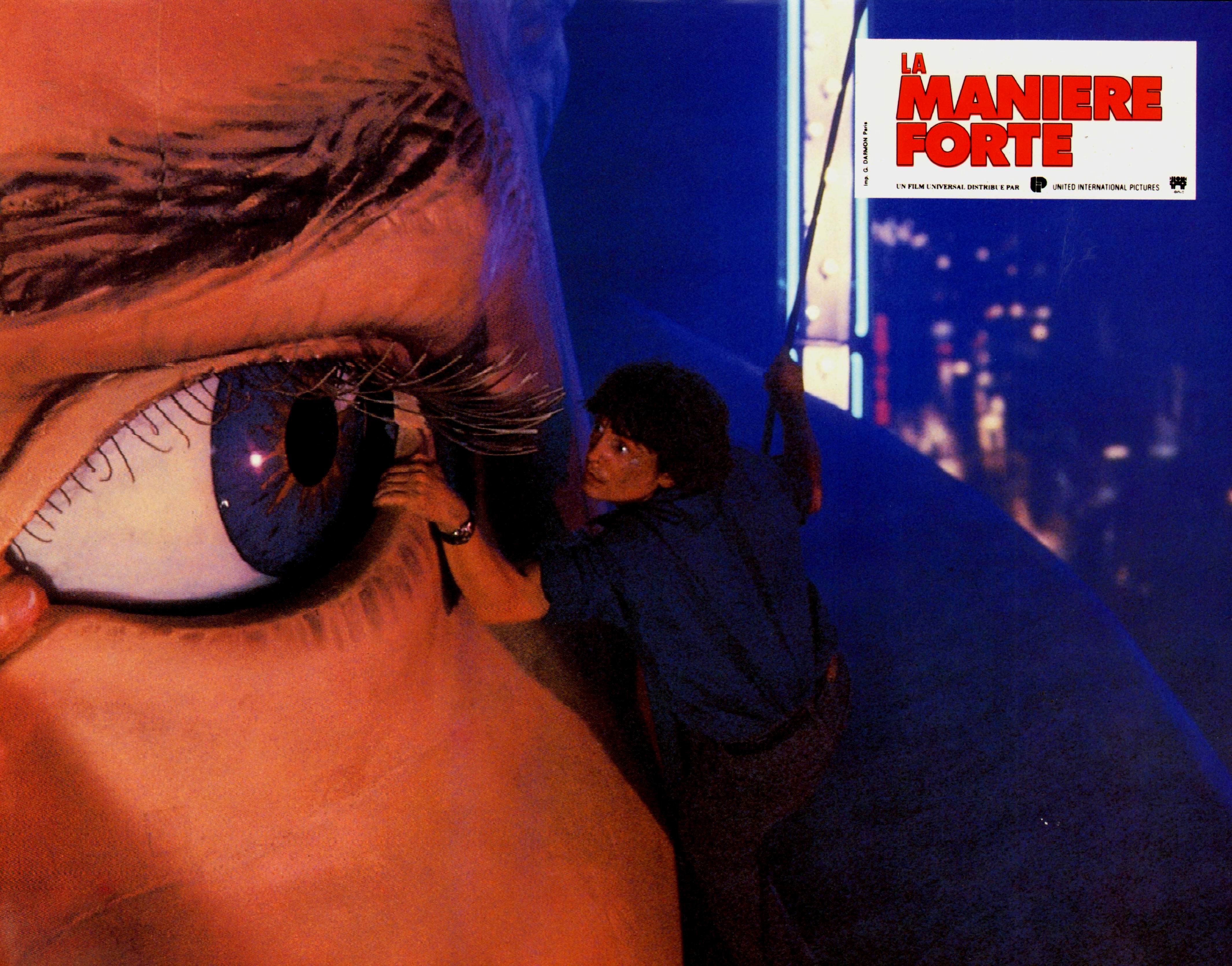
The trailers for Lang’s movie within a movie are absolutely priceless. ‘Smoking Gunn II’ is a shameless rip-off of the Indiana Jones series, with a theme song that sounds suspiciously like that of Alan Silvestri’s Back to the Future score. It is those satirical elements, lampooning the delusions and self-importance of La La Land, that elevate the standard buddy cop formula into something much more rewarding. The script never criticises its characters on any serious level. It takes what are essentially stereotypes and makes them human and relatable, especially following a scene of heartless subterfuge by Moss and his precinct buddies designed to rid them of the well-meaning Lang. Both characters are flawed, self-absorbed, borderline-reprehensible at times, but it’s those imperfections that endear us to them so strongly. Their capacity to win each other over against all odds makes The Hard Way such a joyful experience.
Despite its relative anonymity more than three decades after its release, a rather impressive box office of $65,000,000 is a testament to not only the evergreen appeal of the buddy cop formula, which remains a cinematic staple, but also the watchability and star power of our lead duo. The movie’s satirical edge is enough to set it apart, but The Hard Way thrives on the sheer energy and irresistible camaraderie of its lead players, who are clearly having so much fun revelling in parts that were tailor-made for them, roles that very few could have pulled off like Fox and Woods. Just watch the scene in which Moss and a newly-recruited Lang stop off for a nitrate-heavy, ‘Frog Dog’ lunch, only for Moss to lose his shit when Lang continues to imitate his every action. There’s a tension to their comedy that leaves you in a perpetual state of anticipation.
Badham, a director who can add Saturday Night Fever, 1979’s Dracula and War Games to his back catalogue, has proven himself a wonderful genre filmmaker over the years, with a special knack for forging flawed, relatable characters. Some, like Saturday Night Fever‘s talented delinquent Tony Manero, are very much rooted in reality, rich with conflict and motivated by a burning desire to cast off the stifling preconceptions of a society that rejects them almost as a birthright. The Hard Way doesn’t aim for such depth or catharsis, is a completely different animal, but the fact that we are equally as endeared to characters who are absolutely steeped in convention is a testament to Badham’s abilities. It may be hard for some to embrace Woods given his recent antics, but sometimes you don’t have to separate the person from the artist. Someone else does it for you.
Director: John Badham
Screenplay: Daniel Pyne &
Lem Dobbs
Music: Arthur B. Rubinstein
Cinematography: Donald McAlpine &
Robert Primes
Editing: Tony Lombardo &
Frank Morriss





 vhsrevival.com