

Ki ki ki, ma ma ma… Jason is back from the dead in more ways than one
Can Jason Lives, a semi-enforced meta flourish that went against the violent controversy of earlier golden age instalments, really be considered the best of Paramount’s irrepressible Friday the 13th series? Most would put it above New Line Cinema’s largely misguided efforts, but for all the fandom that the fifth sequel has inspired, just as many gave up on the franchise following 1984’s Friday the 13th: The Final Chapter, a movie that was meant to put the indomitable Jason Voorhees to bed amid a moral panic that saw Roger Ebert and Gene Siskel lambast the character’s influence on modern teenage culture. Ebert also suggested that Paramount’s titular proclamation was little more than a marketing gimmick to pull in the punters following Friday the 13th Part III‘s relatively impressive but less than expected financial fling with the short-lived, Reagan-era 3D revival. Of course, he was right.
The fact that series producer Frank Mancuso had signalled the end of Jason as early as 1982 at a wrap-up party for Friday the 13th Part III, Paramount agreeing to one final instalment two years later, suggests that there was a degree of truth to their marquee intentions, but with teenagers flocking in their millions to see the supposed demise of their favourite masked slayer, resulting in figures that almost matched its equally gimmicky predecessor, there was simply too much money to be made. $33,000,000 was hardly an earth-shattering sum in 1984, but for a low-budget, low-risk series that had barely exceeded $2,000,000 in outgoings owing to Paramount’s notorious thrift, far less would have been considered a success, or at the very least a worthwhile venture, particularly with the prospect of many more sequels to come.
It took Paramount less than a year to renege on their final chapter promise, but for many the fifth instalment of the series, Friday the 13th: A New Beginning, was the final curtain creatively, a gimmick too far that flipped off Jason’s loyal fanbase by taking him out of the equation entirely. Conceptually, A New Beginning was fundamentally like-for-like, a masked killer stalking a bunch of teenagers at a home for delinquents that was located at a similarly out in the sticks setting, but when that killer was unmasked, Scooby Doo style, and fans realised that they were dealing with an imposter killer, outrage ensued.
In a production built on lies and half-truths, A New Beginning was even cast under false pretences, actor John Shephard, who would replace the otherwise engaged Corey Feldman as franchise stalwart Tommy Jarvis, uphappy with the fact that he had auditioned for a movie titled Repetition (see what they did there?), only to discover that he was in fact the lead in yet another Friday the 13th instalment having spent months volunteering at a state mental hospital in preparation for the role. In reality, producers used fake titles to swerve unions who were looking to castigate violent sounding films as horror movie censorship reached absurd levels, and a movie attached to the Friday the 13th banner in 1985 didn’t stand a chance, but you can certainly sympathise with the young actor. With the stigma surrounding the series in 1985, A New Beginning was a potential career killer.
As was apparent by A New Beginning‘s twist ending, one that hinted at a newly crazed Tommy replacing Jason to become the franchise killer going forward, Paramount’s initial intention was to stick to their Final Chapter promise as late as 1986, but due to a damning critical backlash for a film that has now become something of a cult classic, plans were quickly altered, Mcloughlin given a fresh narrative canvas with the proviso that the final girl be a “very attractive blonde”. Despite this, and with no explanation offered for the canonic about-turn precipitated by A New Beginning‘s less than favourable reviews, Evangelical Christian Shephard was offered the chance to return for Jason Lives, and he was initially tempted, due mainly to a scene in which a praying girl is spared by Jason, which obviously spoke to his religious beliefs. Ultimately, he turned it down in favour of crime drama Caught, a movie so obscure that it doesn’t even warrant a dedicated Wikipedia page.
Jason belongs in hell… and I’m going to see that he gets there.
Tommy Jarvis
Despite the apparent distaste of golden age traditionalists, in reality the original slasher template was dead on its feet by 1985, thanks in large part to one Fred Krueger. Wes Craven’s A Nightmare on Elm Street provided a supernatural twist on the same tired concept that revitalised the genre, spawning a whole host of imitators and laying waste to the abundance of cut and shut Michael Myers clones flooding the home video market. Thanks to a decreased but loyal fanbase, Jason lasted the rest of the decade, but paled in comparison to new commercial king Krueger, who went from strength to strength until his most successful instalment, 1988’s A Nightmare on Elm Street Part IV: The Dream Master, jumped the shark with its practical effects led buffoonery and peewee product marketing, sending the series along a shallow path that would drown the franchise by the decade’s end. This meant reinvention or death for Jason, one beyond crappy 3D gimmicks, misleading titles and fugazi-studded comebacks. With Universal Monsters fan Tom McLoughlin onboard as director, that meant taking the series meta.
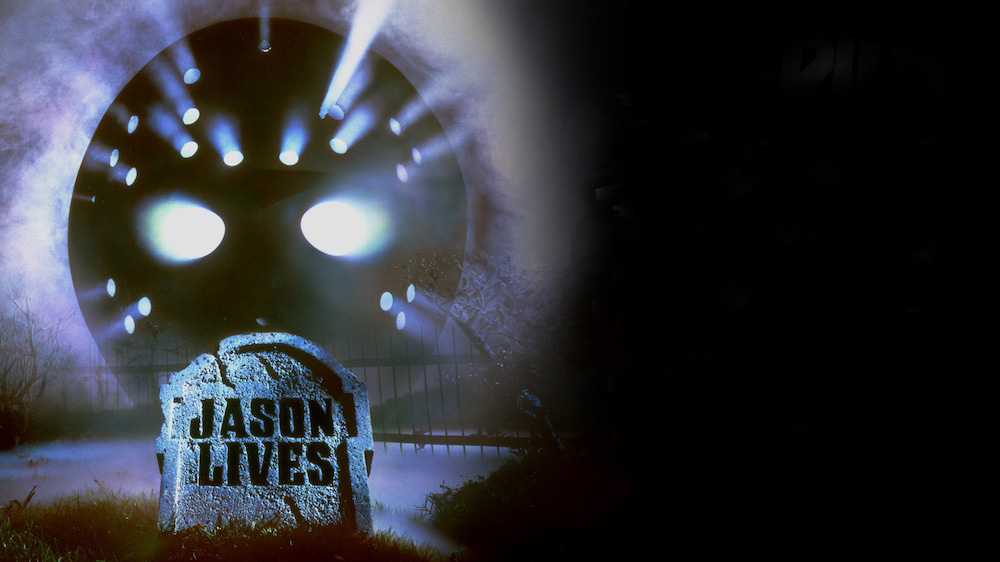
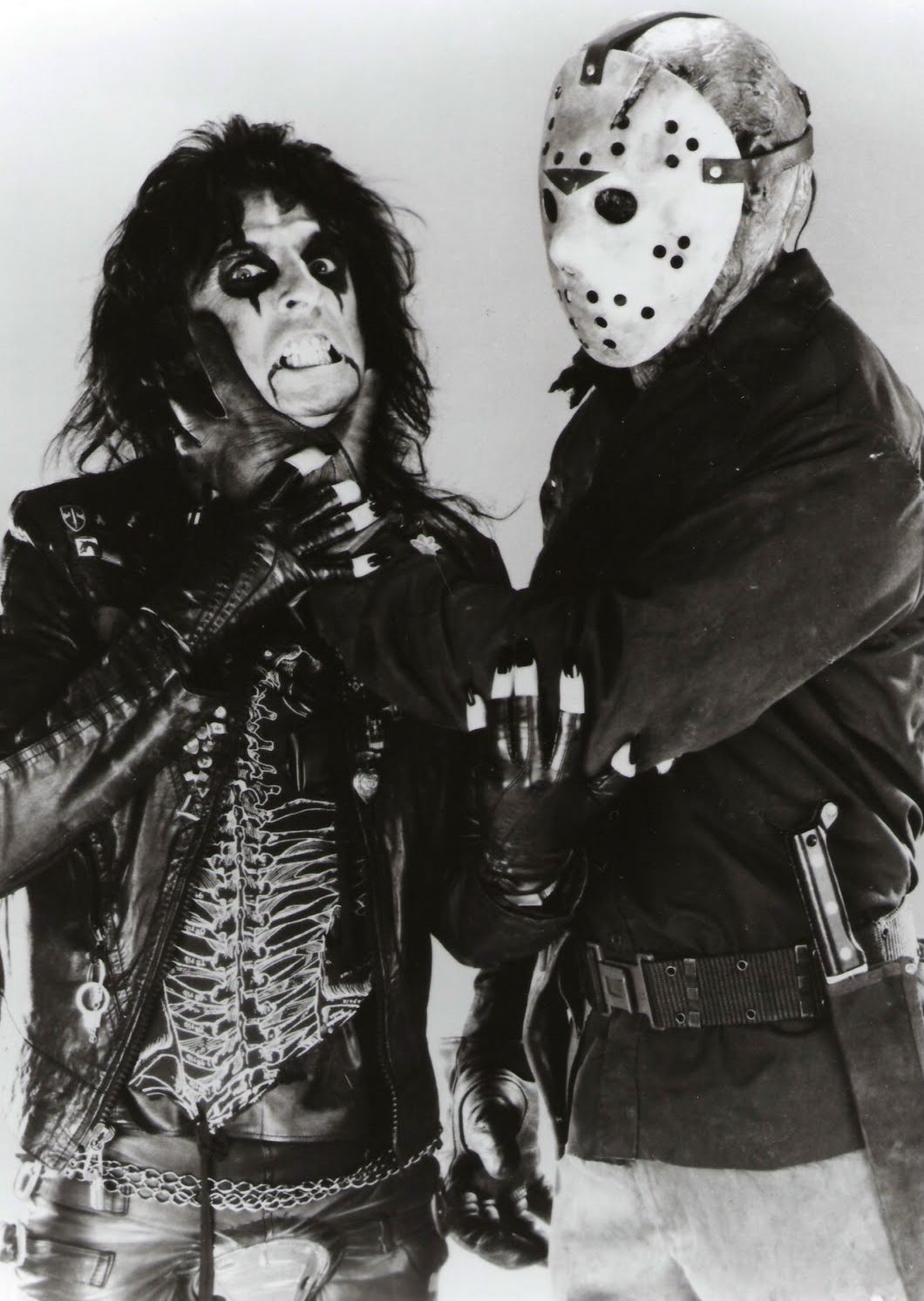
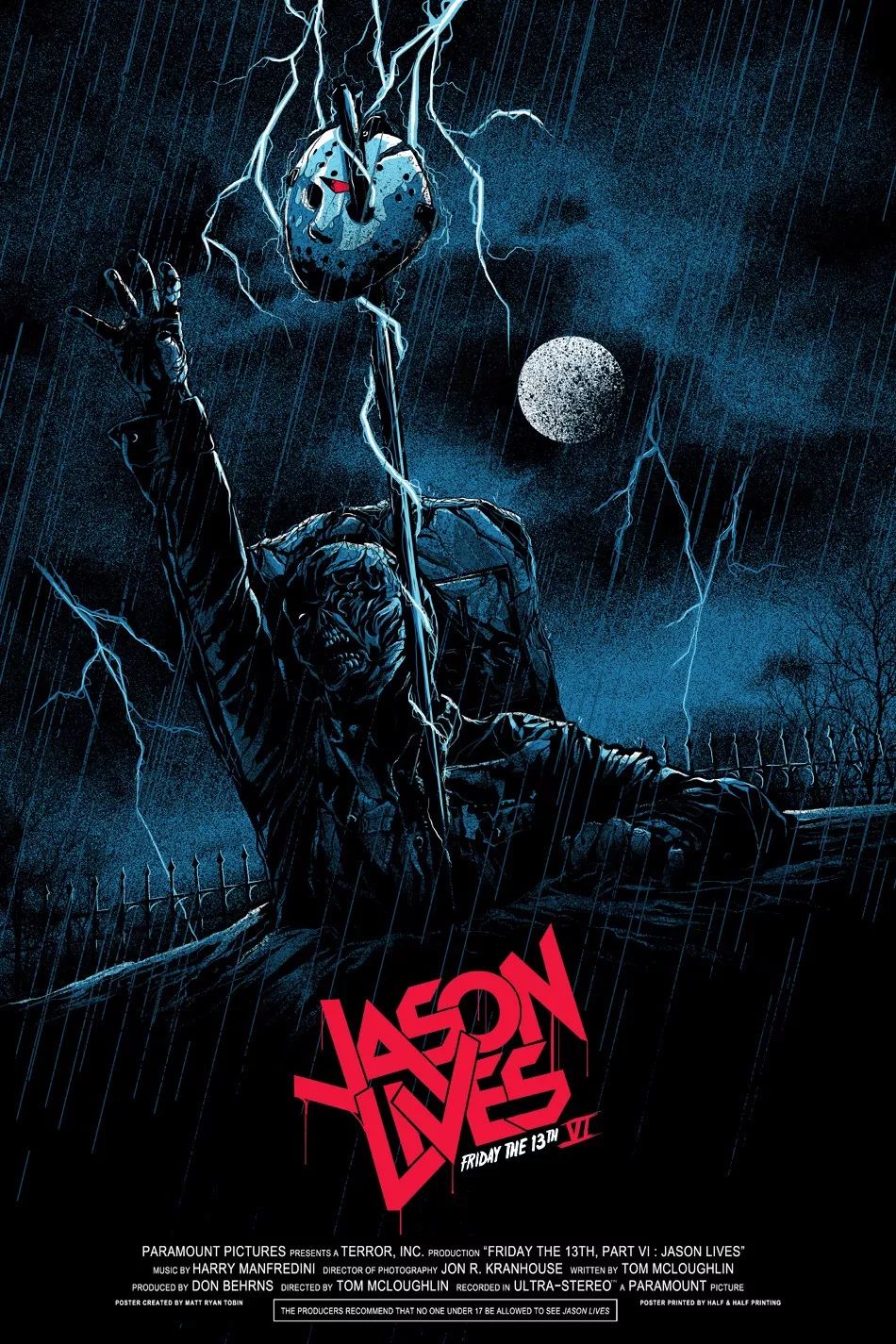
With indie company New Line’s shameless and financially astute hocking of their star attraction, Fred Krueger may have become horror’s first bona fide rock star during the late 1980s, reaching a much larger audience, but with Jason Lives, Jason got there first. The movie would recruit the legendary Alice Cooper to write and perform “He’s Back (The Man Behind the Mask)” for the movie’s soundtrack, complete with a shiny new music video, something New Line would imitate a year later, 1987’s A Nightmare on Elm Street 3: The Dream Warriors turning to American rock band Dokken in an attempt to flaunt their marquee attraction to the MTV crowd, which they managed more successfully. Mancuso saw Jason Lives as a chance for redemption and turned to former mime artist McLoughlin, hoping for a spectacular return with a heavy emphasis on the theatrical, and you only have to look at the poster for Jason Lives to know that we’re in for something completely different. The character’s imperious tombstone, almost arrogantly displaying the sequel’s title, tells you exactly who the star of the show is, not to mention the sight of his iconic mask, devouring the entire composition like an anarchic Batsignal, impenetrable light blasting through the fog-strewn graveyard like some godless immortal hellbent on the world’s destruction.
The movie’s title was just as bold and bare in its intentions, immediately recalling those startling creature features of the 1950s. McLoughlin more than justified such an approach, delivering a movie that is deliciously camp and wildly overblown while retaining the basic ‘more of the same’ template that fans paid to see. The sixth instalment of the hit franchise was like a blast of life-preserving air creatively, becoming easily the most cerebral of a series that had followed a fairly strict template of fast food thrills and unashamed stupidity. It excavated Jason’s long-buried corpse, unearthing something new and inventive with a variation of the character who has become lovingly known (at least in some quarters) as zombie Jason. Yes, it was silly, a far cry from the original character’s dead-eyed antics, which to a certain section of fans was borderline heresy, but could the series really have gone any other way given the heavily censored horror climate back in 1986? Those later instalments, retaining more than an inkling of McLoughlin’s tongue-in-cheek concept without truly capitalising on it, became increasingly lifeless. Of course, there is a ceiling when it comes to the Friday the 13th series, Jason Lives hardly a genre masterpiece, but there is so much life in Jason Lives; so much self-referential joy. It gave the series a charge that was desperately needed.
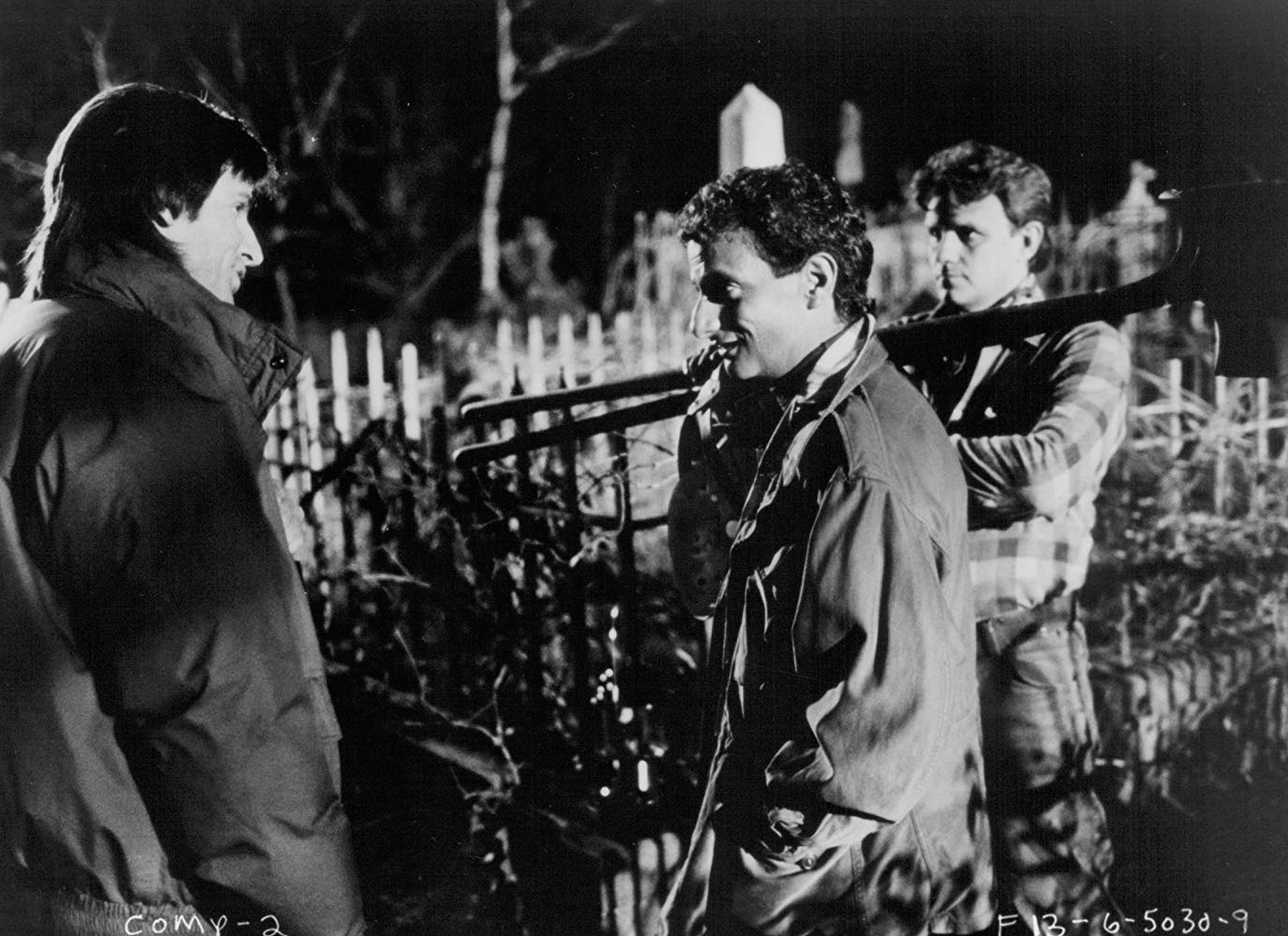
The movie wastes no time putting Jason front and centre. We begin with an ill-fated road trip involving Tommy and a seriously misguided buddy, a duo of former mental patients who feel that digging up Jason’s long-buried corpse is the only way to finish the job. The fact that they are practically unarmed when facing a supernatural force who has proven himself all but invincible is something you shouldn’t concern yourself with if you’re to fully appreciate the tone of this movie, one as fully loaded with mocking contrivance as Schwarzenegger was with cute one-liners. Their original plan is to set Jason on fire until Tommy’s solitary match succumbs to a rather unfortunate bout of drizzle (mental note: next time come better prepared). As if consciously aiding his resurrection, he then impales Jason with a rusty spike, one that immediately resuscitates his nemesis like a defibrillator when lightning strikes. Put succinctly, the hero of the movie is wholly responsible for everything that transpires thereafter, including the immediate death of his accomplice, who has his still-beating heart ripped out of his chest like a Mortal Kombat fatality. It’s the ultimate ode to horror movie stupidity. The film even has the temerity to rip-off that classic James Bond opening, a close-up of Jason’s eye playing host to a miniature version of the character slashing at the screen. If you can name a more emphatic return for a horror character, I’d like to see it.
It’s interesting to note that Thom Matthews and Ron Palillo, who portray Jarvis and ill-fated bud Allen Hawes, respectively, were both actors with backgrounds in comedy rather than your typical muscled jocks. Pallillo was most famous for portraying “Sweathog” Arnold Horseshack in 70s sitcom Welcome Back, Kotter, and would later star in 1989’s cult horror comedy Hellgate, also finding work as a cartoon voice over actor. Matthews, who had already bagged a starring role in 1985’s Romero spoof The Return of the Living Dead, would become something of a cult figure in horror circles, and Jason Lives is arguably his second most notable role. Matthews and co embrace the endlessly regurgitated tropes of a series that had been labelled tired, repetitive and just a little bit naff, with a cartoon, self-aware gusto that turns those criticisms inward. Rather than crank out a derisive retread, McLoughlin’s smash-mouth, wink-wink approach is a postmodern take that is tailor-made for fans of the series.
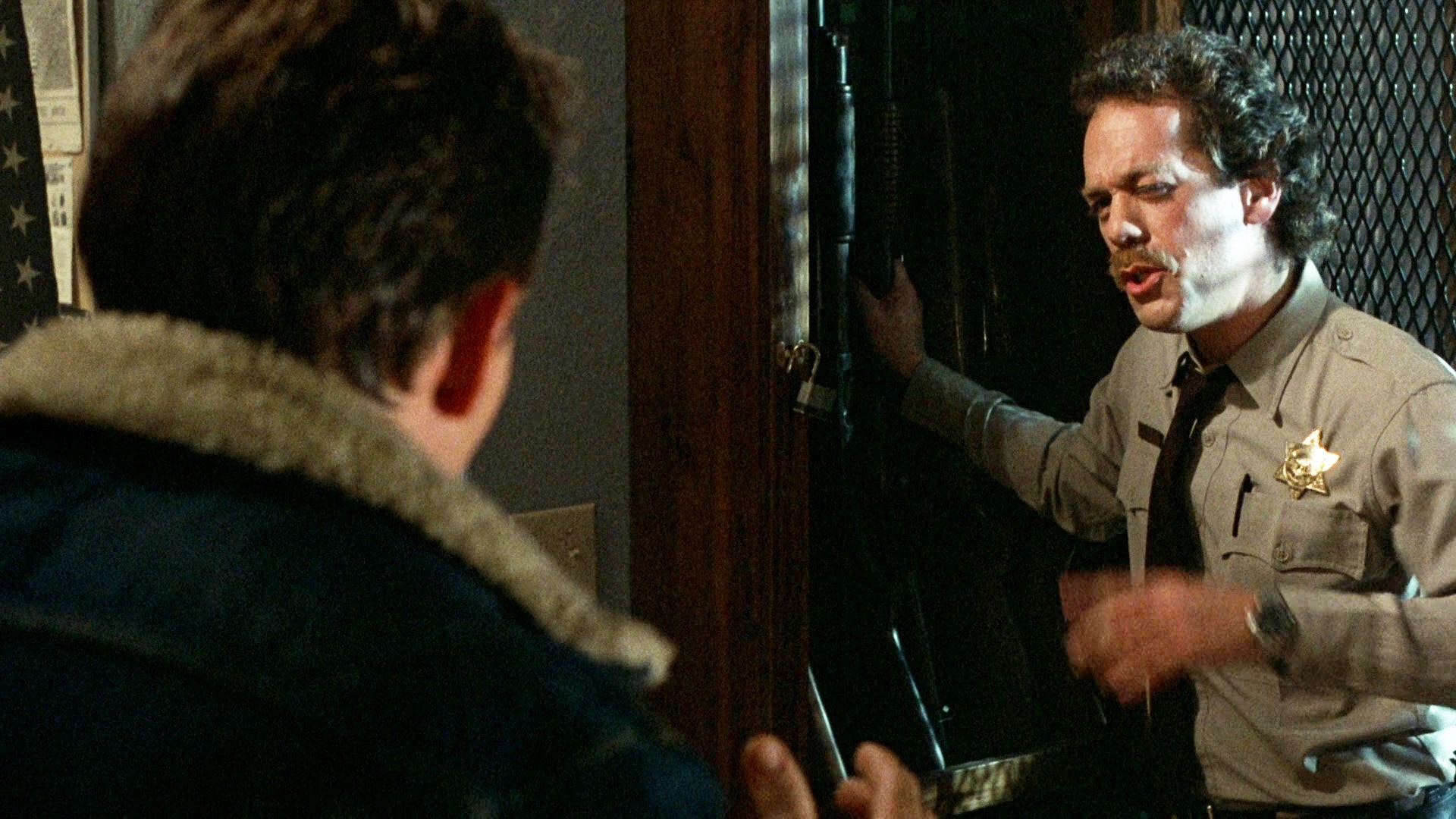
The next major character to appear in Jason Lives hammers home the self-reflexive hi-jinks that make the installment so unique in the Friday the 13th universe. Hot on the heels of A New Beginning‘s unusually astute but spectacularly wide of the mark lawman Sheriff Tucker, a character who actually suspects the work of Jason rather than shrugging off his involvement, even though events take place outside of Camp Crystal Lake with an impostor killer, David Kagen’s priceless archetype Sheriff Garris reverts to type with a comical ferocity, taking police dismissiveness to a whole new level. As soon as Tommy shows up to warn the newly named Camp Forest Green of a bloodthirsty, Jason-inspired recurrence, he pins him as a raving lunatic. With the character’s past issues, this is more than understandable, particularly when his motherless daughter gets involved, but every time a bit of evidence arises to support Tommy’s supposed ravings, Garris swats them away with the belligerence of an oil barren faced with the world’s climate-based destruction. When the first mutilated bodies are found, in Garris’ mind Tommy graduates from harmless loon to the kind of bottomless psychopath who will murder innocent teenagers just to prove a point. When Tommy asks, ‘The phone’s disconnected, shouldn’t that tell you something?’ Garris replies, ‘Yeah, they should have paid their bills.’
If one good thing came out of Garris’ laughably obtuse attitude to sleuthing, it’s his sassy hellcat of a daughter, who breaks the ‘Friday’ final girl mould in a way that goes directly against her amped-up stereotype of a father. Jennifer Cooke’s Megan Garris, though undeniably beautiful, isn’t your typical babe with mammary glands of steel. Nor is she the archetypal do-gooder who evades Jason’s wrath due to unrealistically high moral standards. In fact, she immediately has an eye for the temporarily imprisoned stranger with the wild tales of death and mutilation, even going as far as breaking him out and aiding his morbid crusade, burying him in her crotch as she joyrides her way past a gaggle of shotgun-wielding deputies whose bloodlust is severely misdirected. Not since Friday the 13th Part II‘s Ginny Field has a final girl proved so independent and resourceful. In a series that typically relied on mawkish, American as apple pie beacons of traditional virtue, Megan is a kickass sexpot who defies the rules of a patriarchal industry, while Kerry Noonan’s more traditional final girl, Paula, perishes in an unapologetic jolt of cabin-bound splatter.
Elsewhere, the characters in Jason Lives are much more peripheral, pretty faces lined-up for Jason’s relentless quest for human disposal. The Friday the 13th series has always been about the kills. In the early days it was about those spaced out acts of creative slaughter: the pierced throat, the twisted neck, the harpoon through the eyeball, the question being, how far would they take it this time around? Later, that question would become, how much creative violence would the censors and Paramount themselves allow to sluice through? The series had always been plagued by the scalding hand of censorship to some degree, but post-1984 the crusade grew ever more pedantic to the point where the series felt somewhat anemic. A New Beginning was the first to suffer in a way that was notable to even the most passive viewer, and things would only get worse, 1989’s Friday the 13th Part VIII: Jason Takes Manhattan tampered with to the point where the film was almost unrecognisable from those earlier instalments, where it was hardly worth your time as a viewer. As Friday the 13th Part VII: The New Blood director John Carl Buechler would say of his own troubled production, which, as the raw footage will attest, was arguably the most gruesome of the bunch before the censors drained it within an inch of its life, “It’s like telling a joke without the punchline.”

With Jason Lives, McLoughlin approached the violence differently, tackling those scenes in a way that would avoid the censors, which explains the lack of violence this time around, but compared with the heavily cut instalments that preceded it, Jason Lives is the most tolerable for its lack of gore, mainly because it doesn’t feel like half of the movie has been ruthlessly erased after the fact. Again, it’s all in the presentation. Much like Wes Craven’s Scream, a movie that changed the face of the slasher in the late 90s with its inspired meta flourishes and intelligent self-deconstruction, some of them almost know they’re in a movie, like the couple who are confronted by Jason while lost on the outskirts of Forest Green. There’s an inevitability to proceedings that goes beyond audience expectation to enter the fictional world. If you were out driving in the wilderness, at night, only to be confronted by a giant, spear-wielding brute sporting a hockey mask, you’d know well enough to make a sharp exit, or at least attempt to. In a sense he does, the foolhardy confronter promptly speared in the nads and pole-vaulted into oblivion.
Later, a group of paintballers are massacred, one of them leaving a bloodied smiley face on a nearby tree upon impact. As a visual aid to their premonitory hobby, they each possess a bandana sporting the word ‘Dead’ for when their time comes. It’s almost as if they could see it coming. At one point, a peewee camper is seen sleeping with an open copy of John Paul Sartre’s ‘No Exit’. And you know there’s no reason for it to be there other than to make a very specific commentary, unless he’s hiding a miniature nudie mag under there. Ironically, initial cuts of Jason Lives were deemed not violent enough by the very producers who had oversaw or at the very least complied with the deadening preoccupations of censorship hysteria, a further three deaths added after the initial shoot. The film’s most gruesome death, Sissy’s head-twisting, initially didn’t exist, her head later found following her offscreen murder. Jason Lives also holds the dubious distinction of being the only instalment in the entire franchise to feature absolutely no nudity, proving the antithesis to A New Beginning, which director Danny Steinmann famously described as “a porno in the woods,” lamenting the amount of cuts that the movie had endured based on nudity alone.
This tonal shift was enough to turn many golden age slasher fans cold, and Jason himself, once the purveyor of so much explicit destruction, naturally follows suit. Jason Lives is the movie that first takes Jason into superhuman territory with the ability to be almost omnipotent. He’s not quite teleporting Jason yet, an evolution that would kill any attempts at traditional horror by the eighth instalment, but his ability to be seemingly everywhere at once is beginning to take shape, and when you begin to break those rules, it becomes harder to create any kind of genuine tension. By this point he’s also truly invincible, which makes everything that much more inevitable, some would suggest pointless. It’s not like we were fooled into thinking that there wasn’t a sequel in the pipeline prior to this instalment, but Jason Lives crushes any and all reasonable doubt. Jason has always been borderline immortal. He survived in the wilderness for over a decade after supposedly drowning, overcame a machete to the neck, an axe in the head, and even a full-on facial impalement — unlikely, though stranger things have happened — but when he eats a barrage of bullets with barely a flinch, snapping the helpless Sheriff Garris in two like a splintered twig, you kind of accept that this guy is beyond the basic laws of humanity.
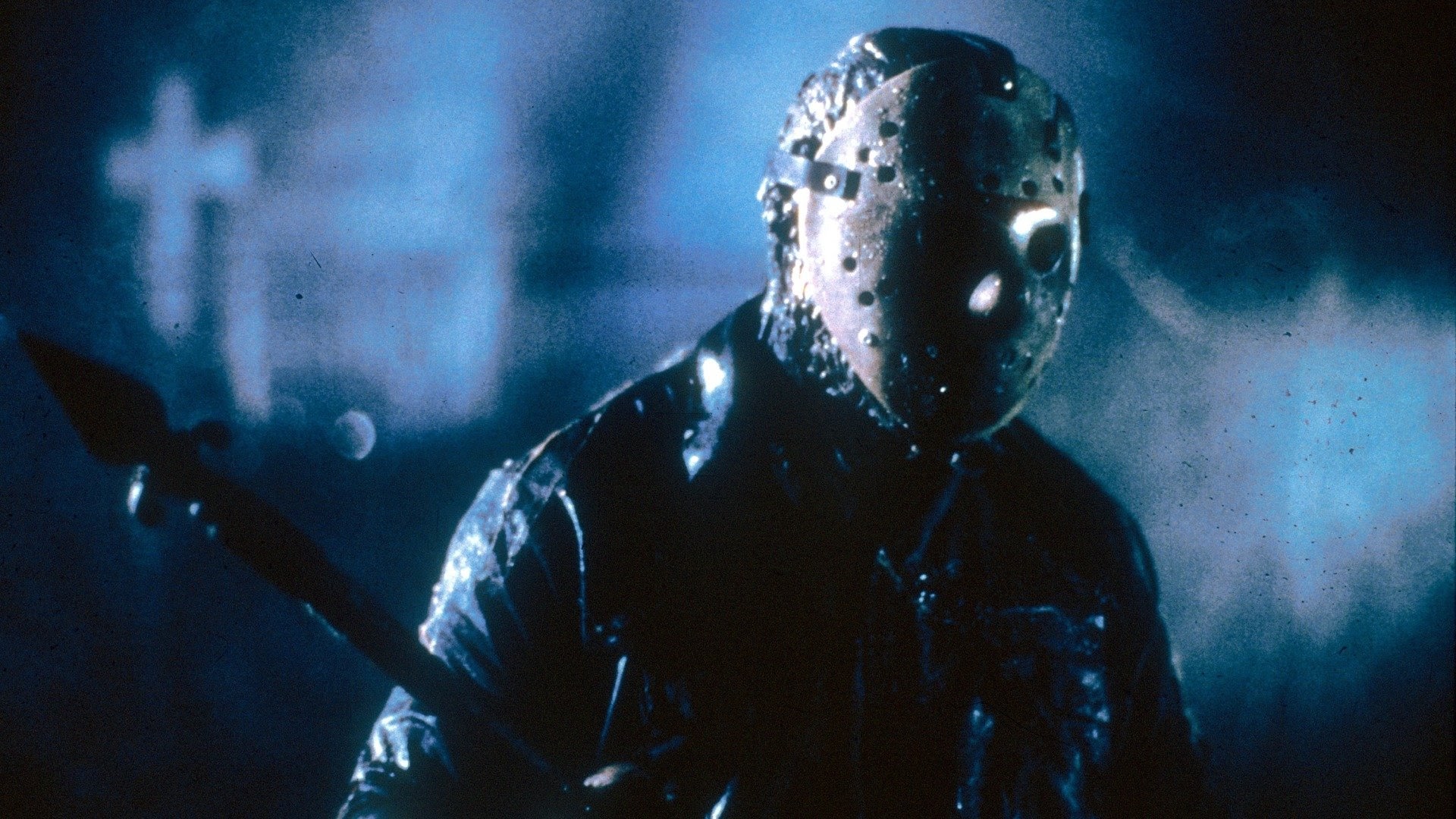
This time around Jason is played by C.J. Graham in what would prove to be his one and only appearance, which had become a kind of tradition for the series for various reasons. Another tradition was to have a stuntman play Jason, which was not only cheap and convenient, put practical considering some of the stunts involved. The role initially went to stuntman Dan Bradley, who was promptly replaced after Mancuso decided that he lacked the correct presence for a character of Jason’s nature, though the scenes that he was involved with, those featuring those whacky paintball executives, were kept to reduce cost.
Graham, a former soldier who was scouted by special effects coordinator Martin Becker while working as a manager at a local restaurant, wasn’t a stuntman, but was recommended to Mancuso after taking part in a magic show that saw hypnotized audience members placed in a scenario in which they encountered Jason Voorhees. You just couldn’t make that shit up. Standing at 6’3 and weighing 250 lbs, Graham, who was devastated not to be called back for Friday the 13th Part VII: The New Blood, cuts an intimidating figure as Jason, setting the groundwork for fan favourite Kane Hodder, a stuntman-turned-actor who would finally make the role his own, starring in a record three installments thereafter. Graham isn’t my favourite portrayer — that accolade goes to Part 3’s lumbering brute Richard Brooker — but he’s a memorable one nonetheless.
The finale of Jason Lives, the money confrontation that typically leaves Jason in commercial limbo for at least another year, isn’t the most memorable. In fact, it’s the weakest up to that point, paling to the brilliant Betsy Palmer’s decapitation, Ginny field’s genuinely creepy tête-à-tête, Part 3’s eventful homage to the original film, The Final Chapter‘s practical effects heavy send-off, and even A New Beginning‘s rainswept stand-off with a rather revealing wet t-shirt and a Scrappy Doo-esque little fellow named Reggie. For reasons that are not fully explained, Tommy has discovered that to truly kill Jason you have to return him to the place of his original demise, the bottom of the former (and future) Camp Crystal Lake, leading to a not-so-scintillating battle involving a canoe and a ring of fire (he obviously didn’t count on the awesome power of telekinesis). It isn’t poor per se, it’s just that we’ve been here before, and in a movie that generally takes risks and attempts something new, you would expect a little more creativity and flair.
Maybe he was telling the truth. Just because our parents keep telling us that Jason was only a legend doesn’t mean it wasn’t true. What if he did come back here, looking for the camp counselor that caused him to drown as a boy, searching for the one that decapitated his vengeful mother? And you do know what today’s date is, don’t you? And I can think of only one thing even more terrifying.
Megan Garris
It could have been very different. The original script for Jason Lives ended in the graveyard where Tommy is reprimanded by local law enforcement having gone in search of Jason’s open grave, which is where the weird and seemingly inconsequential gravedigger know as Martin comes into the equation. When Tommy leads Garris and his deputy to the graveyard with the intention of proving that Jason’s corpse is actually missing, the grave is mysteriously filled in, leading Martin to suggest that it had always been that way. This alternate ending would introduce Jason’s father, Elias, to the series, though the prospect of having to introduce a backstory down the line turned the always budget-minded studio off. Plus the murder of Martin, added in order pad out the number of kills featured in Jason Lives, would have resulted in a continuity error had the idea been developed.
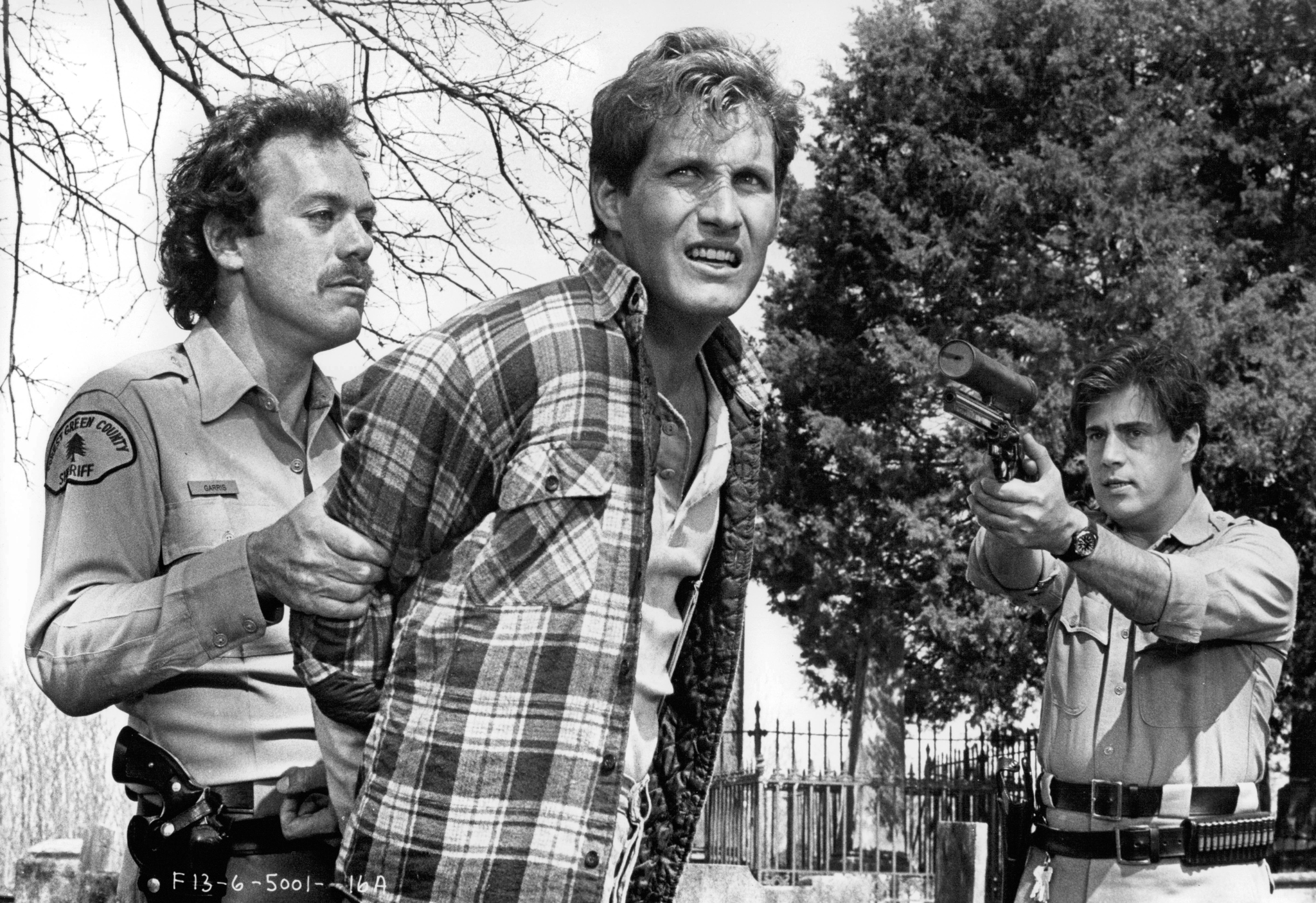
Interestingly, McLoughlin shot two further endings for Jason Lives. The first featured Jason’s mask floating to the surface of the lake following his struggle with Megan, the second involving the laser-sight wielding Deputy Cologne. Having previously been locked in a jail cell by Megan and Tommy, Cologne is seen reaching for the keys in that particular scene, only for the door of the police station to swing open, briefly hinting at a returning Jason before the film abruptly ends. Those two endings did not sit well with producers, who wanted absolutely no degree of ambiguity regarding yet another sequel, which is why an image of a submerged Jason’s opening eye was ultimately decided upon. Did anyone not have the balls to suggest that a little ambiguity can actually go a long way? It’s no wonder that so many turned their back on the series.
Despite its attempts at revitalising the waning franchise, Jason Lives posted the lowest returns yet with a gross of $19,500,000 — enough of an incentive for Paramount to churn out two further instalments, but the end of Jason as a truly fearsome low-budget draw. Seeing the writing on the wall, Paramount would attempt to cut a deal with New Line Cinema the following year for a long-imagined Freddy vs Jason crossover, but the two were unable to come to an agreement. High on the fumes Krueger’s commercial explosion, New Line didn’t need the project as much as their rivals, putting that particular idea on the shelf for close to two decades, at which point they owned both properties. Of course, a movie’s box office is often determined by the movie that preceded it, and the absolutely potty and creatively underhanded A New Beginning inflicted the kind of damage that the original series never quite recovered from.
Whether you are a fan or not, Jason Lives is hardly a movie to rival the best that horror has to offer. It may be self-aware trash, but it is trash nonetheless, and it’s only natural that it would be disregarded as yet another in a long line of like-for-like slashers at a time when oversaturation had left the genre limping along like a vacuous barefoot teen destined for fatal retribution. That being so, it’s still the most intelligent of the series, and the only instalment to inspire actual critical analysis. Gene Siskel even managed to show less than absolute disgust with a one and a half star review, stating that while the film’s self-referential humour was good enough to make it the best film in the series, it wasn’t enough to take away from the story being essentially the same as the previous five installments. High praise from a series detractor who gave the original Friday the 13th a score of zero. In high-brow critical circles, Jason was clearly moving up in the world. Technically speaking, of course.
Director: Tom McLoughlin
Screenplay: Tom McLoughlin
Cinematography: Jon Kranhouse
Music: Harry Manfredini
Editing: Bruce Green







 vhsrevival.com
Jason Lives is a bit of guilty pleasure for me. Its one of my favourites in the Friday 13th films series, I guess ’cause this is the one were Jason is reanimated. from Urban legend into full on supernatural horror.
LikeLike
Evening, Paul. Great to hear from you.
I love Jason Lives. It’s a far cry from those earlier instalments for the reasons you have mentioned, but I’m not the kind of fan to choose one style or the other. I like my Jason serious and silly.
2, 3, 4 & 6 are probably my favourites, but I love the whacky Scooby Doo shenanigans of A New Beginning, even the soap opera silliness of The New Blood, which has a great finale, despite the demoralising cuts that it was subjected to. I even have a soft spot for Jason X.
The one instalment that I really struggle to swallow is Jason Takes Manhattan. It had so much potential, which makes it even worse, but it’s so sanitised by that point. There’s so much focus on Jason that it comes across like a terrible pop video. No scares. No blood. Not even Manhattan.
What’s your ranking of the series?
LikeLiked by 1 person
Hi ya! Yeah, I completely agree, I love the 1st Friday 13th, its a horror classic, but I think its the way the series evolved with Jason that’s really made the franchise something special.. For me 2 & 3 always felt like they were tinkering around the edges a bit, its that wackiness of New Blood and New Beginning that really elevated things for me as well. As you know, I love Jason Lives as that kind of makes things more supernatural. Jason Takes Manhattan was a misfire, I really like Jason X as well, it was a fun new direction, and even the totally bonkers Jason Goes to Hell had some super gory moments and great practical effects to to die for. Are we including Freddy Vs Jason? Well, I am, despite its flaws, that one is a guilty pleasure for me as well. I didn’t like the Friday 13th Reboot movie though.
LikeLike
Oh, for sure. I love Freddy Vs Jason. Some of the SFX haven’t aged well and it can be a bit generic at times but Robert Englund is such a joy to watch in that movie. He’s completely in his element.
The SFX in JGTH are amazing! I’m pretty sure it was the famous KNB EFX Group who worked on From Dusk Til Dawn. It almost doesn’t feel like a Friday the 13th movie at times but it made up for all those heavily cut instalments. I think I might cover that one next.
LikeLiked by 1 person